
A Guide To Increasing Productivity

By Maham Tasneem

As we all know, learning in medical school is like trying to drink from a fire hydrant. It can be overwhelming, especially, during these difficult times of COVID 19 where we’ve all been stuck at home. However, assignments, written exams, and OSCEs are still around the corner and we can’t lose our productivity. This article explores 7 different aspects every medical student should keep in mind to maximize productivity by encouraging a positive state of mind.

1) Inviting, comfortable, and clean workspace

No one wants to study in a dark, cramped, cluttered corner of the house. Therefore, it’s worth investing some time to clear up your study space; organise it; decorate it. When you wake up in the morning, you won’t dread starting your studies, but will be encouraged to get cracking on the day’s tasks.

2) Eating whole/healthy foods and exercise/keeping active

Many people have reported increased unhealthy snacking during the pandemic, especially when also having to study all day. Medical students work countless hours to finally become a doctor and take care of patients’ health. However, it is important that we do not forget our own health to better our ability in fulfilling our medical role. This can be achieved by regular whole meals and healthy snacks. On the same note, why not have a breath of fresh air as a break from studying. Take a stroll outside by the garden or by the beach shoreline.

3) Good quantity and quality of sleep

This is something medical student are notorious for not following. I know there is a lot to get done. However, in order to increase efficiency of daily tasks, it’s essential to get at least 7-8 hours of sleep. Think about the last time you had a good 8-hour night’s sleep (probably during the summer break) –  you’ll have woken up refreshed, energised and feeling like you can tackle anything in the world. You can feel like that everyday, and get a lot done by just prioritising your sleep. Oh and please don’t forget good sleep hygiene!

4) Keeping in contact with people

Though quarantine has put a hold on our regular social interactions. We can still continue to keep in touch with our loved friends and families through Skype and Zoom. Chatting with others helps reenergize yourself, which is always beneficial when trying to get on top of work. They’re also great in supporting you in being a medical student through these difficult times.

5) Having a life outside of medicine

The vast majority of people who are in medicine are obviously here because they love it and want to do this for the rest of their life. It is an absolute noble profession where you study day in and out for the betterment of people. However, it is also important not to get completely indulged where you forget about yourself and what makes you, YOU. So make some time for other interests you may have, whether it be photography, art, music, gardening, walks etc. You will feel like you haven’t lost yourself and will be even more motivated to continue thriving in the profession of medicine.

6) Creating a schedule

Now, you don’t have to create an over-the-top hourly schedule. A simple list of tasks that you want to complete for the day is more than enough. The idea here is to write everything down that you want to get done for both short-term (daily schedule) and long-term (monthly schedule) goals. This allows you to not think so much about the pile of work you have to get done by the end of the year, but keeps your mind focused on the short-term goals of the day. Ticks for each daily task are motivating for having a productive day. And then having ticks for each day that the schedule has been completed is also extremely satisfying to keep going for the rest of the month. Finally, at the end of the month, you can look back and admire how productive you were over the 30 days and restart the course of action for the next month.

7) Spirituality

Whether you are a Muslim, a Christian, an agnostic, or an atheist, spirituality is an important social factor in the contribution of health. Therefore it’s important to keep connected to your spirituality and community. There are many great Youtube videos, Instagram and Facebook pages, organisations, etc to support you. Overall, these will aid in creating a good personal state of mind to increase productivity. It’s a win-win situation! 

Modern Loneliness

By Phoebe Chen

Part 1. Finding meaning in the madness through music

There is always this distinct something that I feel but can never quite articulate…like breathing out a sigh — where all it leaves is a certain hollow emptiness in your body which sinks in your chest and amplifies with silence. On a low-key Friday night, it settles in as the world goes quiet, the lights have dimmed, and all that remains in your mind is the company of your own thoughts.

The mood blends between the grey sonic echoes of Billie Eilish’s when the party’s over and the blue weariness of Lolo Zouaï’s Here to Stay. As it seeps out, the melancholy fades into numbness, and evaporates by the next morning.

Isolation is introvert heaven, drawing you into a strangely comfortable embrace, yet subtly unsettling — pulling you deeper until you can’t tell whether you’re really okay or not. Last week feels like a month ago, and the days blur into one another, until that feeling lasts much longer than a night.

Even when it did end, I knew it had never really gone. It was just wavering in the background, ready to appear once the screen went dark and all the Netflix and YouTube and TV critic reviews couldn’t keep it at bay any longer. It was poised to return once the conversations ended, exacerbated by a quarantine-induced asocial crisis, so that I couldn’t even be bothered messaging in the first place.

Ever waxing and waning, it had already been with me for years. I was reaching for a stone I couldn’t turn. And eventually, you give up, you withdraw, and you don’t talk about it; because even though support is within reach, you don’t ask because it doesn’t help at all.

We’re never alone, but always depressed

Love my friends to death

But I never call and I never text

— Lauv, Modern Loneliness

Those lyrics hit a little too close to home. When you’re alone in the crowd, but surrounded by people, you can lie to yourself and say you’re fine. But in isolation, physically separated from others, you are forced to confront the truth and face it alone.

When you don’t even know how you want to help yourself, it’s much harder to believe you can even ask for it to begin with, let alone find others to help you. Because the biggest thing holding you back is that you don’t even know how to say what you feel.

So what do you do when nothing seems to overcome that lingering apathy?

~

When it comes to emotions, I have always been naturally inclined to compartmentalise and put them aside, which is really just a form of denial — so it takes more conscious effort to recognise my own state of mind in the first place.

There are moments in life when I viscerally feel this something, but can’t find a single word to capture it; even though labelling it is the first step to reducing its intensity. So the next step is externalise what you experience, to lower the volume of confusion and frustration beginning to roar inside you.

That’s when you turn to the rhythm and the beat.

Even though there’s a 76.95% chance that a moody RnB song is playing in my head at any given time, there’s something to be said about how therapeutic they are for the catharsis they bring.

In the midst of a low, Drake really captures the atmosphere in my feelings through the dark gloominess of Don’t Matter to Me, as the hauntingly beautiful falsetto of The Weeknd brings out the beauty behind the madness. Because whilst you might be Alone Again, the smoky and soulful vibes hold up a mirror to your mood in the moment; reflecting your emotions with sharpened clarity. Paradoxically, once you are acquainted with your frame of mind, you feel more put together, less empty, so you can begin to let it go.

Then you turn to the lyrics to channel how you want to feel.

Drawing on gratitude from the dreamy whispers To Me, Alina Baraz reframes life with lenses slightly rose tinted — it’s self-care in a song, a spa day and a pink clay face mask, a reminder to get in touch with myself again; before raising the Tempo with the self-love of Lizzo for a boost of confidence to lift my spirits.

Stirring at those inklings of strength, Faouzia elevates it to a soaring crescendo through the intensity of Tears of Gold with the motivation of facing This Mountain. Hitting those high notes in all the glory of cinematic pop, shining triumphant and hopeful rays — it’s the equivalent of recalibrating a compass, feet to the ground, sights set once again on being the best version of me.

That’s why I love music — not just because of how it sounds, but because it helps you get in tune with how you feel, regardless of the baseline of your own emotional awareness.

If you look at your own playlists, you’ll notice the music that truly resonates with you can be classified into two: the relatability of who you are, and the aspiration of who you want to be. That’s why you love them, that’s why they’re on repeat; the only thing you need to do is pay attention.

~

There’s a lot of reasons at play when it comes to modern loneliness. But the first step is realising you’re well within your power to make it right.

Rather than being chained to your feelings, think of it this way.

Pretty early on, as med students we learn to use vital signs to get a brief snapshot of health. We pay so much attention to the body — you wouldn’t want to ignore a low blood pressure — so isn’t it the same principle to extend this to your own mind?

It’s simply checking in with yourself, which you can do in the same amount of time as taking a blood pressure; because your emotions are the personal thermometer of your wellbeing. So there is nothing shameful about having them — even the negative feelings — because you’re human, and we all have them too.

If you’re feeling low, you have to acknowledge it before you can begin to feel okay again. Like taking an antihypotensive to bring your blood pressure back to homeostasis, a dose of music is a Happy Little Pill when you’re feeling as blue as the Troye Sivan song, where both make you feel much better once it’s flowing in your veins.

Sometimes you just need to wait it out and let it pass, knowing you’ll feel better when tomorrow comes. But if you’ve been chronically low, definitely talk to a trusted friend or seek a professional.

You can’t always choose how you react, but you can always choose how you respond.

So to sum up, Rx: adjust your dosage according to emotion and change regimen as required.

Now the stone has been turned, and I have found my inner peace — it’s just about balance. The highs will be high, the lows will be low, ephemeral yet everlasting, so it’s a matter of finding the equilibrium in the emotions.

All you need is patience and practice, because if you listen closely, you realise it’s just a musical with reprisals that will play for the rest of your life — where you get better at leading the symphony.

Listen to Phoebe’s Spotify playlist for all songs mentioned. 

Humans of Medicine – Sarah Rav

Tell us a bit about yourself.

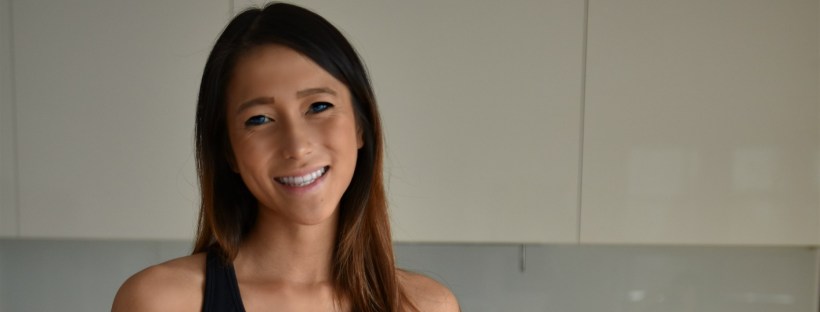
Hi! I’m Sarah, and I’m currently in Year 4C. Outside of medicine, I have a keen interest in health and wellness, particularly nutrition and weight training. In my spare time, I am constantly listening to music. I can’t make music, nor can I play it, but I just love listening to it. Music makes life that much better. I also love meeting new people and catching up with friends over brunch!

Tell us about your Instagram. 

I started my Instagram account about 6 years ago and it has been the most rewarding thing I’ve ever done. It started out primarily as a fitness account, but it has since transitioned to being more lifestyle-based. This has enabled me to raise awareness about issues I’m passionate about, and to share many more aspects of my life with my followers, such as my favourite cafes & food (I’m a huge foodie!), workouts and brands that I adore. The account has garnered a bit of a following since it started, and I’m very fortunate that it’s given me a platform to connect with people, both within Australia and internationally. I’ve also met some of my best friends through Instagram, who I wouldn’t have gotten the opportunity to meet otherwise. A lot of these friends don’t study medicine, so they’re able to give me a really different, refreshing outlook on life. When I’m feeling particularly stressed about something academically related, they keep me grounded and give me perspective.

How does Instagram fit into your daily routine?

My routine tends to vary, but on an ideal day, I’ll wake up and go to the gym, where I’ll usually take a photo, or film a video for Instagram. Depending on how much time I have before placement starts, I’ll spend 1-2 hours going through the DMs and emails that arrive in my inbox overnight. There can be up to 50 emails with invitations for collaborations, so I’ll always sift through the ‘ab-stimulator machines’ or ‘weight loss pills’ that I have absolutely no desire to endorse! I’m usually home from placement at around 5pm, and this is when I’ll upload my posts, usually content that I’ve spent most of the weekend shooting. I’ll then spend 30 minutes to 1 hour online afterwards to respond to comments and to assess whether or not the post is well-received.  Instagram takes up a lot of time, and in that sense, it’s a full-time job, but I don’t mind it at all! 

What is something you’ve observed about Instagram that people might not know? 

I’m really grateful that this is still a viable job for me, but for the most part, Instagram is a relatively quiet platform now. It’s increasingly hard to grow a following nowadays, and I am constantly losing followers on a daily basis. Just like so many other social media platforms have reached their peak, such as MSN and Facebook, in the same vein, I don’t think there’s much future in Instagram. At this point, however, I’m not interested in numbers. I care more about creating an impact, and promoting a positive message to the wonderful followers that I do have. 

What have been your favourite brands to work with? 

That’s very hard to pick, but something that does make brands more enjoyable to work with is if they allow me creative freedom. Botanica Blends, for example, which is a vegan protein powder company, allows me to do my own thing with my photos and videos, which I appreciate because it allows me to be creative, and inject my personality into the content. Above all, I want to be genuine in what I promote, and this is why I love working with them. I also love all the brunch places that I work with, because they give me the unique opportunity to eat and connect with my friends. They literally force me to socialise! 

What is your dream brand to collaborate with? 

Apple! All of my products are Apple, so I am well embedded into the Apple family. Apple, if you’re reading this, please send me your iPhone 12! 

Would you like to share a bit about your experience with an eating disorder? 

So, I would say that I’ve had an eating disorder since year 8, but I didn’t receive an official diagnosis until 2018. I had just started third year, which I would say is a pretty big transition from pre-clinical years. I remember being concerned about how I was going to balance running an Instagram account, going to Dandenong hospital everyday, and maintaining my gym routine. I felt that everything around me was out of control, and because of that, I began to focus on the factors that I could control – diet and exercise – and became really strict with myself. I didn’t see it as a problem, and eventually I got to the point where I was at a BMI of 10 and weighed 29kg. 

I was admitted to the hospital and diagnosed with anorexia nervosa, which helped me to realise that I couldn’t continue this lifestyle if I wanted to have a healthy future, or even a future at all! Since then, it’s been a ridiculously difficult, emotional road to recovery. I stayed as an inpatient for one week, and started working with a psychologist, GP and dietician for the purposes of weight restoration and psychotherapy. 

There was definitely a point where I blamed myself. I remember thinking ‘why couldn’t I have been stronger?’, and I think that this is one of the worst parts about having a mental illness. My journey is now one of the topics that I talk about most on social media. I hope that others will see it and realise that it’s a serious condition, and that it’s okay to be open about it, to talk about it and to seek help. 

You can read more about Sarah’s battle with anorexia nervosa here

What’s been your favourite moment during medicine? 

Again, this is very hard to pick, but one of my favourite days was actually earlier this year. It was on one of the Fridays when the hospital was extremely short-staffed due to COVID, and I was scheduled onto a Caesarean section list with just the registrar and the consultant. Unfortunately, the registrar cut herself on the first case of the day, and had to proceed with all the safety protocols, which meant that by default, I became the first assist! It was really cool being able to get hands-on experience, and to stitch and suture and make incisions. 

What are three traits you admire in people? 

I’ve worked hard for everything I’ve achieved, so personally, I find it really refreshing to meet someone who also possesses drive and ambition. I also strongly admire kindness as a trait in others. I have these two friends who stand out in this respect, because they are so genuinely kind and caring, and that infectious warmth makes me want to be a better person. Lastly, I value it when people have insight and perspective, and can consider the bigger picture (which is much easier said than done, because I am definitely guilty of freaking out over something small like an OCE or tutorial presentation!).

What changes would you like to see for the future of medicine? 

The change I want to see actually stems from my experiences as an inpatient. Although I understand that there is a need for strict hospital protocols, especially those with eating disorders, there were times where I felt like my treatment was dehumanising. I wasn’t allowed to walk for an entire week, for example, which meant that when I needed to go to the bathroom, I would be wheeled in. Sometimes, the nurse would forget about me, and I’d be sitting there for 15 minutes. Additionally, I only saw the treating team twice for the duration of my stay, and I felt like I didn’t have much say in my treatment. I was kept in the dark, with no idea what was going on. Given that at the time, I didn’t even realise I had an eating disorder, I was terrified. It’s because of this that I’m hoping we can see even more integration of compassionate patient-centered treatment in the future.


If you’d like to know more about Sarah’s journey and experiences, visit the following links: 

Sarah’s IGTV series 

The Mentor Project w/ Fahad Khan – Sarah Rav – The Pursuit of Perfection

Humans of Purpose – 132 Sarah Rav: Healthy Influence