
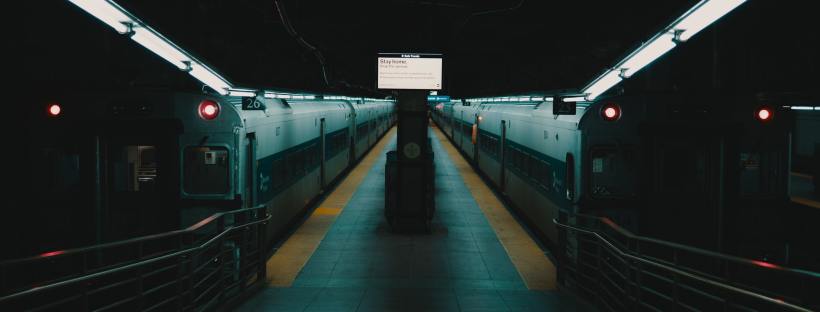
Following Orders

BY BILL WANG

This story received First Place in the Writing – Preclinical section of The Auricle’s 2020 Annual Writing Competition. 

Foreword

I had originally planned to write a different story but with the recent events occurring
around the world and the seeming apathy of all my friends and family I wanted to convey a different message. When learning about Nazi Germany I was always impressed at the ease with which the ordinary citizen can grow to accept and even turn a blind eye to atrocities happening around them. As future doctors, we will have a position that brings us respect and the ability to advocate on important social issues to the community at large. For us to say nothing in times of injustice or strife is to effectively lend our support to injustice through silence. Regardless of your wishes, people will be listening to what you do or don’t say.

“Suddenly it all comes down, all at once. You see what you are, what you have
done, or, more accurately, what you haven’t done (for that was all that was required
of most of us: that we do nothing). You remember those early meetings of your
department in the university when, if one had stood, others would have stood,
perhaps, but no one stood. A small matter, a matter of hiring this man or that, and
you hired this one rather than that. You remember everything now, and your heart
breaks. Too late. You are compromised beyond repair.”

– They Who Thought They Were Free: The Germans 1933-45

Following Orders

The air is stifling in the holding chamber. I can barely breathe, every fibre of my being
twisting and shifting in fear as I listen to the muffled proceedings filtering down from above. Two guards stand at the one exit, waiting silently for their cue to bring me up to the stand, faces impassive and blank. I try to run through my planned defence in my mind again but it is no use, my thoughts are jumbled and the words fall away even as I try to reach for them.

Faintly I hear the rowdy applause emanating slowly down from the chamber. Another death sentence – the snake slowly tightening around my inside seems to move another notch in.

The guards’ motion for me to follow them, falling in step by my side as I slowly make my
way up the stairs.
Along the way I pass the Director of Security being led towards the execution chambers. His face is white and pale, the fury and rage that had underlined all his speeches replaced with abject terror. Good riddance.

That however does not solve my problem. The list of people on stand today so far have only been the worst of the worst, the architects and executioners of the hell-machine that tore our country and much of the world apart. The Asian delegation is out for vengeance and the European and Oceanic delegates have also suffered far too much to contemplate mercy.
Now that I think about it, why am I also being trialled today? I hadn’t done anything on that scale. Surely, they would realise I was just a single insignificant cog – just one doctor out of thousands also recruited to assist in the relocation of people.

A last desperate sweep of my thoughts to see if anything is particularly useful and then I’m pushed into the blinding light shining down on the stand.

Please state your name and occupation.

‘My name is John Pes and I am a doctor.’

Dr Pes, please describe your role to the tribune.

It began in the midst of the Kharsa pandemic…

*

There was a knock at the door at 11pm. I waited a few seconds, uncertain as to whether I
should answer, until the knock came again.

‘Dr Pes we wish to speak to you briefly.’

At the door was a federal agent, half occupied with some message or another on his data-
pad as he acknowledged my presence.

‘Apologies for the late call. As you may have heard last night, the President authorised the creation of an emergency task force for coordinating the continued quarantine efforts of Kharsa infection. We would like you on the team in light of all your infection control research.’

*

‘Of course I accepted. How was I to know the darker motive behind the taskforce?’
I can’t see the individual members of the tribunal through the blinding light, only the
occasional murmur and rustle of papers. My throat scratches against my tongue as I try to coax a slow dry swallow.

Describe what you did as your role in this task force.

*

The supervisor was a jovial fellow from out of state – a direct representative from the CDC, or so he was reported to be. The instructions were simple.

Every day quarantine officers would pick people up from the streets exhibiting signs of
Kharsa and bring them to our processing centres. We were to then make the diagnosis and either send them to the isolation camps for recovery or clear them of their health.
Occasionally we would be required to make a special decision regarding patients. If our
scanner revealed any link to the protests, we should send them to isolation as a
preventative measure because they were at greater risk of contracting Kharsa.

*

Do you know what happened to these so-called ‘special decisions’, Dr Pes?

The question I was fearing.

I reached down for the glass of water and drank, taking the opportunity to close my eyes
away from the dazzling gaze of the lights. I needed to think of something – anything.  What was that one Nazi that got away all the way back in Nuremberg a century ago? Something Albert. What did he say?

I decide to go with a form of honesty.

‘Well, not really…’ I begin. The European delegate interrupts with laughter – ‘Yeah right, just about everyone involved was briefed on the exact nature of these camps once the war was clearly lost.’

Quickly I backpedal. ‘Yes, I guess so if you mean at the end when it was too late for me to do anything.’

‘The reality was I was too focused on my job to ask questions – and for that I recognize I am just as complicit as those who directly ordered the process. I’m sorry for my own failure to find out.’

We have one last question for you. Documents obtained showed that you visited one of
these camps at the start of the war. How can you claim you knew nothing of what was
occurring?

*

The isolation camp loomed in the distance through the train window, a squat grey smudge that stood out amongst the rolling green hills of the countryside.

‘Whatever you do, don’t get off the train. We will bring the people you need to interview
onto the train for you.’ Reiterated the officer.

As the train pulled to a screaming halt just outside the gates, I noted a small line of people by the side of the tracks – small and terrified. I had been briefed on a list of names I would have to send back for further processing due to persistent Kharsa superinfection and the list of names who could go on to the rehabilitation camps.

With a start I realised the first person I was seeing was my former colleague and friend Dr Stantine.

He looks terrible, malnourished and broken in more ways than physical. He was one of the few who spoke up against the quarantine initiative – vanishing after he also supposedly contracted the infection.

‘Look at me in the eye Pes,’ he managed to cough out, ‘How much will it take for you to
make a stand? To protest?’

‘I don’t know what you are talking about,’ my heart racing with fear that they will over hear this conversation. ‘The Kharsa infection has clearly affected your mental state as well.’

‘I know what you are waiting for – for a single explosive moment that will finally ignite the apathetic masses to revolt. Bad news, Pes. There is never one moment, it’s always a series of small insignificant steps. Step C is only a little bit more worse than step B, if you didn’t protest then why would you protest now. And so, they move onto step D.’

*

I don’t know why I am relaying this conversation to the tribunal. Even as the words leave my mouth and I can hear them objectively – I somehow cannot stop the rebellion of my lips and tongue. They have surely signed a death warrant for me.

I guess I have finally made my stand, several years too late. At least I will go as having
denounced the madness that had occurred in the States.


A Little Change

BY RADHIKA CHALIKAVADA

What do we know about change? How do we feel about change?

Imagine sitting at your favourite restaurant and ordering the same thing again and again. We all have our favourites that we excitedly relish a couple of time. But what if we don’t order anything but that, forever? How would we feel? The same can be applied to our lives.

Now more than ever, in self-isolation, the idea of change is very appealing. Something to break up our usual routine. When self-isolation began, there might have been many like me who were secretly glad to have a reason to be home. Hoping to get a “break” from studying and going to uni, and most of all, doing things that we have always wanted to do but never had the time. Now, a few months later, the same idea of wrapping up in a warm fluffy blanket binging Netflix doesn’t seem that appealing. Something that you looked forward to a couple of months ago isn’t something you look forward to anymore.

But thinking about it, I realised I was satisfied. I had moments where I was as exhilarated as I imagined. For example, during my first clinical skills class. Even during my first anatomy class. During my first week of self-isolation, when I binged a series I was hoping to get to for a while. However, this wasn’t a constant occurrence. It didn’t last to my week 15 anatomy class. It didn’t last to my holidays, when I finally had the opportunity for endless entertainment. Why was that?

Monotony. Or put another way, I was too used to it. And we may already know this. That such a turn of events is normal. That somewhere through the track, an exciting thing is not so exciting anymore. So, what does that mean for us?

For me I realised that the moments where I felt that excitement was when there was something new. Something I wasn’t used to. There was a change. Many of us may associate change with bigger and grand ideals. But for me it was simply something that breaks monotony. Little things that change up a routine. I realised giving up my free time or my course wasn’t the answer. Life-altering changes aren’t the answers. Rather it was the little things that mattered. Little things that spice up a normal thing.

Ever since this epiphany, I made several little changes to my usual routine – be it in my studies or my day-to-day life. Some changes were as simple as switching to group study sessions and swapping checking social media the first thing in the morning for an early morning walk to see the sunrise. In a few weeks, this might become a routine and I might not be as motivated for them as I was before. Not because I don’t like them, but because I might be too used to them and it might be time to find something new. As mentioned before, we may already know about this. The idea of little changes may be trivial. However, when noticed and appreciated, they go a long way. And we all need reminders. No matter how treasured something was, we need to recognise that if our present feelings do not match up to what we imagined, it’s not because there was something wrong. It is just because we are somehow attuned to it. A little change is all we need, and it is completely normal and human.

The House

By Anonymous

Discuss with a medical practitioner in your rotation who manages patients with chronic illnesses. Has he/she experienced any change with the National Strategic Framework?

The therapeutic hum of the engine filled the cabin as the car tore down the motor way. I sat in the passenger seat marvelling at how proud and tall the hood ornament stood against the backdrop of the endless black tarmac stretching into the distance. The hovering like sensation the car gave us as it smoothed out the inconsistencies in the road seemed surreal, supernatural even. The psychiatrist sat leaned back in the driver’s seat, calmly staring out over the cowl. His right hand gripped the wood grain steering wheel and barely ever seemed to make any adjustments to the car’s trajectory. There was an eerie serenity to the journey, like he’d done it dozens; if not hundreds; of times before.

There was a question that had been nagging at me since we’d torn out of the community clinic car park a few minutes ago, and I sat in the passenger seat in silence slowly working up the courage to ask it.

“What’s up?” he asked me, not taking his eyes off the road. It was always disconcerting how he managed to sense when I was hesitating to say something.

“Well, I know I’m new to this, but aren’t there a host of teams that usually go out to visit patients at home then report the situation to you back at the hospital? I mean there’s Hospital in the Home and the Crisis Assessment and Treatment Team. Is there a reason that you’re handling this particular call out?” I sat there doubting the validity of the question for a moment before he offered an answer.

“Some cases require more… finesse.” With that we turned off the motorway and started to meander down the side streets. The houses that littered the area sat sadly in various states of disrepair. As he navigated the derelict neighbourhoods, he took the opportunity to explain further, “Patient name is Melissa Jenkins, 58 years old, chronic schizophrenia. Background of alcohol and methamphetamine abuse. Discharged from an inpatient unit a month ago after an almost a yearlong stay. Has been unresponsive to our attempts to make contact. We’ve got questions about her compliance, whether she’s adjusting to community life again. She’s been known to our network for a long time. From what I can tell it’s a vicious cycle of poverty, abuse and mental illness.” He sighed. “The underlying issues are difficult to address from our position, but the house call, it goes a long way to help us understand of what’s going on.”

Eventually we pulled into the driveway of quite a dejected looking house. The timber panelling on the façade seemed veritably allergic to the remnants of paint that clung to it, having shed all but a flake or two of the dull white hue. We left the burgundy limousine in the driveway and walked up to the patio, which seemed to hold itself up out of sheer will and little else, the supporting timber pillars were bowed and warped in all directions.

The psychiatrist adjusted his cuffs such that the prescribed inch of shirt was exposed under his jacket, before raising a fist and vigorously rapping on the door. After a moment the door creaked open just a few degrees and I caught a glimpse of a figure lurking in the shadowy interior of the house. “Melissa?” the psychiatrist questioned, “I work with the doctors that treated you in the hospital, I’ve come to see how you’re doing.”

I could sense a reluctance on the other side of the door before it swung open and revealed a small, feeble woman standing at threshold of the house. She seemed to disappear underneath the expansive brown shawl draped over her slumping shoulders. She looked up at the psychiatrist but couldn’t seem to say anything coherent. Utterances of gibberish escaped her thin lips every now and then. She quickly lost interest in us and headed back into the house.

We followed her in and were greeted by a horrid stench. My eyes struggled to adjust to the darkness of the house, but I soon was able to identify the complete disarray that had engulfed the place. A massacre of litter carpeted the floor and decrepit pieces of furniture lay about like the corpses in a battlefield. It looked like it had been abandoned for decades. Dereliction had started to swallow it up whole. The woman seemed to wonder around the house aimlessly, her eyes darting from corner to corner, the murmurs never ceasing. She seemed completely unaware of our presence.

“Melissa,” the psychiatrist addressed her, but she seemed unable to recognise her name. He turned away from her and started investigating a box of medication that sat on the mantel piece. He opened it and emptied the contents out. Tray after tray of sealed, untouched medication spilled out. He looked at me, “we’ve gotta take her in, this doesn’t bode well for her.”

In her listlessness she didn’t put up much resistance to our assistance as we helped her out of the delipidated house and into the back seat of the big Ford. When we had resumed our seats in the front he turned the key and the car rumbled to life. We reversed out of the driveway and turned back the way we came.

Melissa continued to murmur to herself in the back seat. The psychiatrist handed me his phone, “Call the doctor’s office on the psych ward.” He instructed me, “tell ‘em we need to make room for a frequent flyer.”