Sunsets

By Caroline Younan

We may be in different places, and our individual 24 hours may look different, but we all have something in common. Every single one of us. Wherever we are, the sun will rise and the sun will set.

We all know the recipe to good health because we’ve heard it a million times:

  • A generous serving of good sleep
  • A splash of balanced diet
  • Sprinklings of exercise
  • And a dash of social connectedness is vital

What’s missing from the list? Yes, that’s right, I bet Craig Hassed’s voice popped up in your head with the cursed ‘M’ word, ‘mindfulness’. Whilst being in isolation, ‘tricks for mental well-being’ were constantly brought up and I, for one, have tried becoming the most ‘zen’ I can be with all this extra time. It became overwhelming though, trying to juggle all of these aspects at once.

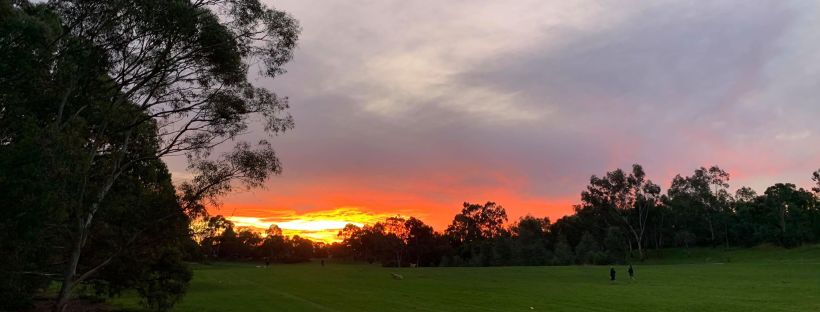
Irrespective of how my day might’ve played out or how I was feeling, however, my constant was that I knew that I loved watching the sunset. There’s something about watching the transition between the light of day gradually turning into a pitch-black sky. It is grounding. It puts things into perspective for me and I realise how small we really are. Our worries can get the better of us sometimes and it can be hard to get away from our own thoughts. When I see the sky painted in different colours, it helps me breathe. I feel present. I feel calm. I feel grateful. Even when it’s been cloudy and the sky is grey you can observe where the sun is setting somewhere else, with that part of the sky tinted gold. This habit of watching the sunset daily allows me to catch those breathtaking views of pink, gold or, orange skies we see from time to time.

Where and how I watch it differs from day-to-day. Sometimes, I stand in my front yard or at the park nearby and sometimes I am walking along a trail. Regardless, I find that listening to songs complements the view and helps me calm down and focus on what’s in front of me. Lately, I’ve been listening to ‘Mystery of love’ by Sufjan Stevens but you might find it easier not to listen to anything and instead listen to nature’s sounds. Whatever you decide to do, this is a great way of informally practising mindfulness.

If listening to mindfulness podcasts seems like a hassle and like a chore that doesn’t fit into your day, I prompt you to watch the sunset. You’ll be amazed at how rewarding it can be to and how easy it is. It’s a great way to get a fresh breath of air if you find yourself spending a lot of time indoors.

Sometimes, you will be busy doing something else and that is okay too. There’s always the night sky to look at. I use an app called ‘SkyView Lite’ to identify planets and constellations that can be seen on a clear night. Sometimes, clouds will obscure the view, but don’t let this deter you. It’s more about the act of slowing down and looking up; taking a break from our busy day and busy minds. You could do this in the middle of the day as well and appreciate the sky as it is at that time. What does it look like?

It is humbling to realise that we all live under the ‘same roof’, despite our varied lives. It can be hard to implement the overwhelming advice that’s out there about how to live a ‘healthier’ life, but I prompt you to take these simple instructions. With our lives having moved online for the past few months, take your eyes off whatever screen you’ve been behind and go outside. Look up. Take in the scene.

Med Student Syndrome

By Mika Sood

I remember sitting in a lecture theatre learning about types of strokes – how it’s possible to have a brain aneurysm just sitting in your brain, how slowly the artery wall can weaken to the point that it can burst randomly and unprovoked and how it could, in theory, happen to anyone – including me. I don’t know why, but after learning more about it that day, I started to relate the symptoms to myself: “Do I have neck stiffness? Am I nauseous? I probably have a headache”. I could talk myself into thinking I had a brain aneurysm, and it wasn’t far-fetched at all.

I think we can all say that at some point so far in our medical education, all of the signs and symptoms begin to sound far too familiar as soon as we have studied a certain condition. This leads to a jump down the rabbit hole with a bit of help from Dr Google, and we self-diagnose ourselves with a condition or disease that had never crossed our minds before.

Medical Student Syndrome is defined as a condition frequently reported in medical students where they think they have the symptoms of a disease that they are studying. Don’t worry if this has happened to you – it’s significantly common and there have even been studies and research done about it. It has many names including “Third Year Syndrome” or “Disease of the Week”, but in essence, it’s a temporary kind of hypochondria based on being extremely aware of psychological and physiological dysfunctions and relating those signs and symptoms to oneself.

The wider community is also not immune to the effects of Dr Google, and in the age of this digital hypochondria, it’s important for us, as future doctors, to realise these effects for ourselves and the general population. It is true that you can find solid, evidence-based information online, but most Google research will not be directing you to the therapeutic guidelines. The easy access to health information is definitely convenient, and it is much less embarrassing than going in for a consultation to ask if it’s possible to have cancer and a brain aneurysm, but it’s also more than likely to be an incorrect diagnosis that can increase anxiety levels unnecessarily (1).

So, I guess this is a big red stop sign to get you to halt your daily activities and call out the irrational thoughts in your head. As medical students, it’s hard not to worry and stress about basically everything, but here is a little friendly reminder that you probably don’t have a life-threatening brain aneurysm or a rare deadly form of leukemia.

Take home message: Close all your google tabs. Stop self-diagnosing. I promise you don’t have the disease you think you do.

P.S. On a serious note, if you are really worried about something, definitely go see your doctor.


(1) MedicalDirector. Dr Google Survey 2019 [Internet]. MedicalDirector; 2019 [cited 2020]. 24 p. No: WHI00047Med – AUSV1. Available from: https://www.medicaldirector.com/resources/doctor-google


The Car

Discuss the quality of the teamwork in your current, or recent clinical placement with one of the clinicians. How do they rate the teamwork? What is their, and your, perception of the main factors that are influencing the adequacy of teamwork in this unit?

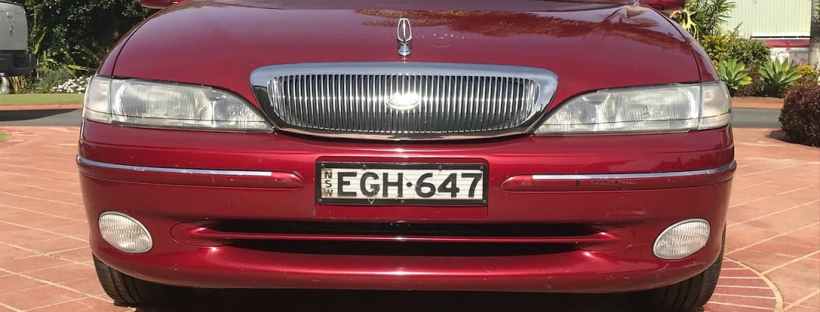
The car, by the owner’s own admission, wasn’t reliable at the best of times. It sat in the hospital carpark, a great marooned land yacht of a thing, with its hood propped up, offering a glimpse of the ancient looking mechanics lurking within. Its metallic burgundy paint gleamed in the sunlight, reflecting every cloud in the sky in crisp and deep detail. I looked on in confusion as the psychiatrist fussed about in the engine bay, twisting and tightening and adjusting all sorts of odds and ends. His crisply pressed white business shirt had its sleeves rolled up just above the elbows, as to not get his cufflinks snagged on anything.

It was a 1996 Ford LTD he’d told me, one of very few left. He’d gone on to explain the origin and particulars of the car, using jargon that seemed even more mysterious than the medical jargon he used on the ward. Something about cubic inches and gears and differentials. I’d been sure to nod along during the exposition.

“Right,” he said abruptly, bringing me out of a daydream, “this is where you come in. You have to bring your car up nice and close, close enough for the cables to reach across from your car’s battery to mine.” He walked around to the trunk of the old Ford and produced a set of red and black jumper cables.

“Um, okay,” I responded with an air of confusion.

“Okay, let me explain it one more time,” he said, an edge of exasperation creeping into his voice, “my car’s battery is dead, I’m not certain why, it’s pretty new, but I think something faulty is in the electrical system is sapping it. The only way I can get it to start, so we can all call it a day and go home, is if you help me jump start it. To do that, all we need to do is temporarily wire up your car’s battery to mine. That’s it. Comprende?”

The Spanish he threw in for good measure jolted me into action, and with a sigh I began to move towards my car. I made a quick job of parking it nose to nose with the antique limousine, and propped the hood up to initiate the procedure. At the doctor’s instruction I left my car’s motor running, and it quietly hummed away as he started making the necessary connections. “You’re paying attention to how its done?” he asked as he worked.

“I’m not sure this is in the fourth year logbook.” The length of the day and abnormality of the task at hand lent a frustrated sharpness to my response, but the psychiatrist just chuckled.

“This is more important than almost anything in that logbook, one day you’ll see.” He stopped what he was doing and turned to me. “Look, this is an unconventional form of aid you’re being asked to offer here, but on this team, you’ll see that unorthodox help is sometimes necessary.”

“Is that so?” I was intrigued.

“Of course, I mean we deal with the most confronting, most demanding, most mentally unfit patients with the lowest absolute treatment success rate of any field. We’re under constant stress, and if we’re not willing to be there for each other in moments of trouble, we’ll be admitted as in patients ourselves,” he explained, “every member on that team has something that I don’t have, and I need to collaborate everyday as a result. Whether it’s the social worker’s ability to secure housing for a patient, a reg that can talk a patient into taking their medication, or a medical student that possesses a car battery that can hold a charge, I’m always relying on the cooperation of my team.”

He turned back to the engine bay of his car as he continued to explain, “we’re a team. Lone wolves don’t last too long in this game.” He added a final adjustment to the cables. Happy with how everything was looking, he moved to the driver seat of the LTD, and turned the key. After a few moments of the starter motor ticking away and the engine labouring to turn over, the car roared to life. After a few moments of the V8’s proud roar reverberating through the carpark, it settled into a smooth purr. The psychiatrist removed the cables from the cars and proceeded to drop both of their bonnets.

He produced his fountain pen from his pocket, “in the spirit of such teamwork, I’ll tell you what, I can sign your logbook for spectating ECT. I mean, this was basically Electroconvulsive Therapy, just on my car rather than a patient.” After foraging around in my bag, I handed him my logbook, and he scratched his signature down. He returned the book and moved back to his car. “Adios” he said before shutting the driver’s door.

I looked on as the gleaming red limousine slowly rumbled out of the parking lot and turned onto the main road outside the hospital, and waited for the distinctive vintage drone to recede into the distance.