
An open letter to Greg Hunt MP; Tobacco Tax is a smoking gun

By Grace Scolyer

Dear Greg Hunt MP,

Stop taking money from my cousin.

When I think of the people who should be paying the most tax proportional to their income, I think of the big earners, with their multiple properties and multiple cars, their children in private schools, whose assistants make reservations at fancy restaurants for them. But I’m not writing to you about tax cuts for large and small businesses and the adjustments made to tax brackets. I’m writing to you about my cousin.

My cousin Anthony is a gorgeous thirty-three-year-old man who loves the NBA, magic cards, playing guitar, and painting. In high school he was social, popular, loved acting and playing sports, and was a prefect. Since the age of eighteen though, he has been battling severe schizophrenia.

Anthony is unable to support himself financially. He has struggled to keep a job. He struggles to make his government income last the fortnight. It is through the support of his family that he is able to survive, and often, survive is all he can do.

Survive, that is, and smoke.

Anthony smokes a pack a day, and has done for many years. When he smokes, he is focused, mindful, yet between puffs, he is lost in his internal whirlwind of chaotic thoughts and voices. He takes another puff; he is back, and the cycle continues. It calms him; he remembers to breathe.

My family often refer to smoking as a part of his treatment. As a medical student myself, who is fully aware of the risks associated with smoking, it seems almost paradoxical to call it therapeutic, but it is hard to deny. His medication changes, as do his moods, as do the volume and rhythm of the voices that control him. But this never changes: he will always find himself on his balcony holding a cigarette to his lips.

He has tried to stop countless times, because he cannot afford a pack a day. He spends half his pension on tobacco. But there is no hope in him stopping, not in the foreseeable future. It is undeniable though that the biggest impact smoking has on his life, aside from the positives, is financial.

Mr Hunt, this is not a health promotion issue. I care about rates of lung, throat, mouth and bladder cancers. I care about COPD and asthma and heart disease. But I also don’t think this tactic is working. If it were, with the taxation of cigarettes rising 12.5% every year, we would not be seeing the first increase in tobacco use in decades. If this were an effective health promotion measure, Australia would not have the smoking rates it does. If this were an effective health promotion approach, those facing financial hardship would have significantly lower rates of smoking than the rest of the population.

This is a financial issue. My question is how the government can justify benefiting from the most vulnerable members of our society. Because that is who is impacted by tobacco tax, and it benefits no one – except you. With tobacco tax rising at the rate it is, the financially disadvantaged are taxed more heavily, proportional to their income, than the richest people in the country. And that might sit alright with you, Mr Hunt, but I can see the impact it is having on people, and it is not alright with me.

I would like my cousin to stop smoking Mr Hunt. I would like us to find a way to make that happen together. In the meantime, I would like his life to be just a little bit easier. And I can think of one easy way to make that happen.

Kind regards,

Grace Scolyer

Bingo, you’re a medical student!

By Fraser Tankel

The hospital grind getting you down? Have you snuck off for an extended toilet break and already browsed all the dank memes? Are you wondering what life will be like once you’ve finished the VIA? Introducing….

Medical Bingo for Bored Students (MBBS)

Consultant unaware of student’s existence

“Hi, my name’s ___ and I’m one of the med students…” Misses easy cannula Gets kicked out of room because there’s ‘too many people’ Orders 10 coffees on the reg’s BOQ Specialist card

Turns up to rounds incredibly hungover

Follows reg to the toilet Friend/family asks for medical advice Wears RM Williams boots

Can’t find patient’s chart or file

“Uh, I have a tute I need to go to…”

“So, are you going to specialise, or just be a GP?”

Free

Grand Rounds

Space

Lunch

Obs not actually stable

Gets stuck talking to patient for >1 hour

Reg borrows pen and never returns it

“Can you sign my log book?” Ward round lasts >6 hours

No swipe access to important area of hospital

Actually asks about patient’s concerns

“Sorry, I’m just the student, so I’m not allowed to do that…”

Best hand hygiene despite least patient contact

Follows multiple dank medical meme pages Requires antibiotics for conventionitis

Contaminates sterile field

A letter to the AMA: Mandatory sentencing

By Seamus Horan

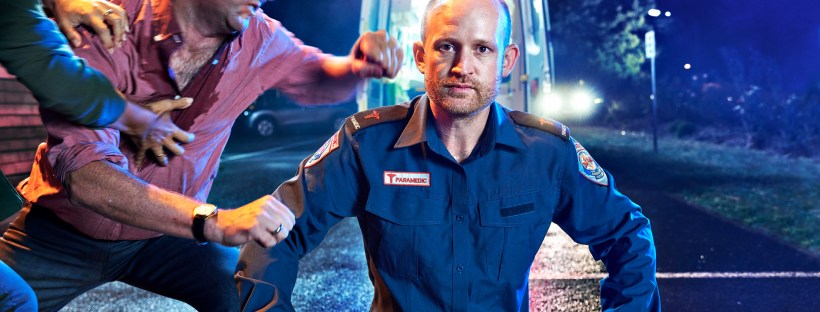
In 2014 the Victorian Liberal government instituted six-month mandatory minimum jail sentences for people who assault emergency service workers, except where there are “special reasons” not to impose it. In December last year two women were found guilty in the Magistrates Court of assaulting a paramedic and, as per the mandatory laws, were sentenced to prison. On appeal this month, the County Court overturned this decision on the basis of the “special reasons” exemption.  Those reasons related to difficult backgrounds, mental health and dependent children. This prompted an outcry from Ambulance Victoria paramedics, who have called for the mandatory minimum sentencing laws to be tightened, with “It’s not OK to assault paramedics” painted onto ambulances across the state. In response, the Victorian Premier Daniel Andrews has promised to tighten mandatory sentencing laws.

In a newsletter from 17 May 2018, the AMA conveyed their “profound disappointment” in the removed jail sentence for the two women, and called upon the government to send a “strong message” that “such acts [should] be met with the mandated penalty”. In response, Seamus Horan wrote the following letter exploring the effect of mandatory sentencing.

I refer to your email newsletter from 17 May 2018 regarding penalties for attacking healthcare workers, specifically discussing the recent assaults against paramedics. I was surprised to read that the AMA is supportive of mandatory sentencing.

Healthcare workers have a right to be safe at work, and often this right is not met. Tragedies in the last year alone have shown us the devastation that attacks on healthcare workers can have. As the peak body representing medical practitioners and students in Australia, the AMA has a responsibility to advocate for change that will make us safer. Advocating for mandatory sentencing does not achieve this.

The AMA supports evidence-based medicine, however it appears this outlook does not extend to the legal system. The evidence indicates that mandatory sentencing fails to produce the desired result of deterring crime, and comes at high social and economic costs. The Law Council of Australia found that mandatory sentencing results in unjust sentences where the punishment does not fit the crime, and that by their very design they disproportionately impact particular groups within society. These groups include Indigenous peoples, juveniles, people with mental illnesses and cognitive impairment, and those who are impoverished. Indeed, in 2000 the United Nations condemned mandatory imprisonment legislation in Western Australia and the Northern Territory for its disproportionate effect on Indigenous Australians, acknowledging the negative health consequences, as well as the social and legal impacts.

If we were to compare the legal system to the medical system for a moment, imagine the medical equivalent of mandatory sentencing. Mandatory clinical guidelines would be unthinkable in medicine. There would be an outcry if they were imposed, particularly if they were imposed by politicians spurred by popular demand. Clinicians would rightly say that the specific circumstances of individual patients should influence which treatment is recommended. This is the job of doctors – if we follow mandatory clinical guidelines, what is the point of having doctors?

Mandatory sentences are unjust because by their design they similarly ignore the circumstances of individuals and lead to unjust results. If we have mandatory sentences, what is the point of judges? Why allow discretionary judgement in any profession? By weakening public confidence in our justice system in this way, we only weaken ourselves.

For further detail of the substantial evidence that mandatory sentencing leads to unjust outcomes and fails to deter crime, I refer you to the article below.

In the era of Fake News and political scepticism, our institutions are under intense pressure. The AMA has the potential to play a moderating role, to champion evidence-based policy and confront populist politics. By supporting mandatory sentencing, the AMA has done the opposite.

Regards,
Seamus Horan

Articles:

Sentencing Matters: Mandatory Sentencing, 2008, Sentencing Advisory Council, Victoria
AMA Media Release


Featured image from WorkSafe Victoria