
Getting Outside

By Ash Spittle

By now, I’m sure you’ve all heard of some of the most important positive emotions that contribute to a sense of wellbeing: gratitude, joy, and love, to name a few. But there’s one that is not often discussed, and that is awe. Awe is the feeling of goodness on a grand scale, of feeling overwhelmed by greatness, and often happens when we are looking at something magnificent like a landscape of huge mountains, or a wide-open ocean stretching as far as the eye can see. I’ve always felt happiest down by the beach or amongst the mountains and I’ve noticed that the first glimpse of ocean as I’m driving down to the beach, or the first time I see the mountain peaks on the drive to the snow, is met with a feeling of relief, relaxation, and happiness. Only recently have I learned that this sensation is a well-recognised phenomenon. Awe.

I’ve been lucky enough to get more than my fair share of awe in the past six months. In December I did the Annapurna circuit trek in Nepal with one of my friends. At the end of our trip, as we reflected on the two weeks of walking, we both agreed on the two best days of the walk – the days when we had the most incredible view of the Himalayas. On each of these days, as we reached the top of the hill, an expanse of enormous 8000-metre-high peaks simply stopped us in our tracks. We just stood there and admired them, feeling overwhelmed with awe, and couldn’t stop smiling for the rest of the day (despite our blisters!). Today it’s Easter Monday, and just yesterday I was walking over the Tongariro pass in New Zealand: home to some spectacular red volcanos and sparkling emerald lakes. I feel so lucky and happy to have been able to see that amazing landscape and appreciate all that the outdoors has to offer.

Of course, we can’t have these awe-inspiring moments every day. Even if some of us end up working up in the mountains or down by the beach, in a place that makes us stop and stare, it’s certainly not going to be the majority of us, and it is most definitely will not be the majority of medical school. Right now, our days consist of being inside our cars, public transport, lecture theatres, and hospital wards, often with not a lot of time for anything else. So how can we bring a little bit of awe into our everyday lives?

I firmly believe that being outside in the open air is like being in the mountains or at the beach on a mini scale. I know that the days when I take a moment to appreciate my surroundings are the days I feel happiest in all aspects of my life. So here a few of my ideas for how you can get outside every day, for no other reason than to put a smile on your face.

If you’re a morning person:

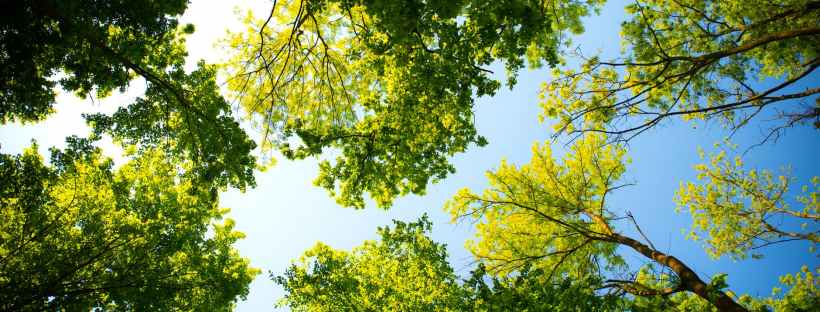
If you don’t already, try setting your alarm 10 or 15 minutes earlier, get up and go for a quick walk around your block. Look up at the trees. The leaves are changing colour at the moment and, as cheesy as it sounds, it really is beautiful. If you don’t like walking, find a spot to sit outside and stretch or wake up slowly.

On your way to uni:

Do you catch public transport? Take a moment when you’re walking to and from the train to look up at the sky. Most of you probably have to get going early, and Melbourne has some pretty impressive sunrises to offer. Do you drive your car? Park your car just a bit further away (like a million people before me have suggested) and use the time it takes to walk to relax and enjoy the cool autumn breeze.

Coffee time or lunch time:

If you brought your own lunch, take it outside to eat in the sunshine. If it’s raining, find somewhere under shelter and enjoy the smell of the rain. If you’re at the hospital and have a bit of time, walk to the café down the street to get your coffee, or go around the outside of the building to get to the good coffee place instead of through the over pass (yes MMC, I’m talking to you).

Catching up with friends:

Got a standing brunch date at your favourite café? Try switching it up for a coffee to go and a walk around your local park instead. You can appreciate the outdoors together and save some money at the same time!

Have you got a whole free weekend?!

Get outside and find yourself some awe! We’ve got the beaches from St Kilda down to the Peninsula, we’ve got the Dandenong Ranges just an easy walk from the Belgrave train line, there’s the Yarra Trail (my personal favourite) and all the other bike paths along rivers in Melbourne, and even something as simple as your local duck pond. If you’re really feeling adventurous then head down to the Great Ocean Road or up to the Victorian High Plains and walk, sit, and enjoy.
Continue reading

Sunshine on a Cloudy Day

By Alexander Bell

“It’s like there’s a cloud that comes over you, and it just won’t leave.”

That’s the assessment my girlfriend once gave me of the periods where I’ve struggled with my mental health. From my perspective that analogy could not be more apt.

Times where I struggle with negative thoughts and emotions are like cloudy days. Of course, much like the overcast sky, these days don’t always look the same. On some days, there’s a smattering of light clouds: short periods of sadness or worry that quickly transform into blissful sunshine. Other days find only the occasional ray of short-lived sunshine poking through a heavily-veiled sky. Sometimes a morning shower can give way to a clear sky of blue, while on other occasions the bright sun of the morning can hide a lurking dreary afternoon. Very occasionally, the day is a storm: a thick band of dark, unrelenting grey that stretches as far as the eye can see. Sometimes, a storm will mark an aberration from an otherwise sunny week. Other times, I spend weeks wondering if the sky will ever be clear again.

Continue reading

Putting the “Me” back in “Medicine”

By Jessica Stark

Continuous learning, long hours, difficulty with work-life balance. At 18, I said I understood these were the challenges faced by doctors, but at 18, fresh out of school, I didn’t really comprehend what I was agreeing to. I thought it wasn’t that big of an issue, I thought the life of a doctor could only be fantastic. How naive I was. Now on the home stretch of my medical degree, I’m finally reflecting on what I signed up for.

Medicine wasn’t something I fell into. I worked hard at it, and had to make some tough decisions to get where I am today. My family and I sacrificed a lot, but it was all I wanted, and I couldn’t imagine myself doing anything else. I couldn’t contain my excitement when I got my offer to Monash. Though moving to a new city where I didn’t know a single person was certainly daunting, I wanted this career so much and moving away was just a sacrifice I had to make.

It was difficult; far more difficult that I thought it would be. I missed my friends and family back home enormously, and there were periods of time where I cried every day. The endless lectures, tutorials and histology pracs were often a drag, and I was in major struggle town with anatomy, but I knew it would get better once I entered the hospital. And it did. I relished being part of the team, speaking to the patients and scrubbing into theatre. It was just as I thought it would be, and after finally having contact with patients, I knew this career was for me.

As the years went on, I began to realise the competitiveness of medicine and that it was a bit of a cutthroat world getting into a specialty. It seems like you need at least a master’s degree and several publications, plus experience, to get onto several training programs. How is this meant to possible when you’re also working extensive hours as a junior doctor? How can you work more than full time, study part time, research part time and have a life outside of this? The answer – make sacrifices and work yourself into the ground. At least that’s how it seems to me when I look around at a lot of the junior doctors. I look at my friends who didn’t study medicine with their great work-life balance and I can’t help but be jealous. They don’t have to put their lives on hold for years, and they have far more freedom and time to do the things they want.

Whilst I was told a career in medicine meant long-term study and long hours, I didn’t understand that what they really meant was I was partly screwing over my own life to save other peoples. It’s not that I dislike the career; being in the hospital, helping the patients, coming home in the evening and knowing the difference you’ve made for even just one person is truly special and very rewarding. I feel extremely grateful for the opportunity to help people through difficult times in their life, but I do feel sad that it affects my life and my relationships in so many ways. I feel sad for all the sacrifices I’ve made, and all the ones I’m yet to make.

Only a few weeks into my first rotation of final year I experienced burnout. It seemed odd that after three months of holidays I could feel this way, but the prospect of job applications, getting references and paving a pathway towards a specialty training program, as well as the difficult transition back into clinical medicine after a year in a lab, was just too much. I was recently told by someone close to me that I’m no longer the same person I used to be, that my degree has changed me and the happy bubbly person I once was had disappeared. When and how did this happen? A conversation with my doctor made me realise that I hadn’t really stopped in a very long time. I’ve been studying hard since the beginning of high school and continued straight into med school. I’ve always been busy, juggling a job, committee roles, volunteer work and the responsibilities of living out of home. I have always placed immense pressure on myself, and now I’d reached a point where I couldn’t do it anymore. My doctor asked me to take a break and do something for myself, something I enjoyed doing, something not related to med. In all honesty, I didn’t know what that was, despite all the advice to keep up hobbies and have a life outside of medicine, I hadn’t, and over the course of my degree I’d lost myself along the way.

After two weeks of lying on the beach, catching up with old friends, going to galleries and plays, seeing new places in a city I’ve lived in for years – after two weeks of starting to live again, I don’t want to go back to “not living”. Whether that means actually taking time for myself regularly and not getting swallowed by the med monster again, or leaving the med bubble entirely, I’m not sure. It’s going to take some more time for me to figure out what the future holds, but just because I graduate as a doctor, doesn’t mean I’m bound to work as one forever. It won’t mean I’ve wasted my degree, or wasted my time, if I choose to pursue something else. I’ll have had some great experiences and learnt so much. My life is important too, and maybe I need to be a selfish and do what’s best for me.