Getting Outside

By Ash Spittle

By now, I’m sure you’ve all heard of some of the most important positive emotions that contribute to a sense of wellbeing: gratitude, joy, and love, to name a few. But there’s one that is not often discussed, and that is awe. Awe is the feeling of goodness on a grand scale, of feeling overwhelmed by greatness, and often happens when we are looking at something magnificent like a landscape of huge mountains, or a wide-open ocean stretching as far as the eye can see. I’ve always felt happiest down by the beach or amongst the mountains and I’ve noticed that the first glimpse of ocean as I’m driving down to the beach, or the first time I see the mountain peaks on the drive to the snow, is met with a feeling of relief, relaxation, and happiness. Only recently have I learned that this sensation is a well-recognised phenomenon. Awe.

I’ve been lucky enough to get more than my fair share of awe in the past six months. In December I did the Annapurna circuit trek in Nepal with one of my friends. At the end of our trip, as we reflected on the two weeks of walking, we both agreed on the two best days of the walk – the days when we had the most incredible view of the Himalayas. On each of these days, as we reached the top of the hill, an expanse of enormous 8000-metre-high peaks simply stopped us in our tracks. We just stood there and admired them, feeling overwhelmed with awe, and couldn’t stop smiling for the rest of the day (despite our blisters!). Today it’s Easter Monday, and just yesterday I was walking over the Tongariro pass in New Zealand: home to some spectacular red volcanos and sparkling emerald lakes. I feel so lucky and happy to have been able to see that amazing landscape and appreciate all that the outdoors has to offer.

Of course, we can’t have these awe-inspiring moments every day. Even if some of us end up working up in the mountains or down by the beach, in a place that makes us stop and stare, it’s certainly not going to be the majority of us, and it is most definitely will not be the majority of medical school. Right now, our days consist of being inside our cars, public transport, lecture theatres, and hospital wards, often with not a lot of time for anything else. So how can we bring a little bit of awe into our everyday lives?

I firmly believe that being outside in the open air is like being in the mountains or at the beach on a mini scale. I know that the days when I take a moment to appreciate my surroundings are the days I feel happiest in all aspects of my life. So here a few of my ideas for how you can get outside every day, for no other reason than to put a smile on your face.

If you’re a morning person:

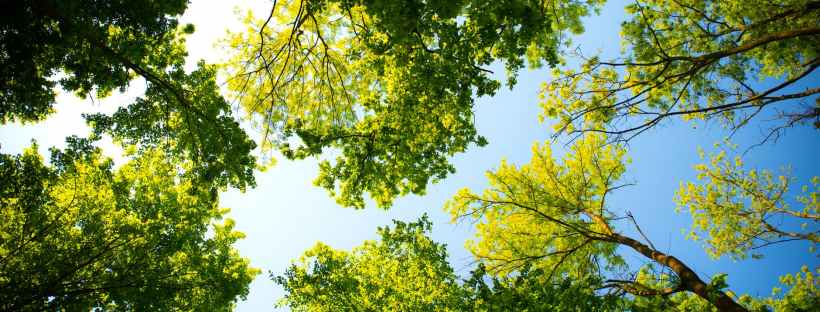
If you don’t already, try setting your alarm 10 or 15 minutes earlier, get up and go for a quick walk around your block. Look up at the trees. The leaves are changing colour at the moment and, as cheesy as it sounds, it really is beautiful. If you don’t like walking, find a spot to sit outside and stretch or wake up slowly.

On your way to uni:

Do you catch public transport? Take a moment when you’re walking to and from the train to look up at the sky. Most of you probably have to get going early, and Melbourne has some pretty impressive sunrises to offer. Do you drive your car? Park your car just a bit further away (like a million people before me have suggested) and use the time it takes to walk to relax and enjoy the cool autumn breeze.

Coffee time or lunch time:

If you brought your own lunch, take it outside to eat in the sunshine. If it’s raining, find somewhere under shelter and enjoy the smell of the rain. If you’re at the hospital and have a bit of time, walk to the café down the street to get your coffee, or go around the outside of the building to get to the good coffee place instead of through the over pass (yes MMC, I’m talking to you).

Catching up with friends:

Got a standing brunch date at your favourite café? Try switching it up for a coffee to go and a walk around your local park instead. You can appreciate the outdoors together and save some money at the same time!

Have you got a whole free weekend?!

Get outside and find yourself some awe! We’ve got the beaches from St Kilda down to the Peninsula, we’ve got the Dandenong Ranges just an easy walk from the Belgrave train line, there’s the Yarra Trail (my personal favourite) and all the other bike paths along rivers in Melbourne, and even something as simple as your local duck pond. If you’re really feeling adventurous then head down to the Great Ocean Road or up to the Victorian High Plains and walk, sit, and enjoy.
Continue reading
Self-care is a long term relationship with yourself

By Tanya Tang

Self-care has become trendy lately. #selfcare has nearly 5 million posts on Instagram, and more on Twitter. But when you log into Instagram and hit up the search bar, the first few posts under #selfcare are of girls with their perfect beach tan glowing under the sun, captioned with something along the lines of ‘how to stay soft all day #selfcare #selflove’ and a long list of beauty products. Further down the page, there’s a post extolling the greatness of a morning bath for a busy mum, complete with a picture of a rose filled spa bath.

Somewhere along the line, something has gone horribly wrong.

When we think of self-care, there’s a trend towards self-indulgence. Self-care has become synonymous with ‘treat yourself’—a tub of ice cream for the days that are too stressful, a shopping splurge or ‘retail therapy’ because you deserve it. The face of self-care has become cold-pressed juices, yoga and motivational quotes. Even when we bring this back to the basics that we as medical students have understood and experienced, mindfulness has also been commercialised. The old Buddhist meditative way of living has evolved into McMindfulness that slots into busy consumer lives just as easily as a one-tap-pizza-to-door delivery service. Often it isn’t taught right. For some, myself included, the sort of meditation that is taught to us in first year only serves to heighten our anxiety and, at its worst, can trigger an episode of depersonalisation.

What, then, is self-care?

Self-care is anything that is initiated by a person to maintain their physical, mental and emotional health. The key word here is maintenance. The self-indulgent nature of the modern consumer based self-care so prevalent nowadays is not sustainable. We take photos of our salad and tag it #selfcare but behind the uploads are the bags of potato chips and a few too many batches of brownies that were stress-baked. We buy packs of face masks and beauty products for a night to ourselves but end up peeling off the black charcoal mask to reveal a festering layer of guilt for the wasteful spending of our savings.

And if you see a trend of self-care targeting wealthy females, that’s not entirely a coincidence.

Self-care is neither kind, nor indulgent. It is a chore to be practiced every day, every hour and every second. More than mindfulness, meditation and becoming aware of the present, it is a deep introspection of yourself. It is facing yourself in the mirror and criticising yourself so that you can be a better version of yourself.

It is, in fact, a dedication to discipline.

It takes time to cultivate a truly balanced mental state of mind, and it definitely will not bring a sense of instant gratification. That mental health day we take when we are burnt out serves to only bring us a sense of instant gratification that lasts maybe only a day or two. To draw a medical comparison, it is the band-aid fix to a chronic ulcer. By practicing good self-care and self-control every day, we reduce the chances of burning out. Perhaps we might even prevent needing a mental health day.

How to care for yourself

This is perhaps the trickiest part. Despite knowing exactly what is good self-care, how do we in fact SNAP ourselves? With the trend to become healthier mentally and physically, the motivation to get started is right there; and yet that gym membership is still unused despite saying that you will go to the gym every day since Craig Hassed taught you exercise is the essence of health.

It isn’t a lack of motivation. It’s hardly the lack of motivation with all the attention being focused on student and doctor wellbeing in the medical area, and also on self-care in the wider society (albeit in a self-indulgent way).

It may not even be an issue with laziness.

It’s a problem with converting words into action.

‘Taking care of yourself’ is a huge, intangible concept with so many branches and offshoots, it may as well be one of those mirror labyrinths. There’s the diet, the exercise, the work-life balance, the social aspect and the hobbies amidst all our study. By taking small steps, we can gradually incorporate every aspect of what good self-care looks like, and nurture a balanced physical, mental and emotional wellbeing. We can plan it all down to the details, we can allocate time and money, we can scout out which gym membership is cheaper and we can educate ourselves on the healthiest recipes and procrastinate and procrastinate, but in the end, we have to own up to the fact that motivation was never the culprit in the first place.

In the end, you just have to take a deep breath and commit to yourself.


Featured image from Yoga Journal

The Adventures of Pen

By Rav Gaddam

There are many things that bind the medical student community together; our love of stealing food, the ability to still be bamboozled by an ECG, and of course, our innate skill to lose pens at a rate that Ebola has got nothing on.

But have you ever truly wondered what happens to a pen? Where does it go? What adventures does it have? Ever wonder about the people and things it sees?

Well, if you’re reading this article, you can guess that I have.

My pen’s journey began last year, when I lent it to my consultant who snapped their fingers at me and gestured to my pen as they were on the phone. “Do you also have some paper?” I was also asked, while begrudgingly handing over my favourite black pen.

I was unfortunately called away by a registrar, lured away with the promise of being able to cannulate the next patient. As you can expect, I never did get that pen back, and I assumed it had been lost in the depths of the pen blackhole that is a hospital.

At the same time though, I also imagined that my pen saw many exciting things in its life. It would likely have been used to draw up a drug chart to save a patient from a DVT, or sign path forms for a renal patient on dialysis. It could have been used to write down obs on a glove in ED, or provided comfort to that paeds patient who had left their mark on the hospital (likely on the walls, possibly on the bed covers). It could have also vacationed in world of hospital administration, and heard all the juicy gossip about the number of beds that were not available that week. Who knows what the pen could have done; the possibilities are endless!

Well, in some exciting, awe-striking news, I found the pen.

Nearly a year later, as I rocked up to the first day of my new rotation, I found “pen”, as I affectionately now call it, sitting innocuously in a surgical theatre. “It couldn’t be,” I thought to myself. “After all this time?”

Now, I can imagine some of you scoffing at this story, and some perhaps even accusing me of stealing a pen that perhaps did not even belong to me anymore, for it now belonged to the hospital. Pish-posh, I say. This event was a reunion that would have put The Notebook to shame, and made you weep like the time Mufasa died (it’s been 24 years, and I still cry. Every. Single. Time.)

It would have been a reunion story for the ages, a tale so splendid that David Attenborough would have wanted to make a documentary about it.

That is until the consultant snapped their fingers, and off my pen went on an adventure again.


Featured image from user FP Network on The Fountain Pen Network