
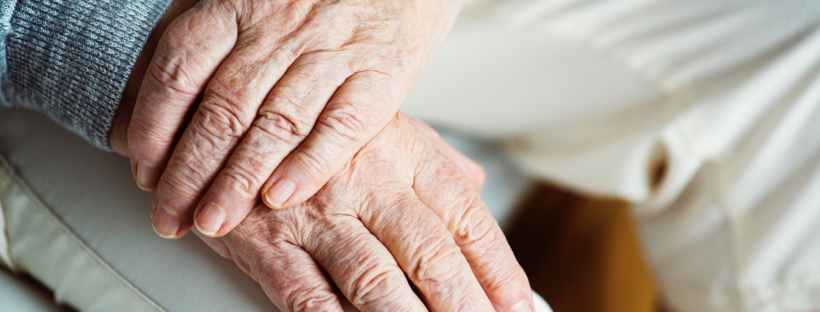
Fifty-Four Years Ago

By: Bowen Xia 

For: The Auricle Writing Competition 2018

Prompt: ‘What is a piece of advice you wish you hadn’t taken and why?’

In a small house, a year 6 student sits in a dimly lit room studying hard all day to prepare in the hopes of entering a prestigious selective school. Surrounding him are boxes of certificates, medals and trophies of various competitions and outside that, on a patchwork couch, his parents and siblings huddle together watching the latest episode of the ‘Simpsons’ on an old box TV. They ask him to join but he has more important things to do. Ha! His family’s periodic bursts of laughter mix over the TV static and he blocks his ears. One day my hard work will pay off and then I’ll be truly happy.

6 years later…

In a prestigious high school, a year 12 student sits in an empty classroom studying hard all day, to prepare for his VCE exams, in the hopes of studying medicine at a prestigious university. His blazer is adorned with numerous academic and leadership badges and his brow is furrowed and beaded with sweat whilst gazing at the citric acid cycle. Bam! A ball hits the window and shouts of his friends playing outside fill the room he shuts the window and closes the blind. One day my hard work will pay off and then I’ll be truly happy.

4 years later…

In a prestigious university, a fourth-year medical student sits in the medicine building foyer silently studying hard all day, to prepare for his end of year exams, in the hopes of gaining an internship at a prestigious hospital. In his bag sits his Netter’s flashcards, four medicine textbooks and his trusty Classic III stethoscope. Slam! The silence is broken as his peers leave the building for their weekly pilgrimage to the ‘Nott’. He stares back at his Anki cards. One day my hard work will pay off and then I’ll be truly happy.

3 years later…

In a prestigious hospital, an RMO sits in the staff breakroom revising hard all day, when he is not on shift, to prepare for his eventual registrar exams in the hopes of joining a prestigious speciality. On the table sits his fourth cup of coffee, a Cardiology III stethoscope, two patient files and a model of the brain. Creak…! Some colleagues leave the room and head off to Zoukis for a well-deserved break, but he resolutely refocuses on his studying. One day my hard work will pay off and then I’ll be truly happy.

9 years later…

At a recently founded clinic, a neurosurgeon sits in a consulting room working hard at night. It has been a long day chock full of patients and paperwork but hopefully, he will be finished soon. On his desk sits a framed picture of his family, a pile of bills, a neatly drafted cover letter and a brochure titled ‘AMA Nominations Opening Now!’. Click…! He opens the main door to his house. All the lights are turned off except a small night light in the lounge room where it shines dimly on the couch and two small sleeping figures are illuminated. He picks up a piece of paper lying next to them and inspects it. A squiggly drawing of his family is on it and underneath is scrawled ‘please come home soon Dad!’. A tear rolls down his eye. One day my hard work will pay off and then my family will be truly happy.

12 years later…

In the nation’s capital, a high-ranking member of the AMA studies some documents in his empty boardroom. When he is not attending meetings all day, he prepares his family’s finances. In his wallet sits a real-estate business card, a prescription for Xanax and a well-worn photo of his children. Ding! A message appears on screen ‘where are you dad? I can’t see you in the audience from the graduation balcony’. As the Prime Minister and his panoply of staff enter the room, the text message is dismissed with a sigh. One day my hard work will pay off and then my family will be truly happy.

20 years later…

In an inviting, large, well-kept house no one enters except for the occasional cleaning staff. On the balcony, a recent retiree idles all day on a sunchair waiting for the clock to strike 5:30 pm. In a bin next to him sit two empty pill boxes, one bisphosphonates and the other NSAIDs, and a torn brochure titled ‘Europe travel guide’. Beep… beep… beep! He unsteadily gets out of the chair and shambles towards his phone. Every movement seems to be painful but made with determination as he stops the alarm. His daily ritual has begun as he calls the two people that matter the most to him. Both go to voicemail but not without him sending two text messages that are left on seen. As the sun begins to set and the darkness approaches, he begins writing a letter.

My dearest angels,

I am truly sorry that I could not make you happy, but I hope this letter can. Fifty-four years ago, I a young, eager boy promised myself that I would not stop pushing forward into the world until the right moment to enjoy life to its fullest arose.  Alas, that day arose too late and I an elderly frail man will bountiful time and material can make neither you nor me happy.

 I blame this on ill-disciplined motivation and determination and insufficient time. If only, my promise was made when I was younger, and I tried working harder, today’s grief would be avoided. Our past conflicts were due to our different outlook on life but as your father, I cannot let you continue making the same mistakes as me. I implore that you resist being complacent and discontinue your premature enjoyment of life. If you do not stop working hard for the future, you may be happy in the end.


With Love,

A Sorry Old Man

A study in inter-faculty relations

By Natalie E Evans 

It was upon a midnight clear when the three discovered each other. Awakened from their slumber by the whispers of wind which breathed their way through the fronds of palm trees. The one with the stethoscope round her neck awoke first – or so she thought.

Her last memory had been of playing hangman in Active Learning – but suddenly she had sand beneath her feet and night’s cool embrace upon her skin. In front of her lay another – an individual whose face was hidden from view by the cloak of night. She tentatively took a step closer when she felt someone push from behind. Suddenly her face was in the sand and a foot was planted firmly on her back.

A voice came out of the dark.

‘State your name – whoever you are.’

The one with the stethoscope wriggled out from the foot, heaved herself up and said with a salute,

‘My name is Laura Jacobs and I’m a first year medical student at Monash University. I don’t know why I’m here but I was probably asked by a GP to take your medical history or perform an examination or jab you with a needle. Don’t worry though, everything we discuss will be between yourself and myself and your doctor –’

‘Spare me the spiel.’ said the disembodied voice. ‘I thought you might have been the one who dumped me here but obviously we’re in the same boat.’

‘And who are you?’ said Laura.

The other stepped into the light.

‘I’m a law student.’ Silence, then –

‘Need I say more.’

Laura let him have his moment of significance and then interrupted it with an obsequious flourish of her hand,

‘Perhaps your name my lord?’

‘Paul.’

Laura noticed the Paul wore something strange.

‘What’s that?

‘Oh – this?’ Paul touched his head, ‘It’s a wig. I sometimes wear it when I’m at home studying to make me feel more motivated.’

The two students fell into stilted silence as they surveyed what was visible of their landscape in the darkness.

‘What do we do about –it?’ said the Paul eventually.

‘The one still asleep?’ said Laura, turning around.

‘Well was,’

The third one had disappeared.

‘Where did they go?’ said Laura

‘Well I don’t think it’s in our jurisdiction now to do anything about it.’ said Paul,  ‘The – individual – has moved off to where it’s someone else’s problem.’

‘Like whose?’ asked Laura.

Before the two could begin an argument ripe with the fruit of bitter conflict they heard a shout and then a thump.

‘Quick, we’d better help.’ said Laura.

‘No – not our problem any more, remember?’ replied Paul.

‘It’s not in my code of ethics to leave someone to die,’ Laura continued, ‘Beneficence, justice, non-maleficence, those are my divinities.’

Laura tore through the undergrowth, stumbling over ferny tendrils and occasionally splashing through black pools of water. Paul reluctantly followed, slapping at any stray vines that attempted to mess with his wig. In a small clearing lay the third – the moon illuminating her curled up silhouette.

Laura stopped about a metre away – Paul nearly crashing into her.

‘Well? Aren’t you going to fix her? What’s the diagnosis?’

Laura’s fists unconsciously curled up.

‘You think I can treat her? I don’t know anything about anything!’

‘But you do med,’ Paul snapped back, ‘therefore you’re basically already a doctor.’

‘I can recite the contents of the femoral triangle and the popliteal fossa but that’s not going to help us here!’

‘But you have a stethoscope around your neck.’ pointed out Paul.

‘I only used it once in a vital signs assessment but the assessor was so busy trying to get the Wi-Fi to work she didn’t even see I was doing it right!’

‘Help!’ said the one sprawled on the sand.

‘What brought you in to see the G- I mean, what happened?’ said Laura.

‘Well, I was fake sleeping before, and heard you two plotting against me so I ran off. Then I ran into this palm tree here because I couldn’t see.’

‘So you didn’t dump us here either.’ said Paul, stroking his chin in contemplation, ‘How curious. I wonder who did.’

‘Can’t you just help me?’ said the one on the ground.

‘Of course.’ said Laura, bending down. The other slowly sat up, and rested against the offending trunk of the palm tree.

‘I do arts. What about you two?’

‘Law,’ said Paul, ‘she does med, hence the stethoscope.’

Laura started palpating a few anatomical landmarks.

‘I don’t suppose anyone knows how we got here?’ said the arts student.

‘Nope.’

‘Well then – I might just head to the beach and write a distress message in the sand. I’ll do it in the phonetic alphabet too – put that linguistics to good use.’

‘What’s your name?’ cried Laura, hurrying after the arts student.

‘Name’s are of trifle importance at a time like this,’ called back the arts student. A wind rippled through the trees, ‘what matters are our values, our talents – our creative enterprise which shall save us from this dystopian land.’

‘Have it your way then,’ mumbled Paul as he struggled to keep up.

‘But,’ continued the arts student, her words tossed about in the air as if they were ships upon an ocean, ‘if you wish to refer to me by name, Theodora de la Roule is the one to use.’

Once Laura and Paul caught up with Theodora she had already scrawled a number of messages in the sand. Her handwriting was curiously elegant and loopy.

‘Are you sure any would-be rescuers would be able to read that?’ said Laura, peering at the cursive script.

‘I don’t know, but I love it. I squish all my university commitments into two days so I do lots of random stuff the other five days of the week. Calligraphy is one of my hobbies.’

‘Hobby. Maybe I should get one of those.’ said Laura.

But her thoughts were cruelly tossed aside as a horde of helicopters descended overhead and landed on the churned up sand. Bright yellow lights winked and sparkled as three individuals came striding towards the sorry party of students.

They were the three heads of faculty – each wore a steely glare.

‘You have failed us.’ boomed the first.

‘I am especially disappointed in you,’ the medicine faculty head (that would be me) exclaimed to Laura, ‘I assumed a medical student would be able to foster good interfaculty relations. But no – you stand back and critique handwriting!’

Laura hung her head in shame.

‘And you forgot to palpate the tibial tuberosity!’

‘Hey, wait a second,’ said Paul, pointing to the cowering arts student, ‘I think you are to blame for this after all! You’ve been acting strangely this whole time! I bet your name isn’t even Theodora de la Roule!’

The arts student broke down.

‘They told me I had to participate, and feign ignorance! They threatened to cut arts funding again!’

“This Monash University experiment is deemed a failure.” said the law faculty head.

‘And you’re right about the name,’ said the arts student between sobs, ‘I’m really Jessica Smith.’


Are surgery and Social Media Compatible?

BY NEBULA CHOWDHURY

Initially, one may think that the only links between ‘surgery’ and ‘social media’ is that they both start with the letter ‘S’ and that they are two things that an average middle-aged person may not completely understand. However, upon deeper reflection, one would realise that we have been using social media to benefit the surgical world in many ways.


Social media is increasingly playing a role in surgical education. Relying on books and lecturers alone is an obsolete concept as students are perpetually utilizing the Internet to complement their studies. In her editorial, “Using social media effectively in surgical practice”, Texas cardiac surgeon Dr Mara Antonoff writes her experience of supervising an intern who was placing a central line for the first time. She recalls watching in awe as the intern did the process flawlessly. When Dr Antonoff asked the intern who had taught her, she clarified that she learnt it through ‘Youtube’ and had only physically gone to one simulation class. This highlights the changing nature of the way education is being delivered to the next generation of surgeons. Various social media sites contain vast amounts of credible content. On ‘Youtube’ alone, there exist numerous medical education channels such as John Gilmore M.D, Dr. Najeeb Lectures and many more. Education through social media is not limited to medical professionals – certain content is created for the prospective patient. A leading Sydney Plastic Surgeon, Dr Eddy Dona, live-streams entire uncensored cosmetic procedures on his Snapchat channel. Though controversial, Dr Dona believes that this strategy successfully provides people with complete medical details so that they can look past the ‘glitz and glamour’ of plastic surgery in order to make a holistic decision on whether to undertake a cosmetic procedure.


Social media is also a prodigious platform for information sharing and discussion. This is due to its ability to bring large numbers of like-minded people together. For example, The Royal Australasian College of Surgeons regularly updates their Facebook page to keep surgeons and medical students updated on the happenings of the surgical world. Social events, important journal articles and many other relevant information are all conveniently curated in one place, providing a highly accessible medium for health professionals to keep up with the important knowledge. Additionally, the fact that social media allows for the easy gathering of people from all over the world enables health professionals to engage in scholarly discussions with colleagues that they might not have been able to reach otherwise. For example, there exists an “International General Surgery” journal club on Twitter, which goes by the name of “Int Gen Surg J Club”. This club connects thousands of medical professionals who meet online monthly to discuss new articles related to general surgery. The many contributions of people from 69 nations allow for a more sophisticated discussion- and it would have been impossible to maintain such monthly meetings if they were to do them in person.


The fact that social media enables widespread reach also renders it an attractive realm for advertisement and publicity. Both surgeons and hospitals use their social media pages to share success stories and promote their practice. Dr Simon Ourian, the Kardashians’ plastic surgeon, has posted hundreds of pictures on his Instagram account ‘simonourianmd1’ showcasing the various dermatological cosmetic procedures that he has done. Recently, on their Facebook page, the Royal Children’s Hospital also posted a video of a young girl going through her cancer treatment. 5-year-old Christy was diagnosed with aggressive neuroblastoma and the video shows the cycles of radiation therapy, chemotherapy, stem cell transplant and other procedures that the little girl went through until she was finally in remission. The posting of success stories and procedures confers credibility and experience onto the business, incentivizing prospective patients to choose them over other services.


There are also patient-specific services empowered by social media – such as financial services and support services. It goes against the fundamental nature of surgery to cost patients an arm and a leg but that happens to be the case for many procedures. For patients in need of financial aid, there are many crowdfunding websites around the world which allow them to raise the money required. A prominent local example is mycause.com.auwhere surgical patients or their families can start an online campaign by posting the amount that they need to raise, accompanied by pictures and a brief medical story. Patients would then continuously update their treatment progress and donors would comment the amount that they gift along with a message for the patient. These sites are accessible worldwide, connecting patients with almost anyone around the world. This makes it more likely that the patient would encounter someone that would sympathize with them, increasing their chances of receiving a donation. In terms of support services, there exist many online support groups for patients that have undergone various procedures or are experiencing a certain condition. The global website inspire.comcontains hundreds of these in one place. Patients can join an online community and talk to other members, benefiting from the company of people that can empathize with them.


However, there are certain disadvantages to having social media linked to the surgical world. The notorious doctor-rating websites such as RateMDsand Vitalsare a good example. The fact that many patients ‘google’ their surgeon places too heavy an emphasis on such platforms and their ratings which have a possibility of being misleading. These sites allow for anonymous reviews and have features where doctors can pay to have reviews hidden or have banner advertisements on the pages of other non-paying doctors. These ‘tactics’ reduce the integrity of these websites, not making them an honest provider of surgeon information, instead fostering a toxic sense of competition.


So, are surgery and social media incompatible? Not at all. Amongst its many other uses, it is already being employed in the educational, informational, promotional, financial and supportive aspects of surgery. Despite the problems, there is a net benefit in employing social media in surgery. It is already enriching our present surgical world and there is no doubt that if managed correctly it will continue to do so in the future.