
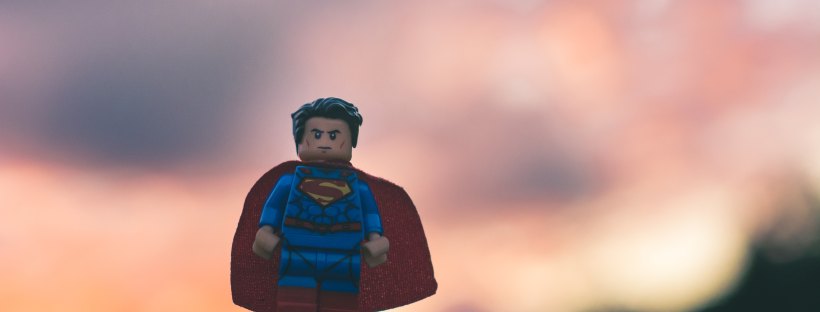
My Superpower

By Evan Kuma 

When I was young, we’d often play a game in the yard that involved a group of us going around in turns and saying what superpower we’d want bestowed upon us in the event of some freak occurrence. A group of friends, we would all come up with the best of powers, and elaborate ways in which to use them. Super strength, so you could lift a car up above your head, super speed so you could dodge a bullet or X ray vision so you could see who was hiding behind a brick wall. But not me, no. I would often wish for invisibility. You wouldn’t need to be super strong, super-fast or have X-ray vision, I reasoned, if you could be invisible. When I look back now, I realise how naive we all were, that is, until recently. Maybe that superpower I had wished for as a young child was finally granted to me in my third year of medicine.


It’s like any other day, walking through the wards, stethoscope around my neck and clipboard in hand; have take a history or do an exam today, I remind myself. I walk past the nurse and smile – he’s busy scanning in medications and so he doesn’t realise I’ve walked past. That’s fine, everyone’s busy in a hospital. I know that, so I shrug it off and walk into the meeting area where the ward round team assembles every morning. This is a busy morning like any other – the intern is busy printing lists, the registrar chasing up on night cases, and the consultant – where is the consultant? So, I move to the side and stand, waiting for the bustle of the morning to play out. The team slowly starts to assemble, everyone caught up in their own world, and it strikes me – how is everyone so preoccupied that they forget to say hello? By this point, my superpower is pretty much tried and tested, I am invisible. The consultant comes in and we leave for rounds. There’s a lot of us at this point, so fitting in the room is tough – let me just stand to the side and watch. Rendered invisible again. When we move to the final room, I decide to use my superpower to stand at the foot of the patient’s bed – I’ll be fine here, no one can see me anyway! As the consult finishes and the team empties out of the room, I decide to stay and talk with the patient – she looks sad and I figure she could use some company. And the strangest thing happens – she sees me. As I sit and talk, she tells me her story; why she’s come in, what’s on her mind and where she plans to go. No WWQQAA can guide you in this conversation between two strangers bonding over their shared humanity.  As I get up to leave, I hold her hand to say goodbye. She smiles at me and I smile back, and in that moment something spectacular happens.


This is my revelation – I wait for the sound of ethereal bells or some wise old man to float in and give me a cape – but this doesn’t happen – the change is within. I’ve realised something, something that has taken a while to happen – I am a superhero, but my superpower isn’t invisibility. Maybe my superpower is the ability to push through tough days and continue to smile? Or maybe it’s the superpower to know when I’m feeling burnt out and take time to myself. In truth, I don’t know what it is, but I’ve learnt that even in the toughest of days, even in the days when it feels like no one can see you, the patient still does. Maybe it’s because they feel the same- doctors, nurses, physiotherapists and ancillary services all coursing in and out of the room, yet they still feel invisible.


I’m glad that we both saw each other that day, I’m glad I was reminded of why I choose the path I did and I’m glad that I finally realised that being invisible wasn’t my superpower after all.
 

One of those days.

It’s one of those days.

It’s one of those days, when you’ve pressed the snooze button on your alarm for what might be the twentieth time. When no amount of cajoling, self-reprimanding and mentally yelling at yourself can get you to muster the energy to put one foot out of bed. It’s one of those days, when the only safe place is the warm cocoon of your doona; where you can curl up in the dark and quiet, and there is nothing to disturb you but the steady thumping of your heartbeat and the soft whooshing of your blood coursing through your veins. When it feels like there is lead in your bones, and in your chest, holding you down, and it is exhausting just to think, just to breathe.

(It is okay to call in and tell them you are taking a day off today. This is not a defeat. This does not mean you are giving in. In an age when it is burn bright and burn fast, what you must remember is that first, you have to last. When the ideal is to strive for machine-like efficiency, you must concede that you are only human.  You need this. You need to recover for the many battles yet ahead. Tomorrow can wait, will wait.)

It’s one of those days, when there is a lump in your throat that won’t go away and a loop somewhere in your head that seems stuck on replay. When you turn up the volume on your headphones to the loudest they can go. When you take the train absentmindedly past your stop and get off and walk the rest of the way back home. When you distract yourself by scrolling mindlessly through social media and stay up late in the morning binge-watching Netflix until four.

(Self-medication is a band-aid solution and numbing or swallowing your emotions does not make them go away. They tend to lie in wait, lurking in the corners of your mind, until they ambush you when you least expect it. When it’s time, let them in. If the tears come, let them fall. You have been carrying these things that are so very heavy for so very long now. It’s okay to put them down for a while.)

It’s one of those days, when you stare into the mirror and practice a smile that doesn’t quite reach your eyes. When you notice every dark circle, every little blemish, everything that feels too large or too small or too asymmetrical and oddly placed. It’s one of those days, when you lie awake at night and suddenly remember every fumble and folly, when you agonise over every word you wish you could take back, every mistake that you have ever made. When you dissect yourself apart, until you can’t tell outside from inside. When you wish you could just resect those silent malignancies of the soul, those parts of yourself that fill you with shame, or loathing, or anger and disgust.

(If only you could remember to try to see yourself the way those around you see you, or moreover, you would treat yourself the way you treat those around you. Nurture; be patient with and forgiving of yourself the way you are for others.  Of course, you are flawed, as are we all. But what is most important is that you are always learning. Your weaknesses and failures make you who you are, and it is in them that you will discover your strength. They are what make you good, truly good.)

It’s one of those days, when you feel a yearning to return home, even though you are home. When you feel utterly alone in a crowded room. When you cannot fight the feeling that others, even those closest to you, do not see you, do not see through you. When you feel the expanse of an ocean between your heart and theirs. It is one of those days, that a small voice whispers in your head that you are insignificant, replaceable, unworthy.

(Despite what you may sometimes think, you are not alone. There are so many who have felt the way you do. There are so many who have loved you, who love you, who will love you. There are so many who you have not even met yet, who will need you here. There are so many connections, whether fleeting or long-lasting, brimming with meaning and potential, waiting to be made. And sometimes it is up to you too to make the first tentative step. There is so much more to gain than there is to lose. You have given so much, and you have so much yet to give. You matter.)

It’s one of those days.

(And these days too, shall pass.)

The Dead Teach the Living

By An Anonymous Author

Embolus feature May

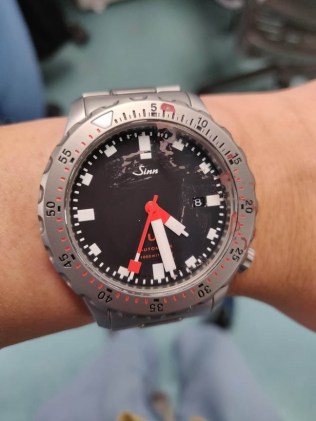
This picture was taken moments after resuscitation. The dried blood on the watch marks the time we took to save the man’s life. Yet, unfortunately, the patient passed away, alone in a room full of strangers he briefly met just forty minutes ago.

The patient arrived by ambulance, with the paramedics pumping on his his chest as we transferred him over to the gurney in the resuscitation room. The paramedics failed to intubate because of a difficult airway. Once the residents managed to intubate him, I was handed the task of ventilating the patient with a bag valve mask. I internally counted the intervals required to help the man breathe, squeezing the bag and watching his chest rise rhythmically as the doctors carried out chest compressions.

With each subsequent breath, however, he became increasingly difficult to bag, as if life was slowly escaping his limp body. And with each squeeze, blood would leak out from the small valve of the mask. Amidst the chaos, I watched as his blood trickled from my fingers down my forearms. It was as if he was falling apart in front of me.

“Time of death, four twenty-five,” declared one of the residents.

The desperate atmosphere of the resuscitation room became suddenly somber. As the residents left, thanking everyone for their help, I overheard a senior nurse asking one of the new nurses whether she’d prepared a body before. Watching the nurses quietly zipping the man into a body bag, I looked at the man’s face one last time. How lonely he was in his last moments without the company of his loved ones.

In clinical anatomy when we dissect cadavers, identify the landmarks, we are told, Mortui Vivos Docent, the dead teach the living. During our clinical years, armed with the anatomic and pre-clinical knowledge, we see the patients we serve pass away and recall what was once said to us, Mortui Vivos Docent, the dead teach the living. But in this case, the dead not only teach us the clinical knowledge, but the human aspect of medicine.

It seems amidst all the time we buried ourselves in books, we have lost the human touch to medicine and forget the humanity of those we serve. With our numbering days we spend in medical school, we realize that time flies so quickly as we look back into our youthful days. Yet, we have a hard time confronting the time in front of us dwindles just as quickly. The deaths of our patients not only teach us the things we could have done differently, but grounds us with the reminder to never abandon our patients and the humanity that embodies them.

And perhaps when we graduate, we will read this oath to re-affirm this promise we once made when we decided to commit our lives in service of others:

“At the time of being admitted as a member of the medical profession:
I solemnly pledge to consecrate my life to the service of humanity;
I will give to my teachers the respect and gratitude that is their due;
I will practise my profession with conscience and dignity;
The health of my patient will be my first consideration;
I will respect the secrets that are confided in me, even after the patient has died;
I will maintain, by all the means in my power, the honour and the noble traditions of the medical profession;
My colleagues will be my sisters and brothers;
I will not permit considerations of age, disease or disability, creed, ethnic origin, gender, nationality, political affiliation, race, sexual orientation, social standing or any other factor to intervene between my duty and my patient;
I will maintain the utmost respect for human life;
I will not use my medical knowledge to violate human rights and civil liberties, even under threat;
I make these promises solemnly, freely and upon my honour.” 


(World Medical Association’s Declaration of Geneva)


First published as an AMSA Embolus Feature