
A Home Away From Home

By Tessa Lim 

I remember it vividly. As I entered the little refugee school back in 2016, the children were eager and friendly, welcoming me almost instantly.

“Teacher! Teacher! Teach me! No! I want her to teach me!”

You could tell that they were smart, excited and ready to learn. Everyone was smiling and welcoming me whole-heartedly with a sincerity I had never seen before.

I was especially captivated by the face of one little girl . She had a pretty face, and she seemed happy, but her smile did not reach her eyes. My instantaneous impression of her was that she had a kind soul, but also a painful background. It was almost as if she had seen so much in the world, despite only being six years old.

She was Huai Nu, a refugee child from Myanmar. When I first walked up to her, she was shy and afraid. She ran to her elder brother, pulling away from me, probably wary and distrusting of strangers. Either that, or she couldn’t be bothered to have a conversation with me. But I liked her.

Overtime, I got to know so many of them: San Kheh, Vung Bawi, Nuam Boih, Khai Lam. One of my student’s name was Saw Thoot, which was directly translated to “Saw Blessing”. Apparently, his family name was Saw but I guessed his parents wanted him to “see blessings”. The children also always had something interesting to say. I remembered asking them to spell the word “laugh” in a spelling test but they misunderstood it as “love”. We went on trips to the National Science Museum, the bread factory and even shopped for Rohingya traditional clothes together. We were like a family.

Huai Nu began to open up, and I realized that she was artistically inclined. One day, she grabbed me a chair and told me to sit beside her. She took out a piece of paper and started drawing a man, then a woman, then a child. She told me that was her family portrait. However, her father had left her when she and her mother relocated to Malaysia as refugees. I gently patted on her back and told her not to be sad, but she did not say a word. She looked straight into my eyes and just nodded. I felt helpless and felt that she deserved better. Slowly, Huai Nu became one of my favorite students even though she struggled academically. But the silver lining was that she was independent. Even though she struggled with English, she gave it her best effort. She was tenacious, and jovial, despite her circumstances.

My job was to teach them but they have taught me even more. They’ve taught me key life lessons. No matter what your background and circumstances may be – there is always a reason to smile and laugh. Even with all the hardship they were going through, they found time to play and be joyful. They were friendly with no judgment.

It was important to me to help nurture these children into thinkers and doers; to polish these rare gems from the underprivileged community. They also made me want to be a better medical student. They made me want to study harder to be the best doctor I could be. More than anything else, they made me want to be a better person.

Just a few months ago, Huai Nu and her mother moved to America.

“Nganinkolwante, teacher Tessa!’’

“I will miss you too, Huai Nu!’’

Even though my roots are in East Malaysia, the Christian Fellowship Centre in West Malaysia will always be home to my refugee students and my home away from home.
Nick’s Healthy Bolognese Sauce

By Nicholas Wilkes 

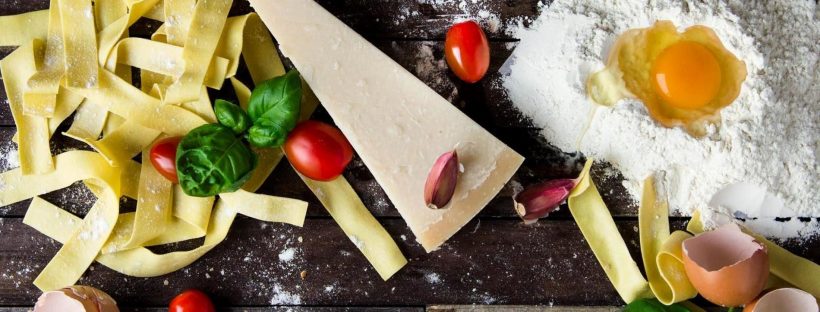
With many of us off placements or back home and learning from online lectures, now is a good time to try some new healthy recipes when you need a break from studying. This week, I’d recommend trying this healthy Bolognese sauce recipe that I shamelessly stole from my mom. It’s a great meal prep item as you can easily scale up the size of batch to match your needs, and as most of the ingredients are optional, can still be readily made with the limited supplies on the supermarket shelves!

Continue reading

COVID-19: The Debate Going Viral

By Anna Shalit

It was three weeks ago, the first day of my week of clinics on my paediatric rotation and I was assigned to the rheumatology clinic. I’d spoken to my family over the weekend and decided that since my placement was still going ahead, I wouldn’t be seeing them for a while, as I did not want to risk making them sick. Most of the children in rheum clinic were immunosuppressed and I had spent the train ride to hospital pondering how I would feel if I inadvertently gave one of them coronavirus. When the consultant at the clinic politely asked us if we minded just going to the library instead, I was almost relieved. The fear had set in and I had stopped feeling like a medical student and started feeling like a vector. Two days later the hospital asked students to stop coming in. 

Most of us chose medicine because, in some way or another, we wanted to help people. So being stuck at home in a crisis, completely powerless and unable to help, is frustrating to say the least. On clinical placement we can feel useless at the best of times. We’re constantly asking for things from people, whether it be asking the nurse where to find the cannulas, asking the doctor why they’ve prescribed one drug over another or asking the patient for their time and consent, we rarely get to genuinely give back. And yet placement is the best way for us to be able to give back in the future. If we can’t go to placement, will it impact our ability to be good doctors? In the long term, of course not. But the idea of being an intern with almost one year of clinical experience missing? That’s something to keep me up at night. 

I’ve gone back and forth so many times about what our role as medical students should be during this coronavirus pandemic. I don’t want to back down from a challenge, and I recognise that in lots of ways, being on placement in a time like this could be invaluable in the future. I’m also not worried about becoming sick myself – I’m young and healthy and I’ve got a far better chance of recovery than many of the doctors on the front lines. Besides, most of our placements would allow for us to avoid having contact with any cases. This is the reality of medicine – how can we simply put this massive part of our lives on hold and wait for it to end? What about when we’re the doctors during the next pandemic?

However, we can’t deny that we pose a risk to the hospital population. Young people are likely to be silent carriers of COVID-19. We could be the fistula allowing the virus to leak from the supermarket shelves into the wards. The potential to bring harm is not only terrifying, but unfortunately, very real. And as selfless as we like to think we all are, it is important to consider that there may be a significant risk to us too. 10% of the people in Australia with coronavirus currently are healthcare workers. This isn’t a risk to be taken lightly. Not to mention, while I’m privileged to be physically healthy, not all medical students are, and it would be completely irresponsible to insist they continue their placements at a time like this. 

So placements have been put on hold for now, but what about the all mighty “surge workforce” that the media is in a frenzy about? Those of us who have the ability to help are more than happy to step up. Most senior medical students could genuinely be of service to doctors if they were called upon. Sure, we can’t exactly manage complex patients on our own, but we can type notes, call the path lab, and (with shaky hands) do cannulas. Be it taking temperatures in fever clinic or writing discharge summaries for a strung-out resident, we will step up if that’s what doctors want. 

The reality is, however, that they must want us there, or we will be helping no one at all. In the meantime we’re trying to help in any way we can, setting up volunteer organisations to call isolated people, offering to babysit for healthcare workers and most importantly, staying home.

 If (and when) medical students are asked to step up and help, we will be waiting, and we will be ready. We might even be prepared. But until then, for me at least, it feels like the best way to help is to do nothing at all.