
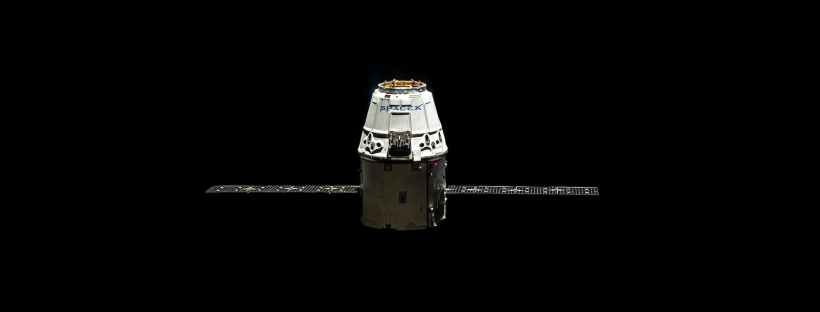
“The Caretaker” by William Upjohn received an Honourable Mention in the Creative Writing division of the 2022 MIPS x The Auricle Creative Writing and Visual Art Competition. William says, ‘I wrote a short science fiction/horror story, set on a deep-space satellite in the distant future. It is titled “The Caretaker”.’ This piece featured in The Auricle‘s October-December Edition in 2022.
Caretaker’s Log:
02/08/54,675 C.E (Estimated Earth Date)
This is likely to be my final statement. I have not made many other entries to this log, a decision that I now regret. I am not sure who, if anyone, will read this. I seek only to explain what happened on my satellite, and to enlighten those who would otherwise not understand what lead me to undertake what I did. I do not seek forgiveness, because I know I have not done anything wrong. This is not a confession.
I am not sure how long until my satellite will be found, or by whom. In case this part of our history is forgotten by those who discover it, I shall provide a brief amount of context. In the year 54,345 C.E, our sun began expanding at a rate far, far greater rate than our scientists had anticipated. This gave us around 50 years to escape our planet and retreat to a safer distance, before life on earth became unviable. The decision was made to place as much of the population as possible into a hibernation-like stasis or “cryo-sleep”, and put them safely on millions of satellites in orbit, far away from the now malignant sun. Most, including mine, were placed in orbit at a distance similar to that of the former planet Pluto. The plan was for other, exploratory spacecraft to search deep space for a new planet with conditions favourable for colonisation. Once this new planet was found, the cryo-sleep satellites would be brought over and reawakened.
Using almost light-speed travel, the estimated time for this mission was between 60 and 80 Earth years. This timeframe has come and went, without transmission or signal from any of the thousands of exploratory craft. It seems overwhelmingly likely that all missions have ended in failure.
My satellite is one of the smaller models placed into orbit. It initially housed 100 individuals in cryo-sleep. It is almost entirely run algorithmically by AI; however, the decision was made to include a single human overseer to ensure the smooth running of all the ship’s functions. This overseer, or “caretaker” as we came to be colloquially known before launch, could override any direction from the ship’s AI, to prevent computer glitches or malfunctions from jeopardising the survival of the satellites’ occupants.
Being a healthy young male with a favourable genetic profile, I was chosen to be the caretaker of my vessel, a position I was honoured to accept. While the position was demanding, and the prospect of decades of isolation not very attractive, I was assured that personalised neurotropic medications would be administered to ensure my mental wellness was preserved. The fact that I was unlikely to secure a position on a satellite otherwise, and be left on the soon-to-be uninhabitable Earth also contributed greatly to my decision to accept.
The first few decades of orbit were largely unremarkable. I developed a routine of monitoring the sleeping passengers and certifying all vitals were in the desired range soon after waking. I then spent my time confirming our orbital path was optimal, supervising any maintenance activities, and generally ensuring that the satellites processes ran smoothly. In order to preserve power, communication with other satellites was completely ceased after the first year. As a result, I had no contact with other humans, only being able to communicate with the satellites’ AI. While this might have been emotionally detrimental to a normal person, the medications I took daily ensured that my mental state remained favourable.
Though the 24 hour cycle of days was now arbitrary, I kept to a pattern of 8 hours sleep followed by 16 hours of waking, trying to avoid the cognitive disturbances found in disrupting the normal circadian rhythm. I ate three times per day, and bathed regularly. The temperature of the satellite’s internal spaces, where I lived and worked day-to-day, was kept to around 14 degrees Celsius. This low temperature was maintained in order to slow metabolic activity and decrease the rate of aging. This meant I was permanently slightly cold – though this is a small price to pay for the supposed increase in longevity.
It wasn’t until my 35th year in orbit that the first complication occurred. During my annual health scan by the satellite’s medical AI, a sizeable adenocarcinoma was found in the hilum of my right lung. This most likely due to exposure to radon, an inert gas that can leak from small nuclear reactors such as the one powering my satellite. While I was not yet experiencing symptoms, it was still a threat to my wellbeing, and I elected to have it surgically removed. The satellite had multiple automated surgical robots, capable of performing almost any surgical procedure at a standard far exceeding human surgeons. Multiple passengers in cryo-sleep had already had procedures performed on them by the machines. They were not even awakened from their stasis – part of the contract for being placed into cryo-sleep involved consent to any procedure the ship’s medical AI deemed necessary.
The operation was a success, at least initially. The tumour was resected completely – however, 4 years later, I developed more tumours, this time spread throughout both lungs. Breathing was becoming increasingly difficult, and I experienced haemoptysis on a daily basis. This presented a clear and present threat to my life, and subsequently to the functioning of my satellite, and to the lives of all those under my care. The only possible treatment was a lung transplant.
While my subsequent actions may appear unethical, it must be kept in mind that my death would certainly jeopardise the lives of all those on my satellite. I could not allow this to happen. It was a difficult decision to make, but ultimately, it is a decision that I stand behind. I took no pleasure in making this choice, and to this day I find the whole process distasteful. I detail my decision here not out of pride, but simply to allow future readers to understand what happened.
I elected to take the lungs of one of the passengers. It was a very grim choice to make, but I eventually settled on those of a 55-year-old man, whose name I will not mention out of respect for the dead. He was a healthy adult male who didn’t smoke, and the medical AI suggested that his organs made the most favourable match. This wasn’t truly necessary – the immunosuppressive medications I would take made virtually any donation viable, although matching did reduce the risk of complications. I cannot detail all the factors that went into my decision, but after 2 weeks of deliberation, accompanied by increasingly severe symptoms, I finally made the decision to go ahead with the procedure. I had to manually override the medical AI, but the surgery went off without issue. The donor was not brought out of cryostasis during the procedure. He did not suffer.
The new lungs were completely successful, and it was almost a full decade before I needed another organ donation. Perhaps due to my constant use of neurotrophic medications, my renal function had deteriorated to a dangerously low level. I required a transplant. Selecting a donor was far less ethically difficult this time, as transplanting a kidney would not result in the donor’s death. For the sake of brevity, I will not give the details of this donation, nor for any of the subsequent ones. Again the procedure went by without issue. The donor was in cryo-sleep for the entire surgery, and was successfully returned to her cryo-pod afterwards, without ever knowing such a procedure took place.
I will not give unnecessary detail about all the subsequent transplants. Initially, at least, I held out as long as possible without using any more organs. However, as the length of my mission extended longer and longer past the expected end point, the aging process resulted in the inevitable deterioration of my body. The successful running of the ship was paramount, and this success was dependent on my input. As such, any and all actions I undertook were necessary, and in my opinion ethically sound. While it appears increasingly likely that I will not have to explain my actions to any individual in my lifetime, I would like to emphasize that I stand by the decisions I made.
Over the almost 280 years that I have now been caretaker of this ship, I have had to extend my lifespan much, much further than would be natural. I have considered bringing a passenger out of cryo-sleep and training them to be a new caretaker, allowing me to finally give up my position, but this is not a viable alternative for many reasons. The most important one, in my opinion, is that the neurotropic medications, which allow me to function under enormous psychological strain, are personalised to my neurological profile. They would not be effective in any other individual. It seems overwhelmingly likely that another person in my situation, faced with the cold, claustrophobic, completely isolated conditions that I live in, would be made insane. I think of myself as something like a deep sea fish, one that inhabits unimaginable pressures without issue. Any normal organism, however, would be crushed.
In order to prolong my life, I have received new transplants of almost every viable organ in my body, as well as various tissues and vessels. I have been through 48 sets of lungs, 40 hearts, and 44 pancreases, as well as countless skin, marrow and vessel grafts, just to name a few. I am not wasteful – I do my best to maximise the number of organs I can use from every donor, and try my best to prolong the use of every organ that I receive. It is difficult, however; as my age increases, the amount of use I get from each transplant lessens. While my first new heart lasted me over 30 years, currently, a new heart will only last me four. This has meant that I am requiring new donations more and more frequently, a situation that is as regrettable as it is inevitable. It brings me great emotional pain to accept organs from those I am supposed to take care of, and were it not for my medications I likely would not be able to cope. These actions must be undertaken to fulfil my duty as caretaker.
I have all but given up hope of rescue – I have not received any transmission, from another satellite or any other craft, since the silence descended all those years ago. I have considered the possibility that my equipment is faulty, and all the other ships have been rescued while I remain here alone, unable to receive the signal. These idle speculations serve no purpose but to heighten my distress, so I avoid them as much as I can.
I imagine that my story is not unique, and that every other living caretaker has had to make the difficult decision that I have. My supplies are dwindling: I have only 20 more untouched donors to use, and my needs are increasing with every year. I do not know what I will do when I have run out, when my satellite has no more passengers and I am left truly alone, orbiting a dying star. According to my ship’s navigational system, we have almost finished our first complete orbit around the sun. I only wish my satellite had windows, that would let me look outside and see the stars. It has been far, far too long.
That concludes all that I wish to say. This is not a confession.
<end of transcript>


 The Auricle