You will never be successful if you have a mental illness

By Molly Maxwell

‘You will never be successful if you have a mental illness’. 

This was a lie that I had unknowingly been telling myself for the 5 years.

After a significant battle with mental illness in year 12, the trajectory of my life felt like it had changed forever, and I felt like I had made it out of school by the skin of my teeth. So I started on my daunting journey of leaving my depressive episode behind. In the years following, I was able to recover and put my past behind me. I felt well enough to pursue a science degree in the hopes that I could maybe…possibly… probably not, but maybe… get into medical school one day. I worked hard to relearn how to function and focus and learn and in December of 2019 my dream was realised when my frantic refreshing of the application portal yielded a successful result.

I immediately started bawling my eyes out, not because I was happy or relieved but because in that moment I had finally proved to everyone around me and myself that I was not a failure and that I was normal and that I was no longer the sad teenager who would never amount to anything.

But BOY  could I not have been more wrong. It took the first year of medical school and the wondrous quandaries that a global pandemic presents to show me that this was not at all the case.

Throughout the last 5 years, I put so much pressure on myself to remove my identity from that of the depressed teenager that I failed to let myself actually address the mental challenges that I continued to face. Looking back now, the obviousness of how my mental illness affected me is almost comedic, but my desire to be normal and my “high-functioning” outer shell prevented others and myself from noticing just how much I was struggling. In early lockdown, I began to spend hours each day ruminating on anxious thoughts that consumed me and once again took away my ability to focus, and learn, and care about almost anything; thoughts that couldn’t be brushed off as uni stress or friendship issues anymore.

Over the years, issues like this had occasionally seeped out. Times of high stress and traumatic events would cause my brain to overflow where I felt like I desperately needed help, but every time I could never follow through. This was all because subconsciously, I had believed that if I couldn’t get into medicine without help, I didn’t deserve to be there at all.

As I sat in isolation, I realised that not only was my mental illness becoming all-consuming but my inability to treat the problems that I was having for fear of never making it as a doctor may actually make me unwell enough to fail medical school and ironically, not become a doctor. So finally, I got help. I relinquished my internalised stigma towards mental health and medication and for the first time in my living memory I finally experienced not having every thought and action derived from some part of my illness. It was not easy but it was worth it and my only regret was that I hadn’t done it sooner.

I write this in the hopes that someone, maybe you, will read this and take this as a sign that you do DESERVE help. That help will not make you less successful or whole or talented or any number of the wonderful things that you likely are. Treat yourself how you would treat the ones you love the most and together we can begin to change the stigma of mental health in medicine.

Phone counselling service @ Monash

Call 1300 788 336 [1300 STUDENT]

Telephone counselling open 24 hours.

  • From Malaysia: 1800 818 356 (toll free)
  • From Italy: 800 791 847 (toll free)
  • From elsewhere: Students +61 2 8295 2917 | Staff +61 2 8295 2292

More information can be found here.

Or contact MUMUS Community and Wellbeing
The Old World

BY ABRAHAM SHAMSHAD

“We can’t help you son, now get out of here!” The shopkeeper grew indignant with my persistence. He motioned to the door of the decaying grocery shop. I paused a moment, rethinking my tact as I took in the acrid odour that surrounded us. A thin film of dust rested undisturbed on all the products on the shelves. The fresh produce section was starkly empty, as were canned goods and toiletries. At this point all he seemed to be selling were birthday cards. Not that anyone had any use for them anymore.

Despite his command, I stood steadfast across from the counter, and insisted again. “They said you could help me. They said you’ve done it for others.” I made an especial effort to keep my tone calm and measured, and his exasperation seemed to subside for a moment.

He looked around the dilapidated remnants of the store and lowered his voice before responding. “Son, you can’t just waltz into random stores and demand we provide your escape. I could report you to them right now. Now get out of here before they make us disappear like those-”

The wind chime sounded, interrupting the shopkeeper, announcing the entrance of an elderly lady. As she shuffled into the store, he motioned to the door again. Frustrated by the hopelessness of the encounter, I complied and returned to the eerily quiet street. The only noises were the birdsong and the overtone of a gentle Autumn breeze. I meandered down the sidewalk, avoiding the knee-high weeds that were growing between the flags of concrete, until I reached my car. I climbed inside the weary machine and considered my next move.

I had been so giddy with hope when I had heard the myth of the mysterious shopkeeper that knew how to out manoeuvre the manoeuvrers, manipulate the manipulators, and infiltrate the infiltrators. But now, I realised the myth had been mostly constructed in my own mind out of desperation. The defeat of the situation started to overwhelm me.

Maybe there wasn’t an out. Maybe this is how it would end. Maybe my forlorn longing for the old days would ultimately be my undoing. Maybe I’d sat around with my fellow conquered thinkers and shared tales of the old world too often. Maybe there was no longer room for freedom or scholarship or advancement or civility.

I calmed my spiralling mind and turned the key in the ignition. The car coughed to life, the weakness of old age muzzling its once proud roar. It staggered over the uneven road as I navigated empty streets with empty sidewalks. I looked into the windows of the decrepit buildings I passed, and every now and then I saw the silhouette of a person, a grey phantom inside, too frightened to come out, but too curious to retreat from their window.

I retrieved my worn radio receiver from the glovebox, a memento of the old world, and tuned it just so. After a few moments of static a deep, raspy voice burst through the audio haze. Despite its harsh tone, the honestly of the voice was oddly soothing to my shot nerves and broken spirit.

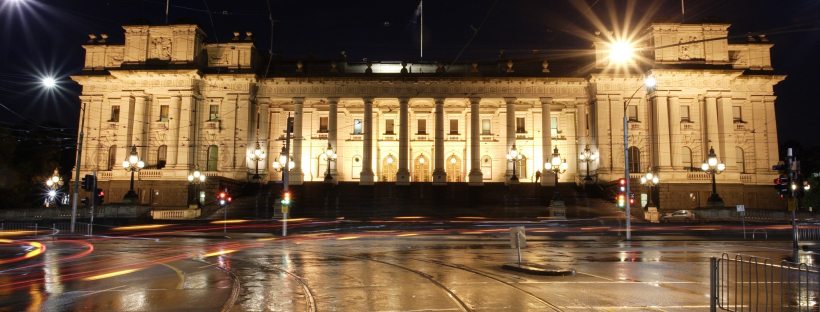
“…we’ve just seen the collapse of what was one of the last relics of our sovereignty in the recent repurposing of Parliament House for the resource operations of The Foundation…

The city around me was slowly decomposing into the ground, falling victim to years of disrepair. Erupting between buildings and from cracks in the tarmac was fresh greenery, the lush brightness exaggerated by the dreary back drop.

…in the wake of all we’ve been through; the plague, the riots, the famines that followed, and the usurping of our democracy by those very people who claimed they would save us; these may be horrific developments to behold…

My concentration was detached from the broadcast as I felt that all too familiar itch on my forearm resurface. I scratched in vain at the site where my Quantum Dot had been implanted. I often wondered if the persistent irritation it provided was purposeful, a constant reminder of the fact that they were stalking you, that they were controlling you, that they owned you.

“…Oddly enough, it seems that virus a decade ago was just the dawn of our problems. Believe me, I never thought I’d say that “back in my day, I lived through a pandemic, but it was but a drop of water in the tsunami of evil that would flood our planet”. But after all we’ve lost, it’s more important now to remain strong, maintain your faith, and fight them. You are not alone. And remember, during a trial so hard, against an enemy so treacherous, resistance is victory.

The transmission ended with a crackle of static, prompting me to stow the radio receiver. I let the car roll to a stop at an intersection. The honking of horns and chatter of voices that used to fill this city centre lived on only in my head. I stepped out onto the road and continued the rest of the way on foot. A great stone colossus stood at the end of the road. It sprouted out of the ground; a grey behemoth of an heirloom left behind by the old word. The graffiti and deterioration that masked it did little to hide the pride with which it stood. I walked between the giant stone pillars into the massive foyer. Inset in the ground lay the cornerstone. Carved into it, these words appeared: “Greater Love Hath No Man.”

I heard the old man approach before I saw him. The scrapping of his cane on the ground as it found a new purchase always preceded him. He came to stand beside me and looked down at the stone. “You’re late,” his voice was hoarse and quiet. Almost a whisper.

“I got held up.” I kept my answers clipped and direct.

“Any luck?” he asked.

I shook my head with defeat. Without turning to him I asked a question back. “Did you hear the broadcast?” He nodded with a heavy sigh. “Why would they use Parliament House?”

There was a pause before he gave a deliberate and precise answer. “To dampen our morale.”

“They’re doing a good job,” I responded with a sad chuckle, “I never thought it would be quite this difficult.”

“It is not easy to find something that you do not know exists,” he said matter-of-factly as he turned, and started to shuffle away with the aid of his cane.

“So, what’s the point then?” I called after him, frustration raising my voice.

“To die hating them,” he responded over his shoulder, “that is freedom.” He moved onward, receding into the greyness of the day outside, leaving me there, with nothing but the foregone cornerstone for company.

Take 8, Call a Mate

By Monique Conibear

Last semester as the minute hand ticked over to 5 o’clock my brain began to pound at my skull, screaming to be let out. The pictures on my screen were blurring into one, diagrams of the lungs and heart forming into something else entirely. Eventually, I slammed the computer shut and flopped onto my bed, pressing my fingers into my temples. Maybe I could get out and go for a walk? No, it’s almost dark. Maybe I could call someone? No, they’re probably too busy, and I don’t even know if I have the brainpower to make it through a conversation. Instead I put on some slow songs and closed my eyes, trying to take a quick powernap.

Suddenly, the music stopped. My phone buzzed. Shooting up, I grabbed it off the bedside table and glanced at the name. With a big smile I answered it. It didn’t even make sense. Two minutes ago, I couldn’t even sit up without my head thundering yet now, as I talked to my friend, I felt excited, happy.

Has this ever happened to you? Unfortunately, in this day and age it likely hasn’t. Or if it has, it is likely quite rare.

We hardly talk on the phone anymore. If we want to talk to someone, we often send them a message, or a Snapchat, or maybe even feel too awkward and decide it isn’t worth them getting the wrong idea. Maybe they are just someone that was in your Anatomy lab last year and you only ever spoke to them at uni. Or maybe you’re close friends but you usually just text or talk in person. You have never had a need to call them. Is this more accurate?

That is how I felt at the start of the year. As I was driving away from my on-campus accommodation towards my rural hometown, I realised I would likely not be speaking to my friends for a while. I would probably text them or talk to them on group chats but calling them? No, that would be too weird. They might not like talking on the phone.

I had a thought. What if I put a post on my Facebook? Put out an offer that anyone who wants to chat can just message me or comment and I would give them a call. It was simple enough, but it would give me an excuse to talk to people I wouldn’t usually talk to and if anyone was struggling it would give them an opportunity to reach out. For the rest of the 4-hour drive home I kept thinking about the details. How would it work? What if I only got one reply? What if I got hundreds of replies? Eventually I realised I didn’t mind if I got too many replies. People would understand if I couldn’t call them for a few weeks and I could keep the calls short.

So, I did it. I took a leap of faith and posted it later that week. I ended up receiving about 6 replies. It wasn’t much but I was still incredibly excited. Two of the people I hardly knew, I had only spoken to them once or twice before and this was a great chance to get to know them more. Another two were friends from Uni that I would stop and talk to if I saw them on campus but would never message them outside of that. The final two were closer friends of mine and I was excited to have an excuse to call them for a chat. Regardless of who they were, I knew they genuinely wanted to chat and that alone made me excited to call them.

For the next two weeks I called everyone on the list, even going out of my way to call my closest friends too. Even though I was hundreds of kilometres away from campus I still felt just as connected as ever. I eventually told my Dad about it casually one night over dinner and he inspired me to take it further. During this time, so many people are feeling alone and often just the thought that someone else taking the time to call can mean the world. So, in the dim light of the kitchen table one Thursday night, ‘Take 8, Call a Mate’ was born.

The idea is simple. Take 8 minutes a day, 5 days a week to call someone and check in. In practice it usually won’t work quite like this. Depending on the person I might talk to them for 5 minutes or 40. I might call 3 people in one day and then no one for a while. Some people I would call randomly and others I would schedule a call. Either way it was keeping me connected and was made me feel as though I was making a difference despite being stuck at home. I could never know how many people it actually reached but if just one person benefitted from it, I had done my job.

One of my friends had an incredible testimony. She told me that she hadn’t spoken to her stepdad all year and their relationship was on the verge of breaking point. She shared the ‘Take 8 Call a Mate’ video and he heart reacted so she gave him a call. They ended up speaking for an entire hour and she came away saying she felt closer to him then she had in months. If that was the only person this helped, then it was definitely worth it.

Who in your life can you reach out to? Who might be struggling? Who might be going well but would still be keen for a chat?

Send them a message. Maybe something like “Hey … just wanted to check in. How are you going?”.

Or if you feel comfortable give them a spontaneous call. Or try and plan a call.

There are so many options, but the idea is simple. Reach out. Check in. Stay connected.