BY PHOEBE CHEN
Prompt 2: ‘The life so short, the craft so long to learn’ – Hippocrates. What are the sacrifices we all make in order to perfect the art of medicine?
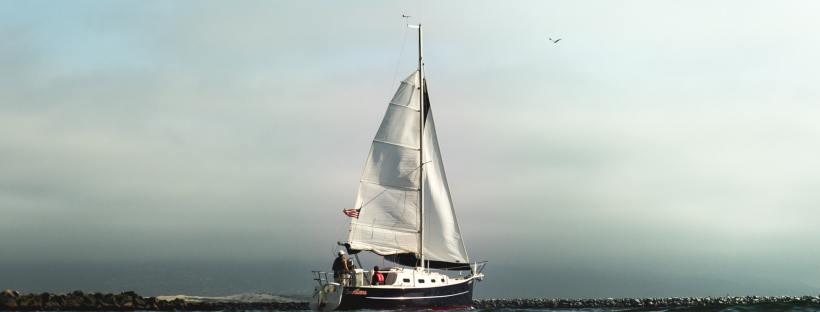
Our courses and careers are oceans; and, being as driven as we are, we set our sights on the most perilous ocean of all, the most respected, the most feared: medicine.
With water stretching beyond the eye’s view, medicine is a vast expanse of knowledge — so this knowledge is what defines the rat race that we will run for the rest of our lives.
In this race, thereare two types of med students: those who chose it because of the science, and those for the art.
The science-minded set sail with purpose, ready to absorb all the facts to face the waves. Anatomy. Pathophysiology. Pharmacology. With clinical precision, they are the experts in class, having built their foundations on an ever-expanding empire of Anki decks, succinct summaries and superhuman self-discipline. Ever the model med student we all aspire to be, they readily provide answers to diagnose, investigate, treat and repeat.
The art-inclined appear more adrift, at times letting the waves carry them forward, at others beaten down by the currents. Culture, lifestyle, psychology. Learning the cold, hard facts for the sake of knowledge — yawn — is met with boredom, or acquiesced acceptance. It’s the human touch that makes it all worthwhile, that’s what gets them out of bed, and that’s why they chose medicine… “to help people”.
By this measure, the former are the captains of their own ships, sailing miles ahead. The latter are seen as inferior, as the knowledge pours in one ear and out the other, sometimes completely washing over their heads. But no matter, “we beat on, boats against the current, borne back ceaselessly into the past.” Scott Fitzgerald definitely wasn’t exactly thinking about med students when he wrote The Great Gatsby, but it captures the idea…that maybe we’ve been looking at this wrong the entire time.
~
After the euphoria of acceptance into med school faded, in crept weary resignation. I came into first year thinking, “Well, I’m going to be buried in books for the rest of my life,” somehow ironically missing the fact that I had spent most of high school like that already.
And that’s the problem. It starts in high school, because the system — whether VCE, HSC orinternational— tests your knowledge and determines your intelligence based on a number, so you take the wrong idea away, believing it to be a measure of your self-worth. Even worse, the system is in fact no true measure of knowledge nor intelligence.
What we really end up doing is gaming the system to achieve the highest numbers. We trained to become study machines, because that’s the price we pay to get in, and the price we pay to stay. But only learning to study limits you to one dimension of intelligence. Obviously, we overcome this with extracurriculars and jobs. But sometimes that’s less so out of genuine interest, and more just a practical move to tick all the boxes.
Now the ATARs have morphed into CVs, so we work towards building the perfect resume for that internship one day, then our dream specialty and then…the finish line stretches onwards. Because tomorrow “we will run faster, stretch out our arms farther…And then one fine morning —”, we think our sacrifice — of our lives, our enjoyment, our happiness — will finally be worth all the misery it took to get there.
It’s as though being drained by medicine is a rite of passage. Because if you’re not stressed out, struggling to balance all your commitments and deprived of a social life, are you even doing it right?
We’ve been so ingrained with the idea that we must constantly work towards the destination that our journey is moulded solely to reach that aspiration, even if it asphyxiates us in the process.
That’s because we focus and sharpen our science whilst suppressing and dismissing the art within ourselves. But the best future doctors combine both — scientific knowledge, with the artistic secret ingredient — wisdom.
~
Whilst knowledge is about doing, wisdom is about being.
Knowledge wants to get into the ocean no matter the weather, but wisdom quietly heads for the shore rather than be battered by the storm, so as to go full speed ahead when the waters are still.
Knowledge makes you “run faster, stretch [your arms out] farther,” where wisdom recognises that “one fine morning” was never going to arrive at your door; because it’s already here within yourself.
Knowledge must be learnt and learnt again, but the beauty of wisdom is that it will always stay with you, once you realise the truth.
Your mind is your sharpest weapon, but it is your mindset that harnesses its strengths and tempers its excesses. Knowledge and wisdom are really two sides of the same coin, where the former pragmatically accepts sacrifice as inevitable, the latter chooses to see the inherent idealism in its path.
So you strike a balance between the two, and come to the conclusion that medicine is a lifelong voyage, and that by undertaking the commitment to learning and growth you are living your ideal — at once knowing you are good enough but promising to strive to be better — and that’s as close to perfect as it can be.
Life is your birthright‚ they hid that in the fine print
Take the pen and rewrite it
— Beyoncé, Bigger
Medicine does command more from us than most. The waves are higher, the storms are rougher and the hurricanes are larger — so it is only instinctive to see it all as sacrifice.
But the ocean does not exist by itself. Medicine is a significant part of our lives, but is not the only thing which defines it. We are so busy looking forwards, we forget to look upwards — towards the sky, toward the rest of life. Sometimes life makes med hard, sometimes med makes life hard, but both are only parts in a grander balance of nature. So, changing your worldview on life also transforms your perspective about medicine.
Even if you master how to batter against each and every single pre-clinical wave, that does not prepare you for the cyclones and typhoons of the clinical years. Whilst knowledge must have control to alleviate that fear, wisdom recognises that you don’t have to conquer an ocean in order to navigate nature. Constant change is the only certainty, so you accept the uncertainty — because it’s all water. Even hurricanes come to pass, with calm days on the horizon; because the bad times will always have some good — you just need to look up.
When knowledge views life as a threat, you just survive — and some do better than others. Wisdom sees it as a challenge, and rises to it — and that makes the difference to let you truly thrive. So rewrite those limiting beliefs and narratives in your head, so you can chart the course to fulfil your destiny.


 The Auricle