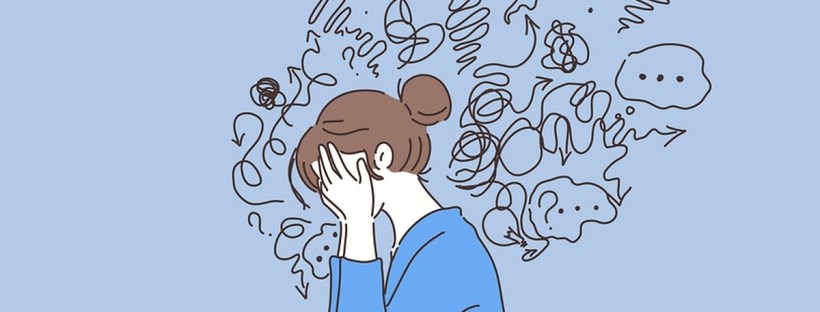
Have you ever found yourself worrying about one specific thing, which somehow leads to numerous other relevant or/and irrelevant worries that you just end up spending hours being anxious and worried? Have your worries ever interfered with your focus on studying and working, which eventually made you even more worried as the deadlines are coming closer but you have even less time left? Have those worries ever followed you till you go to bed, when you feel tired and sleepy, but somehow those worries during the day just cannot leave your mind, and the next thing you know it is almost the time you need to wake up and now you are still awake and left with more sleepiness and worries?
All of the above situations may sound quite familiar to some of us, and a lot of people may have experienced that vicious cycle of worrying at some point in their life. In fact, worry in and of itself is not as bad a thing as we may tend to think it is, a healthy amount of worries can actually serve to help to motivate us to take action to stop those uncomfortable feelings and thoughts. However, worries can also easily become a cycle of self-perpetuating negative thoughts that are uncontrollable and detrimental to not only your productivity but also your happiness in the long term.
“However, worries can also easily become a cycle of self-perpetuating negative thoughts that are uncontrollable and detrimental to not only your productivity but also your happiness in the long term”
There’s a saying by Corrie ten Boom which I find more and more accurate the more I think about it – “Worry does not empty tomorrow of its sorrow. It empties today of its strength”. Excessive worries indeed can adversely affect our study and work and put a strain on both our mental and physical health as many studies have shown. So, now we know that it’s bad but how to stop it?
The very first step of tackling worries is to realize and accept that you are excessively worried and you need to do something about it.
The very first step of tackling worries is to realize and accept that you are excessively worried and you need to do something about it. It can be hard to totally eliminate worries especially if your problems can’t be fixed right away, but you can always set aside a designated time for worrying. Instead of staying worried for all day and everyday, set a fixed period of time like 30 minutes a day when you can think about your problems. During this time, identify what is worrying you and try to list out different options of how you may deal with this problem. When you can come up with a plan of what to do, you can then take small steps toward the goal, which would be way more productive than just being chronically worried without a specific solution. This special “worry time” should be far away from your bed time so not to compromise with your sleep, and whenever you catch yourself worrying not during this set time, make sure you try to think of something else or do something to distract yourself. Of course, things are easier said than done, but do not forget to give yourself time to control the worries, share your issues with your loved ones and be patient and understanding to yourself while you are dealing with all the stress and worries. I hope that that reading this may somehow help you to briefly forget about your current worries, and will motivate you to set your own worry time soon when I strongly believe you can also find a way to overcome your problems.
BY MONIQUE CONIBEAR (MUMUS Community and Wellbeing)
Before this month, I thought I knew what endometriosis was. I had learnt a bit about it at uni, done a bit of my own research and even read some personal stories from women who have experienced it. However, the truth was I didn’t really know that much at all and even now, I can’t completely grasp the impact it would have on someone’s life.
On the 4th of March this year, just 4 days into Endometriosis Awareness Month I got a call from a friend. For years, this friend had been experiencing horrendous abdominal pain. She had gone through both gastroscopies and colonoscopies to try and diagnose it, had a resting heart rate above 100, had been diagnosed with postural orthostatic tachycardia syndrome (POTS), and had even had a loop recorder device implanted to record her heart rate and rhythm 24/7. Unfortunately, despite all this they still couldn’t figure out exactly what was causing her abdominal pain and a lot of the time doctors simply ruled it down to ‘anxiety’ without fully listening to her story.
Then on the 4th of March she had another visit to the emergency department with severe abdominal pain linked to her menstrual cycle which had put her into a massive POTS flare up (increased heart rate and large drop in her blood pressure making her feel faint). The doctors asked for her permission to do a transvaginal ultrasound and of course at first, she was hesitant. By this stage she had gone through numerous investigations, MRIs, colonoscopies, gastroscopies etc. and a lot of them had come up completely clear. To decide to have such an invasive investigation with the risk of it revealing nothing was a difficult decision to make however she went through with it and was lucky she did because they found cysts on the endometrial wall.
“Studies suggest that endometriosis affects 1 in 10 women during the years they have their periods, 10% of the female population”
Endometriosis is a condition where tissue that is similar to the uterine lining grows outside the uterus and causes pain and/or infertility. Due to the nature of this condition, it can only be fully diagnosed by undergoing laparoscopy and having a biopsy taken. Although my friend wasn’t definitively diagnosed with the transvaginal ultrasound, the doctors are now pretty confident she has endometriosis and for once she finally has answers to why she has been experiencing so much pain.
Studies suggest that endometriosis affects 1 in 10 women during the years they have their periods, 10% of the female population. Diagnosis of the condition is often delayed, with an average of 7 years between onset of symptoms and diagnosis. The reason for this is endometriosis is incredibly unique and individualised to every person. For my friend, the pain didn’t always occur at the same time as the periods and as a result it was exceedingly difficult to diagnose.
One of the ways we can help is to increase awareness of endometriosis. To let women, know that it isn’t normal to experience severe period pain and to give them a space to be heard.
One of the ways we can help is to increase awareness of endometriosis. To let women, know that it isn’t normal to experience severe period pain and to give them a space to be heard.
This ENDOMARCH and beyond, take some time to learn more about Endometriosis and how you can help those around you who may encounter it:
By Sophie Skuza and Dana Boden (MUMUS Gender Equity Committee)
Trigger warning: sexual harassment and sexual assault
The voices of women have dominated the Australian media landscape over the last two months. To recap, we’ve had 4 allegations of rape against one man in our Federal Parliament, a historical rape allegation brought to light against one of the most high profile people in Federal Cabinet, and a petition started by Chanel Contos to teach comprehensive sex education in schools at an earlier age.
These events, along with International Women’s Day on March 8th, have contributed to the recent widespread outrage felt by many individuals across the country, and resulted in the nation-wide Women’s March 4 Justice held on March 15th.
While, at first glance, these issues – namely gender-based discrimination and the sexual assault of women – might not be strongly connected to the medical profession, the reality is that these issues are still commonplace. Within hospitals and other healthcare settings, to this day, there exists the rampant mistreatment of women, both as patients and as colleagues. Women and people of diverse genders still face challenges every day, which is why the battle for gender equality is so important.
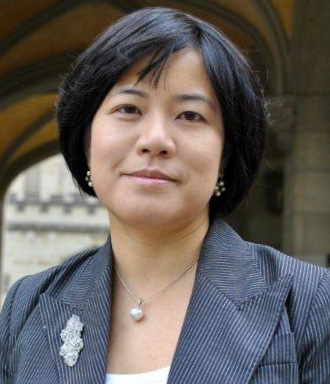
Take the case of Dr Caroline Tan, a neurosurgeon whose career was derailed after she spoke out against the sexual assault she experienced from a senior colleague in 2005. Despite winning the case against her senior colleague in 2008, Dr Tan believes that her decision to take action against the sexual assault she experienced contributed to her being shunned by other surgeons and repeatedly overlooked for positions within both public and private hospitals. During her VCAT hearing, Dr Tan was accused of fabricating her sexual assault experience as an ‘excuse’ for her poor work performance. She was forced to relive her assault in vivid detail, while her authenticity was criticised when she couldn’t recall exact details about the “colour, size, or shape” of her abuser’s penis. It was also revealed that the individual she initially reported the assault to, the head of her department, responded to the tune of, “What do you expect when you dress the way you do?” after she disclosed the details of her assault to him. Dr Tan’s abuser did not face any disciplinary action, and he continues to work with the same employer (at Monash Health).
Dr Tan’s case was referenced by Dr Gabrielle McMullin, a Sydney vascular surgeon, at a function in 2015. Dr McMullin, who, rather than praising Dr Tan’s strength in reporting her assault, made the shocking and heartless suggestion that surgical trainees should stay silent and complicit if they have been sexually assaulted by a colleague, as speaking up about their abuse could have consequences for their careers. She went on to say; “What I tell my trainees is that, if you are approached for sex, probably the safest thing to do in terms of your career is to comply with the request. The worst thing you could possibly do is to complain to the supervising body, because … you can be sure that you will never be appointed to a major public hospital”.
Possibly the most horrifying part of Dr McMullin’s speech was when she said Dr Tan probably would have been “much better [off] to have given [her abuser] a blow job on that night”.
“This unacceptable abuse of power is unfortunately far too common within the medical profession, especially due to the strength of hierarchical structures existing within hospitals”
This unacceptable abuse of power is unfortunately far too common within the medical profession, especially due to the strength of hierarchical structures existing within hospitals. The entrenched belief that women should simply accept and comply with unwanted advances to further their careers serves only to subjugate women while encouraging further violent and illegal behaviour from men. It also contributes to the attitudes surrounding misogynistic statements such as, ‘she slept her way to the top’, rather than revealing the reality of this statement: ‘she was taken advantage of by men who use their positions of power to dominate women’’. Furthermore, Dr McMullin’s comments disempower women from seeking counsel after they have experienced sexual harassment or assault, causing profound feelings of shame, hopelessness, and trauma.
The case of Dr Caroline Tan is disturbing, tragic and outrageous. Her story is hard to hear, and it is a stain on the medical profession that we should all be ashamed of. But rather than just accepting her story, we have to change the narrative. We must ensure there are no more individuals treated as Dr Tan was, and rather than victim blaming and coercing women into silence, we must encourage them to speak up, and support them whilst doing so. We cannot continue to live in a world where the choice exists between a woman’s career and her safety.
The theme for this year’s International Women’s Day is “Choose To Challenge”: why not challenge yourself to be a stronger ally for women and other people of diverse genders, or challenge others to change their behaviour towards women?
It begs the question: what can I do to help?
The theme for this year’s International Women’s Day is “choose to challenge”: why not challenge yourself to be a stronger ally for women and other people of diverse genders, or challenge others to change their behaviour towards women?
Call out misogyny and other gender-based discrimination/prejudice.
If you hear others, including your friends and family, speaking about women in a derogatory way, stand up for women and tell those individuals that the way they are speaking is not ok.
If you see a woman being bothered or harassed, walk over and support her.
If someone opens up to you about sexual harassment or assault, do not victim blame them. Listen, hear, and encourage her to report. Do not get defensive or pass it off as unimportant/insignificant.
Advocate for women’s issues and other gender-diverse issues – sign petitions, attend protests, spread information!
————————————————————————————————————————————————
The MUMUS Gender Equity role was founded in 2018, and since then the Gender Equity team has worked hard to bring representation and inclusivity to Monash Medicine through four key areas: curriculum, social media, community building and advocacy.
In the past few years, great things have been accomplished, including:
Making the anatomy curriculum more trans inclusive by changing male/female to assigned male/female at birth
Introducing asking sexuality into the reproductive history, to avoid assumptions of straightness
Introducing pronoun stickers to clinical student name badges
Data collection to ensure MUMUS is accurately representing the medical student body
Upskilling events with panels of incredible female-identifying medical professionals
In 2021, we hope to bring even more inclusivity to the curriculum, as well as running incredible events, building community through our Facebook group SafeSpace, and spotlighting incredible health professionals on our socials!



 The Auricle