Medical Student Gets Lucky; Consultant Buys Team Coffee On Student’s First Ward Round In Five Weeks

By Christopher Nguyen

In a feel-good news story for your Monday evening, The Auricle has received word about some miraculous happenings at Monash Medical Centre.

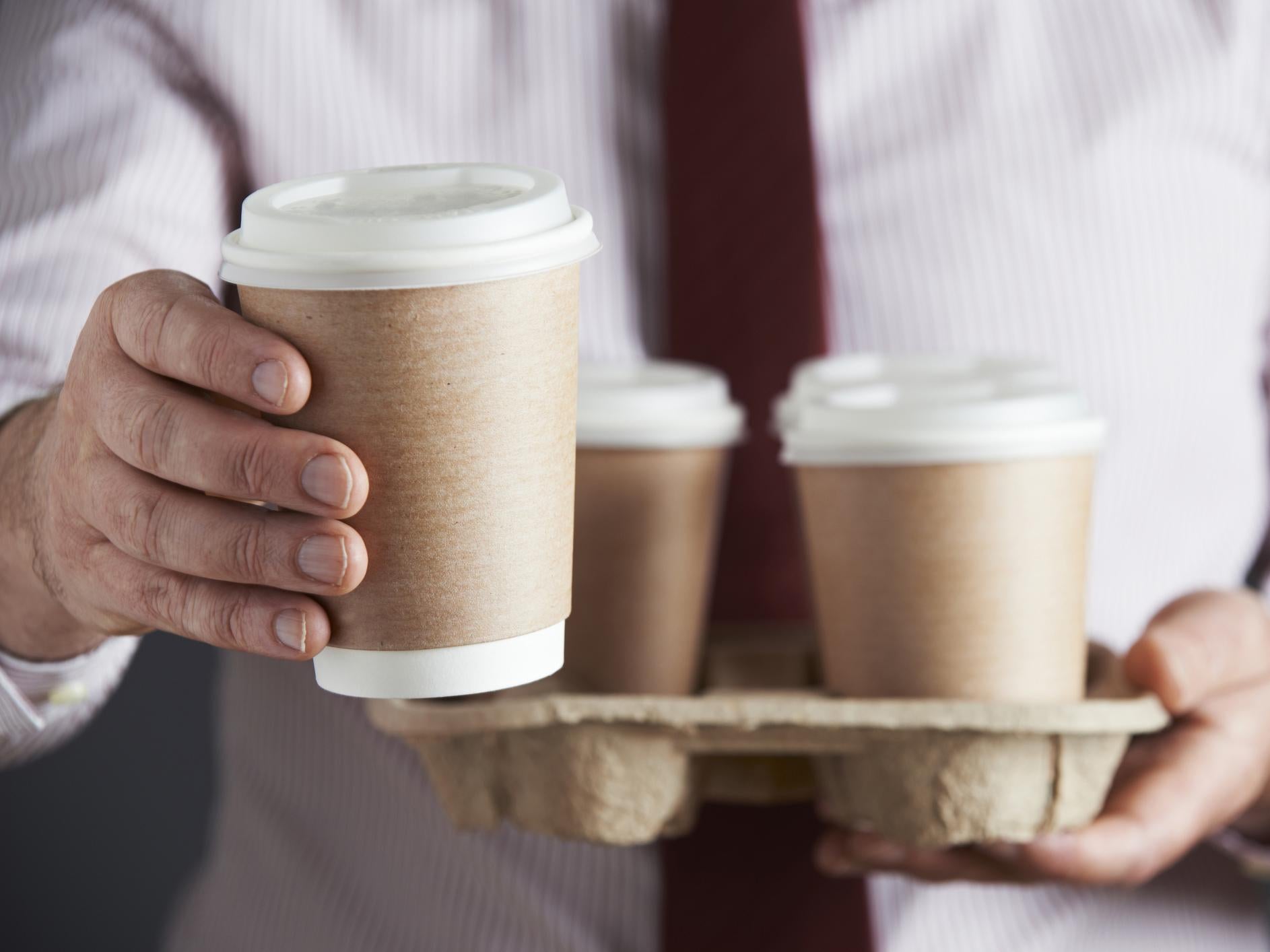
Third year medical student Jean Allen, attending her first ward round of the rotation, has managed to swoop on her rotation group’s hard work and take advantage of a free cup of increasingly transient and ineffective liquid Ritalin: a good old-fashioned coffee.

“This is the first ward round I’ve attended in this rotation and it just happens to be the one where the consultant’s finally warmed up to the medical students enough to shout them a soy cap. I reckon I’m off to buy a lottery ticket today.”

Her less truant counterpart, ward partner Michael Jamieson, scowled in the corner with his long black, ruing the early starts and daily four-hour sessions spent roaming around the hospital trying not to get in the way of important routine procedures on the ward rounds each morning.

“I’d be lying if I said I wasn’t annoyed. I’ve tried every trick in the book; getting here earlier than the registrar, chanting my full name three times whenever someone’s asked for the medical student, even scrambling for my stash of fifteen pens that I’ve slowly been giving away in the hope that the consultant realises they’ve been taking my pens before taking pity on me and shouting me that elusive coffee. I’ve even declined going to the outpatients’ clinic to subject myself to an afternoon of tagging along with the intern on the ward and being an absolute pest while they’ve done paperwork to try and cash in on just fifteen glorious minutes of team bonding and that damned free coffee I desire. It’s just unfair, ridiculously unfair. I had half a mind to oust her right there and then. I was going to go all Damian from Mean Girls on her.”

In light of these revelations about the underground world of ‘coffee hunting’ from the higher ups, we went in search of more comments on the current state of arse-kissing at a third-year level and future forecasts for the field.

“I reckon it’s all about picking and choosing the team based on the vibes you get,’ remarks one student wishing to remain anonymous. ‘Things like whether the consultant wears a tie doesn’t give you much to go on; it gives you an idea of whether you should bother showing up at all, because you’d probably be grilled on how they used to treat a rare condition back in the 1960s. I’ve heard some people use the consultant’s reaction to the classic ‘I have a tute’ excuse to get out of ward rounds as their litmus test for whether they should persist with trying to get some sweet, sweet bean. If they show interest and ask you about your tute trying to catch you in a lie, you just know you’re in for a bad time. My yard stick is whether the consultant continues to ask for your name despite forgetting it at least 5 times. I’ve got this general surgery consultant and she’s up to 4 now; she puts in the effort to ask every time, I’m definitely in with a chance. She’s operating tomorrow and there’s a prime twenty-minute window between her second and third case; pick your battles wisely, I say.”

At the very least, it’s abundantly clear that this issue hits home for many medical students; both in its familiarity and importance. As another student explains and/or complains, “How am I supposed to know whether I need to buy myself a baseline coffee to get me going in the morning if the field is so volatile these days? What if consultants suddenly start buying us coffee before ward rounds? Would I even want to live in such an unpredictable climate? I can’t have two coffees within 30 minutes. I haven’t experienced enough stress and hardship for that yet.”

What started as a positive snippet of news has become an investigation into an extreme sport as old as time itself. The competitive nature of coffee hunting and today’s incident may even perhaps be an allegory for the challenges of finding advantage and favour, in order to further our individual causes at the expense of our relationships with our fellow peers, only contributing to the mutual self-destruction of cohort morale. This, however, isn’t the time for speculation into any hidden meaning behind a seemingly harmless and friendly sport occurring every single day.

Despite all this, our team is left with more questions than answers as they assess the facts that remain: first, that team coffee rounds will perennially be unpredictable, perhaps on purpose to drag students out of bed to ward rounds; second, that the coffee conundrum of whether to bank on snaring a free coffee and forgo the self-funded morning perk continues to stew in the bleary minds of students; and lastly (yet most terrifyingly) that it’ll only get even more messy in fourth year as coffees on the ward are exchanged for babies in the labour suite. The Auricle understands that the dynamics only get more tense when the stakes are higher and midwives and logbooks are involved.

Reporting for the Auricle and signing off,

Christopher Nguyen


Feature image from The Independent 

Self-care is a long term relationship with yourself

By Tanya Tang

Self-care has become trendy lately. #selfcare has nearly 5 million posts on Instagram, and more on Twitter. But when you log into Instagram and hit up the search bar, the first few posts under #selfcare are of girls with their perfect beach tan glowing under the sun, captioned with something along the lines of ‘how to stay soft all day #selfcare #selflove’ and a long list of beauty products. Further down the page, there’s a post extolling the greatness of a morning bath for a busy mum, complete with a picture of a rose filled spa bath.

Somewhere along the line, something has gone horribly wrong.

When we think of self-care, there’s a trend towards self-indulgence. Self-care has become synonymous with ‘treat yourself’—a tub of ice cream for the days that are too stressful, a shopping splurge or ‘retail therapy’ because you deserve it. The face of self-care has become cold-pressed juices, yoga and motivational quotes. Even when we bring this back to the basics that we as medical students have understood and experienced, mindfulness has also been commercialised. The old Buddhist meditative way of living has evolved into McMindfulness that slots into busy consumer lives just as easily as a one-tap-pizza-to-door delivery service. Often it isn’t taught right. For some, myself included, the sort of meditation that is taught to us in first year only serves to heighten our anxiety and, at its worst, can trigger an episode of depersonalisation.

What, then, is self-care?

Self-care is anything that is initiated by a person to maintain their physical, mental and emotional health. The key word here is maintenance. The self-indulgent nature of the modern consumer based self-care so prevalent nowadays is not sustainable. We take photos of our salad and tag it #selfcare but behind the uploads are the bags of potato chips and a few too many batches of brownies that were stress-baked. We buy packs of face masks and beauty products for a night to ourselves but end up peeling off the black charcoal mask to reveal a festering layer of guilt for the wasteful spending of our savings.

And if you see a trend of self-care targeting wealthy females, that’s not entirely a coincidence.

Self-care is neither kind, nor indulgent. It is a chore to be practiced every day, every hour and every second. More than mindfulness, meditation and becoming aware of the present, it is a deep introspection of yourself. It is facing yourself in the mirror and criticising yourself so that you can be a better version of yourself.

It is, in fact, a dedication to discipline.

It takes time to cultivate a truly balanced mental state of mind, and it definitely will not bring a sense of instant gratification. That mental health day we take when we are burnt out serves to only bring us a sense of instant gratification that lasts maybe only a day or two. To draw a medical comparison, it is the band-aid fix to a chronic ulcer. By practicing good self-care and self-control every day, we reduce the chances of burning out. Perhaps we might even prevent needing a mental health day.

How to care for yourself

This is perhaps the trickiest part. Despite knowing exactly what is good self-care, how do we in fact SNAP ourselves? With the trend to become healthier mentally and physically, the motivation to get started is right there; and yet that gym membership is still unused despite saying that you will go to the gym every day since Craig Hassed taught you exercise is the essence of health.

It isn’t a lack of motivation. It’s hardly the lack of motivation with all the attention being focused on student and doctor wellbeing in the medical area, and also on self-care in the wider society (albeit in a self-indulgent way).

It may not even be an issue with laziness.

It’s a problem with converting words into action.

‘Taking care of yourself’ is a huge, intangible concept with so many branches and offshoots, it may as well be one of those mirror labyrinths. There’s the diet, the exercise, the work-life balance, the social aspect and the hobbies amidst all our study. By taking small steps, we can gradually incorporate every aspect of what good self-care looks like, and nurture a balanced physical, mental and emotional wellbeing. We can plan it all down to the details, we can allocate time and money, we can scout out which gym membership is cheaper and we can educate ourselves on the healthiest recipes and procrastinate and procrastinate, but in the end, we have to own up to the fact that motivation was never the culprit in the first place.

In the end, you just have to take a deep breath and commit to yourself.


Featured image from Yoga Journal

The Adventures of Pen

By Rav Gaddam

There are many things that bind the medical student community together; our love of stealing food, the ability to still be bamboozled by an ECG, and of course, our innate skill to lose pens at a rate that Ebola has got nothing on.

But have you ever truly wondered what happens to a pen? Where does it go? What adventures does it have? Ever wonder about the people and things it sees?

Well, if you’re reading this article, you can guess that I have.

My pen’s journey began last year, when I lent it to my consultant who snapped their fingers at me and gestured to my pen as they were on the phone. “Do you also have some paper?” I was also asked, while begrudgingly handing over my favourite black pen.

I was unfortunately called away by a registrar, lured away with the promise of being able to cannulate the next patient. As you can expect, I never did get that pen back, and I assumed it had been lost in the depths of the pen blackhole that is a hospital.

At the same time though, I also imagined that my pen saw many exciting things in its life. It would likely have been used to draw up a drug chart to save a patient from a DVT, or sign path forms for a renal patient on dialysis. It could have been used to write down obs on a glove in ED, or provided comfort to that paeds patient who had left their mark on the hospital (likely on the walls, possibly on the bed covers). It could have also vacationed in world of hospital administration, and heard all the juicy gossip about the number of beds that were not available that week. Who knows what the pen could have done; the possibilities are endless!

Well, in some exciting, awe-striking news, I found the pen.

Nearly a year later, as I rocked up to the first day of my new rotation, I found “pen”, as I affectionately now call it, sitting innocuously in a surgical theatre. “It couldn’t be,” I thought to myself. “After all this time?”

Now, I can imagine some of you scoffing at this story, and some perhaps even accusing me of stealing a pen that perhaps did not even belong to me anymore, for it now belonged to the hospital. Pish-posh, I say. This event was a reunion that would have put The Notebook to shame, and made you weep like the time Mufasa died (it’s been 24 years, and I still cry. Every. Single. Time.)

It would have been a reunion story for the ages, a tale so splendid that David Attenborough would have wanted to make a documentary about it.

That is until the consultant snapped their fingers, and off my pen went on an adventure again.


Featured image from user FP Network on The Fountain Pen Network