On apples, oranges and ripples

By Natalie Liu 

In an education system which intrinsically pits us against one another, which ranks us on how many marks we lost in some exam or assignment, it’s hard not to compare yourself to others.

In a high-pressure course where every single person is smart, driven and high-achieving, it’s hard not to diminish yourself when you don’t measure up to your peers.

In a world where success is praised, promoted and shared, and ‘failure’ is kept to yourself, it’s hard not to feel ashamed if you didn’t quite make it. Especially if others have.

It’s that clench in your jaw when you can’t grasp a concept that everyone else in the lecture theatre seems to get, the tension in your shoulders when you hear your friend has finished the matrix and you’ve barely begun picking your way through Cardio, the twisting in your gut when you’ve struggled to just pass the year, while others seem to sail through with ease. Thoughts like “what am I doing in this course?”, “how will I ever make a good doctor if I can’t even do xyz?” begin to swirl around; crippling doubts, fears and insecurities seep into your day-to-day psychology.

Is it impostor syndrome? Probably. Med student type A personality? Definitely. The good news is, if all this sounds familiar, you’re not alone. Not at all.

We all have defining moments in our lives. Like ripples in still water, they travel unchecked and gradually affect every part of our lives. I’m not sure exactly when or where I picked up the habit of comparing myself to others, but it was making me miserable, and I wasn’t even aware of it.

My epiphany came one fateful afternoon during a delightful Digilab on neuroanatomy (that one where Lazarus maps out all the cranial nerves and their function). I was sitting with a friend – let’s call her X. As X and I struggled to keep up, the other members of our table seemed to pick it up just like*that*, and cruised through. Again, that prickling feeling of panic and frustration began to rise within me; soon enough, I wasn’t even taking in what our professor was saying. I glanced over at X, and was completely shocked to see that she was smiling. I questioned her about the little grin, to which she replied, “all these people are so smart! It’s inspiring, I want to be like that.”

Mind. Blown.

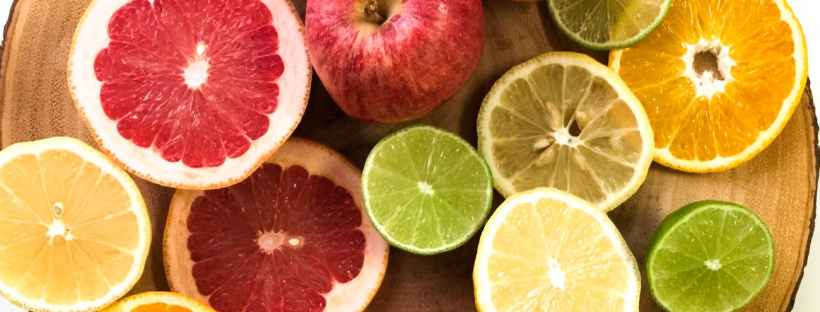
To X, what she’d said was probably just a comment in passing, but to me, it formed the basis of a completely different psychology. It got me thinking- why not let these moments inspire you, rather than highlight your deficits? Why compare yourself to someone whose brain is wired completely differently? Or to someone whose life and circumstances are entirely different? Isn’t it like trying to compare apples and oranges?

And just like that, I created my own ripple, and consciously directed it towards something more positive and self-accepting.

So, here we are, almost a year later. Breaking down habits, especially ones that’ve been rooted within your mindset for years, is like bulldozing a mountain. But I continue to chip away at it at my own pace, and hope I’ll build a new one, with a sunnier view.

At last, here’s my guide to combatting those moments. Can’t say I’ve mastered it, but I’m trying at least.

  1. Acknowledge: When you feel that panic start to rise again, acknowledge it. It’s normal. And whether you believe it or not, everyone else around you is probably feeling the same deep down.
  2. Breathe: Take a deep breath in and out. Let that tension dissipate.
  3. Mantra: At this point, I’ll say to myself- “apples and oranges”. (But if your thing is tacos and quesadillas, well, you do you.)


Then, put those blinkers on and move forward.


“Comparison is the thief of joy”

-Theodore Roosevelt
A Monash Love Letter to the Jaffies

#8519

Clayton/Medicine/Being a first year


Scrolling through Monash Love Letters has become a part of my daily routine. Reading through the sad breakup messages and hopeful love letters to strangers with the excitement that maybe one day I will come across one for myself. It’s funny how I treat it as light-hearted banter, until I read one that I can personally relate to.


Over the past semester, several letters written by first year Medical students have appeared on my newsfeed, many hitting close to home. Starting university was most likely a daunting process for many of us. Even having grown up in the area and living close to campus, the thought of having to leave my old friends and start a new chapter of my life amongst strangers in a course I was interested in yet uncertain about was nerve-wrecking.


First year is the start of a long journey, and as a second-year student looking back, I too remember the feeling of not quite fitting in. I remember feeling disconnected from my peers as they greeted each other every day with hugs and excitement. As someone who is naturally introverted, I often felt uncomfortable around large groups of people I did not know well, mostly whom seemed extroverted and enthusiastic. As many students know, compared to other university courses, Medicine can be ‘cliquey’ and as semester passes by, it can seem difficult to make new friends once everyone has settled into their own groups. If you are in the same shoes as I was, it is easy to use study to escape the insecurity and anxiety associated with the stress of the course.


Eventually, I decided I would be the one who had to actively get to know my peers, even if the thought of making small talk was something I dreaded. I did not want to make superficial relationships just for the sake of making friends in my course; rather, I decided to get to know people who I felt I could ride out my medical journey with. When you find people you can click with you don’t feel the need to change yourself to fit into ‘the group’, rather you feel comfortable being your complete self around them. Thankfully, I have a small but close group who I can study, party and have fun with. Get involved, stick around after classes and lectures, go to events and even if it seems lonely, you are not alone with this feeling.


It is important to note that medicine can be one the loneliest professions. It can be difficult to maintain long-lasting friendships while studying full time at university for long hours, continuing into residency and clinical training. As much as it is rewarding, medicine is a demanding and competitive career where much of your study is reliant on working and spending time alone.


We all know medicine is a hard and stressful course, so we have to do everything we can to look out for one another. I encourage you all to check up on your friends and to be inclusive and welcoming. Although you may be comfortable in your bubble of friendship, go to events and get to know new people, approach your peers if they look like they would like some company and shoot your shot with the person you wrote a MLL about, because we are all in this long journey together.


Humans of Medicine Issue #1 Featuring: Maya Moses

Welcome to our inaugural addition of Humans of Medicine!

Our first featured human is a 4C medicine student, a pro-vaccination advocate and a previously unvaccinated teen – Maya Moses


Tell us a bit about yourself

I grew up in Mullumbimby, which you may recognise as being number 1 on that list of “places with the lowest rates of vaccination in Australia” that always seems to be in lectures about vaccines. It is a very alternative area, which has some really awesome aspects to it, like being very socially progressive and ahead of the curve on environmentalism. It does have some really negative aspects like measles outbreaks and giving us Iggy Azalea.

Despite the sometimes science-sceptical nature of people in my hometown, I’ve always been very drawn to it, and rational explanations for things. I’m a very firm believer that a scientific explanation always makes something more interesting and magical, rather than detracting from it. Ironically the only science I didn’t do at school was biology, and I got really queasy during the dissections you do in like year 9 or 10. Somehow, I just decided in about year 11 that I wanted to be a doctor and applied for Biomed at Monash.

I would say at the time it was a pretty arbitrary decision when I made it, but I really love medicine and find it super interesting. You can take it in a lot of directions which I appreciate. There is always more to learn which is kind of awful and amazing at the same time.

Tell us about your vaccine journey

So, at the time I was born my parents were pretty much only exposed to anti-vax rhetoric and so didn’t know much better. When I was a year old I got whooping cough, and thankfully my parents reconsidered their views. You might think that’s how anyone would react, but I do have friends who had the same experience as me, and their parents are still vehemently anti-vax.

My brother, who is 10 years younger, got vaccinated and at the time my parents attempted to start catching me up on vaccines. I, however, was resistant to it because I was afraid of the needles. The first vaccines I got properly were the ones you get in high school.

I remember always being pro-vax, but I was a bit slow to get them done because of my mild needle-phobia, and the costs associated with it. But I did need to get them done for medicine and that gave me the final push. It was surprisingly a lot more confusing to navigate than I had expected.

Why do you think some people are against immunisation?

Some people – your tinfoil hat types – are pretty much against anything mainstream. I think these people are the most vocal, but also the minority. I believe most people are just scared, and if you’re scared and uncertain about a particular action it is easier to not do, than to do. A lot of fear mongering and very biased “science” from strong anti-vaxxers creates this hesitancy.

It’s easy to think “the truth is so obvious, how can’t they see it”, but a lot of people don’t learn how to navigate scientific evidence and filter out which sources are reliable. A lot of people don’t really know things like dose-response, or relative risk, or risk-benefit analysis so they’re much more prone to believing the misinformation around vaccines.

How do you think we as future doctors can help get people vaccinated?

Educate them! And do it nicely and respectfully. If you talk to an anti-vax parent and act like you know what’s best for their child, and they don’t, they won’t ever listen. It doesn’t really matter how right you are, if you can’t communicate it effectively.

But also educate yourself, be prepared to answer the questions people have, and know how to help someone get vaccinated if they want to. I had a doctor print off the infant vaccine schedule for me and that was the whole consult – which was useless to me as an adult who had a very short time frame to get vaccinated (before med started).

If there was one thing you would do differently back in first year what would it be?

I think the obvious answer is always “study more”. But really, I’d tell myself to eat better. I get a lot of pleasure from cooking and eating nice food, and I didn’t do that at all for first year. First year is taxing, mentally and physically, and it’s a relatively easy form of self-care. It doesn’t have to be gourmet meals but make it diverse and nutritious if you can.

What advice would you give to first year medical students?

Carrying on from the last question, eat well. But also, find what you enjoy and study that first. Most people never cover all the content, and don’t save what you enjoy until last thinking you should tackle the hard stuff first. You may never get to your favourite parts, and medicine is a marathon – you’ve got to enjoy it.

Also, for graduate entry kids, the staff at Churchill are incredibly supportive if you ever need it. Especially Shane, who is a gem.

What speciality do you want to do?

Radiology! Which people always are shocked by because my strongest skill is usually bedside manner, and not anatomy. I’m actually taking a break this year from my studies and doing some research with the Radiology Research Unit at Alfred Health.

Pineapple on pizza, yes or no?

Definitely yes, pineapple on pizza to the grave.