
Look After Each Other

By Anna Shalit 

It’s getting close to midnight, and you’ve spun deep down the rabbit hole of conspiracy theory videos on YouTube. Eyelids heavy, a yawn escapes, and with it the panic sets in – you’ve done none of the seven hours of cardiology revision you promised yourself you would do tonight, and you didn’t see your friends either because you told them you needed to study. The tight grip of anxiety wraps around your gut and the pressure starts to build from within. You take deep breaths and think back to the advice from that self-help podcast you were obsessed with in first year – don’t stress. The answer is simple. Inhale. Exhale. Practice self-care.

If we look anywhere in the media, self-care appears simple. It’s a bar of chocolate and a bubble bath. A new outfit or a pair of shoes. A “thing” which simply by its possession will ease our anxieties and lull us into a state of manageable calm… Or maybe it’s yoga? I saw that fitness model eating an acai bowl on Instagram and she said she just thinks calm thoughts and all her problems go away…

Particularly as medical students, we feel the weight of high expectations and many of us struggle with perfectionism. Our type A personalities allow us to believe that we are not only capable of doing everything and doing it perfectly, but that we have a responsibility and an obligation to. Motivated by guilt and fear of failure, our superhero complexes are weaponised against us when we inevitably burn out, becoming another form of self-flagellation.

On one hand, we are told that no one is to blame for mental health issues and for burnout – that we shouldn’t feel guilty about anxiety. And yet we are also told that the answer to our issues is self-care, and that our problems can usually be fixed by our own means with the right mindset. So how can the responsibility be ours without the blame? When self-care is not enough, if we can’t do it on our own, how will we not just feel that we’ve failed again?

If anxiety manifests itself as a form of pathological self-obsession, then will introspection really fix the root cause of the issue?

Self-care becomes another box for our list-minded brains to check off from our daily tasks. Instead of easing our perfectionism, we aim to perfect self-care itself. Except that the thin young white heterosexual female poster child of wellness is not exactly an attainable image for most of us and so we fail once again.

Who really benefits from this vision of self-care that we are being sold? Is it us, who carry the burden of our personal issues as well as the responsibility to fix them? Or is it the people who can sell us the answer – the people who benefit from our compliance to systems which exploit us? By asking us to focus in on ourselves, neoliberalism has successfully stifled any resistance against the systemic issues that are making us anxious in the first place. The expectations that are perpetuated by a society obsessed with self-image and perfection, a labour of gender, race and wealth.

Why do we need self-care in the first place? Because we are flawed humans and not supernatural beings. Because expectations are high, and our hopes are even higher. Because we are left on our own, pitted against each other in our hyper-individualised society, having lost the collective mindset that our grandparents believed might change the world.

There is an uncomfortable truth we must face – that if self-care aims to fix all our problems, then it is destined to fail. Losing the superhero complex is about more than accepting imperfection. It’s about letting go of the self-improvement obsession completely and replacing it with community building, support and engagement. Finding balance in our lives has to be about more than suffering through hours of study to be rewarded with ice-cream. It has to be about remembering why we do the things we do and caring for ourselves and each other all the time, not just resorting to consumption in times of panic.

Professional help, or even support from friends and family, is treated as secondary to fixing all our problems ourselves with mindfulness and self-love. We risk making people think that they are not struggling enough to justify reaching out, that services are only there for crises, that friends only need to be called in the middle of the night. But we should be encouraging people to seek help far before they reach that level of need.

What if we followed our own medical advice, and looked to the source of the problem, an upstream approach? Helping each other as opposed to trying to fix ourselves both teaches us that we are not alone, and that by putting our care out into the community, we will get it back. If our self-care is turning outwards we might end up not needing self-care at all. Not only because of the collective support, but because we can change the societal norms and pressures which cause so many of our anxieties in the first place

Self-care is important, don’t get me wrong. But it has to be redefined in a way which rejects this hyper-individualised approach. What if instead of individual self-care, we practised caring for ourselves as a collective?

The Phases of Isolation

By Natasha Rasaratnam 

Phase 1: Relief

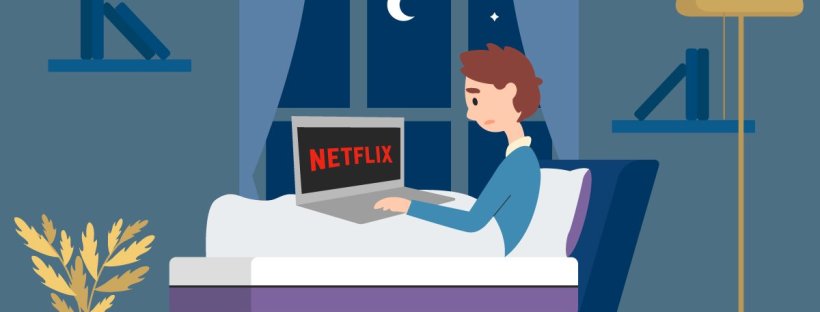
The day I received the email that we were off placement for the next two weeks, I was overjoyed! Maybe it had something to do with the fact that I was close to burnout and this was the closest thing I would get to a mid-semester break. Maybe it was because I was a great deal behind in my studies. Or maybe an excuse to stay in bed and watch Netflix seemed like a blessing in disguise.

Phase 2: Self-motivation

As quarantine started to become more than just a two week ordeal, social media was blowing up with self-help articles. Inspired by the countless, “Here are 10 things to do in isolation,” I found myself with a new motivation to self-improve during this time. How many times had I said, “I wish I had the time to read again” or “I wish I had the time to exercise,”? Now there was no excuse to not complete my wish list. The next thing I knew, I was doing crunches on my bedroom floor as I tried to ‘Get Abs in 2 weeks’ thanks to Chloe Ting.

Phase 3: A Creature of Habit

Let’s just say that I did not make it through the whole two weeks, not even close. My motivation to try new things lasted a maximum of three days. I found myself a creature of habit, returning to my sanctuary of Netflix and YouTube. Instead of becoming the MasterChef I always wanted to be, I racked up an impressive amount of completed TV shows that I had binged.

Phase 4: Loneliness

As the weeks started to all combine together to become an endless cycle of day and night, I found myself yearning for human interaction outside my family. Soon I was dreaming about eating out, a trip to the shops, even the face-to-face interaction of tutorials after facing the awkward silences on Zoom tutorials. Though previously taken for granted, I soon came to realise how much I valued human interaction.

Phase 5: The Bubble

Yet despite the sudden mundaneness of life and everything seemingly coming to a halt, as soon as I turned on the news, the bubble I had created for myself burst. Maybe it was my way of avoiding the reason why I was in isolation in the first place, pretending that we were on an extended holiday rather than a government enforced quarantine. After all, it’s a bizarre scenario that sounds like something straight out of an apocalyptic film.

I think it can be easy for us to feel trapped in our own home, inside our own isolation bubble. It’s enough to drive anyone crazy if we lose perspective. But the truth is we’re lucky. We’re lucky that for most of us, the worst part of this entire situation has been that we’re stuck at home. We’re lucky that we’re able to self-isolate with a roof over our heads, Netflix to binge and a steady supply of food in our supermarkets. Compared to the rest of the world, Australia is in an enviable position.

Phase 6: Where to go from here?

Whilst it is important to look at the situation in a positive light, for many of us social distancing has been a challenge. The isolation bubble not only keeps us from the outside, but traps us inside with our own stress and anxiety. The same internet and TV we turn to for entertainment now broadcasts the virus almost 24/7.  The constant media coverage of infection and death rates only raises anxiety. Although we may be physically isolated, it is important to prevent emotional isolation. Whether it be through Facetime, Facebook or an old-fashioned phone call, it is important to stay connected.

Phase 7: The Light at the End of the Tunnel

Indeed, this is something we never expected, and I don’t think there is any ‘right way’ to do isolation. You don’t need to come out of this a reformed person with abs and a cooking repertoire. Instead, there are many lessons that we have already learnt from this experience that will make us all better doctors. Resilience and the ability to adapt to rapid changes will hold us fast in our future careers. Most importantly, we have recognised the power we have if we all work together. As we see the number of cases fall in Australia, it’s a positive sign that our communal effort to social distance has been effective. At last, there seems to be light at the end of the tunnel.

How to HSM: The Meteorologist

By Anonymous 

What is the most important way in which care of a patient is coordinated between the health care professionals working in this clinical unit?

The sudden crack of thunder rolled over the hills in the distance. Out of the window the storm raged on, the violent swinging of the tree branches and pelting down of rain was punctuated by the odd flash of lightning. The psychiatrist sat back in his chair, leather loafers rested on his desk, staring out the window, mesmerized by the vigour of the storm. It was not uncommon to catch him in moments of deep contemplation like this.

I lurked at the threshold of his office, unsure of whether I should interrupt. I started to raise my hand to knock against the open door, but he spoke before I had the chance to do so. “Take a seat,” he said, not turning away from the window. I took a seat at his desk and sat for a moment waiting for him to prompt further conversation. He slid his feet off the desk and swivelled his chair towards me. “You see that out there,” he said motioning to the spectacle outside. I nodded, unsure where this was headed. “That,” he continued, “is the human psyche. Majestic, unrelenting, but in part, destructive.”

“Uh huh,” I responded. After a final glance out the window, his attention returned to me and he asked:

“So, what can I do for you?”

“Well, I just had another question,” I replied, “about how patient care is coordinated amongst the team at this clinic.”

“Right,” he nodded, a hint of a smile playing on the edges of his mouth, “I’ve always been quite fascinated by how mundane the questions medical students ask me are.”

“Well its not really my question, it’s for-”

“Well the short answer is that its not coordinated,” he cut me off, “its all really very haphazard.”

“Okay. But surely an attempt at organizing is made-”

“Well we try to organize,” he said, cutting me off again, “but this is a community clinic for psychosis. Psychosis, by nature, is a deeply disorganized condition. I mean being disorganized of thought and speech are in the DSM criteria. Its very challenging for a psychotic patient to adhere to appointments, scheduling, treatment and medical advice. It really undermines most of our attempts to organize.”

“Well then,” I fought on, “so what initiatives are made, however ineffective they may be?”

“Well our case workers and psych nurses to a stellar job,” he explained. “They stay in touch with patients and their families, track their treatment and progress, and organize appointments accordingly. They do house visits, provide counselling when needed, and can seek out community initiatives, job seeking services and housing for patients when the timing is right.”

“So how does that relate to what you do?” I pushed.

“They collaborate with me.”

“In what capacity?”

“In a collaborative capacity.”

“Okay…” my voice trailed off. This was proving to be quite difficult. I was beginning to think he was deriving a sadistic pleasure from this intellectual hazing. I shifted uncomfortably in my seat. Maybe I ought to quit while I was ahead. But of his own accord he continued:

“Think of it like this,” he gestured at the window again, “psychosis is the storm. The patients are the residents of the affected area, they need to be evacuated. The case workers and psych nurses are the SES, they know how to escape in a logistical sense, but me, I am the meteorologist. I can foresee and identify the illness just as it begins to roll in. I can direct their efforts.”

“That’s quite poetic,” I nodded in agreement.

“I have to write that down,” he began to search his desk for a pen, “that has to make an appearance in my memoirs.”

“Thanks for answering my question,” I said as I began to move towards the door.

“Anytime”

“And good luck with the memoir”

“I’ll send you a signed copy,” he responded with a sly smile. I ducked out of his office and hurried away with a sigh of relief.