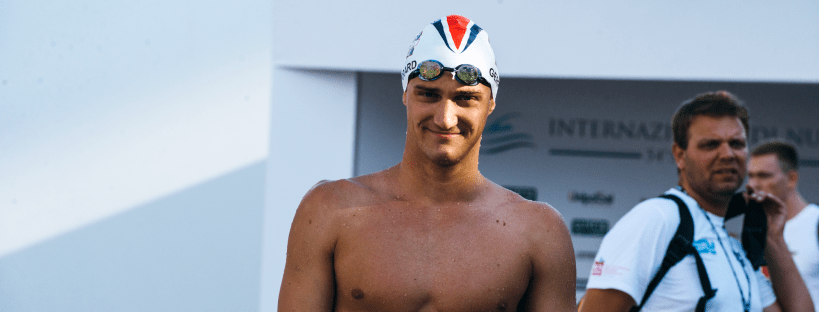
Humans of Medicine – Jack Gerrard

Tell us a bit about yourself. 

I’m Jack, I’m a final year med student, and I’m originally from Cairns. I moved down to Melbourne to complete my last few years of schooling before starting my studies at Monash. This move exposed me to a variety of new challenges and gave me the opportunity to personally develop in the sport of swimming. Whilst medicine and swimming take up most of my time, I’m currently enjoying working together with an amazing team in my role of Convenor for the Australasian Students’ Surgical Conference. In my spare time, I love relaxing in the sun at the beach or exploring the outdoors with friends.

How did you get into swimming? 

The climate in Cairns is very different to that of Melbourne! It’s pretty much always summer in Far North Queensland, so swimming is one of the most popular sports up there. Like most Australians, I learnt to swim whilst also learning to walk, and after learning the basics I loved everything about it. I enjoyed the challenge of it, being able to spend time with my squad, and having something to do after school – it was an awesome way to balance life.  

When I was 9, I started competing. I still remember these three really talented kids in my age group that I would compete against, and I was always the fourth kid who was chasing their tails. Gradually, I found ways to improve my technique, fitness and resilience with the help of my coach at the time. Slowly but surely, this allowed me to move onto state competitions, and eventually Nationals. 

Did it feel different swimming in Melbourne? 

Moving down to boarding school at 15 was a big adjustment for me. The whole experience at Melbourne Grammar was definitely more intense than the slower pace of life up in Cairns. On top of that, I was riddled with injuries for about five years, which meant that although I was still able to compete at various National Championships, I wasn’t physically and mentally performing at my best. It wasn’t until I was able to find a balance between training and studying medicine, that my swimming really improved. I love the feeling of being in the water, and I find swimming to be a great outlet after a long day of studying or placement in hospital. 

Did you ever find it challenging balancing both? 

For sure. In some ways the academically stimulating nature of medicine and the physical demands of swimming complement each other well. However, international competitions required considerable travel, which made it very difficult to combine sport and study. Towards the end of my second year, at a time when year two still counted towards the infamous z-score, I made a squad that was going to the US Open. I knew it was poor timing but I decided to go for it anyway. The event was the largest meet I had competed in at the time, and I couldn’t pass up the chance to race against Michael Phelps. I ended up missing over two weeks of course content that I had to cram upon return – definitely not a fun way to end my pre-clinical years. That experience was formative in making me realise that I wanted to take time away from study the following year for the 2016 Olympic Games. Otherwise, I was going to end up disappointed with both my academic performance in medicine and my performances in the pool. 

What was 2016 like for you? 

I was fortunate enough to have a really good performance at the Australian Olympic Trials before the 2016 Rio Olympics, but unfortunately missed out on the 100m freestyle team by half a second. It was disappointing at the time, but I was motivated to continue with the momentum that I had built, so for the rest of the year, I competed in a series of World Cup swimming competitions. At the end of the year, I had the opportunity to represent Australia as part of the World Championships team. Being able to wear the green and gold was amazing; a childhood dream come true.

Tell us about one of your most memorable swimming experiences. 

I was fortunate enough to represent Australia again at the 2018 World Championships in China, which was a surreal experience. It was the final evening of the event and there were over 11,000 people in the Hangzhou ‘Little Lotus’ stadium. I remember hopping onto the block for one of the legs of the relay, where Australia was competing against the USA, China, Russia and Brazil. As the third swimmer, I was racing against Chinese swimmer Sun Yang, who was a huge crowd favourite. The top teams were all within a second of each other and as I prepared to dive in, the crowd roar was so loud that my ears began to ring. The energy in the stadium was like nothing that I had ever experienced before.

So, where to now with your swimming? 

At the start of March, I would have said that my plan was to cut half a second from my freestyle time to try and make the Australian Olympics team this year. Reflecting on my training and preparation at that point, I felt that I was certainly making good progress. It’s hard to say what will happen with coronavirus now, but regardless, I’m looking forward to my internship next year. I’ve dedicated more than 15,000 hours over the last 15 years or so to swimming, and have learnt a lot about myself through the sport. Whilst I’ll always enjoy swimming, my true passion lies in medicine and I cannot wait to commit my energy to a challenging but fulfilling and rewarding career.

Tell us about your exchange. 

When I was made aware that the elective rotation in final year had been replaced with a research component for MD students, I was keen to obtain exposure to a different healthcare system. I decided to apply for an exchange with Harvard Medical School. I wanted to gain insight into their incredible innovation and technology as well as experience a different healthcare system that faced its own unique difficulties. 

I ended up being placed at the Boston Children’s Hospital as part of the paediatric surgery team, and really enjoyed it. There were 30 operating rooms running every day, and patients would not only fly in from all across America but also from the Middle East, China and other parts of Asia. The Boston Children’s Hospital was located within the Longwood Medical and Academic Area, which was a mini city of innovative medicine and technology. I really enjoyed the culture of inclusivity and the dynamic learning environment. Considering the hospital was neighboured by Harvard Medical School, I was fortunate to be able to study on campus and meet medical students who I am still in touch with today. 

If time and resources weren’t an issue, what is something you wish you could invent? 

Something that I am passionate about is the interaction between medicine and our environment, specifically when it comes to reducing the environmental impact of medical waste. I became aware of the magnitude of this problem as a third year student on a surgical rotation, where every single drape and many instruments would be discarded after each procedure. While disposability is time efficient and allows all equipment to be sterile, it isn’t sustainable, and in future I’d like to conduct research into creating cost effective, reusable equipment.

What is one issue within medicine that you wish you could change? 

Australia is fortunate to have one of the best healthcare systems in the world. I don’t want to come out as an expert as to where we should be moving into the future, but I’d like to see more camaraderie, equity and opportunity for everyone in medicine across all specialities. The important role of general practice in primary health care is vital and should never be underestimated.


The Demons

By Anonymous

Within your placement, ask a consultant about a clinical protocol he/she had to follow in the last week. Was there any aspect of the protocol he/she disagreed with? How did the clinician deal with this?

“Tell me about the demons, Gerald.”

A smile spread over the patient’s face at the psychiatrist’s question. The smile was genuine and innocent, and perfectly suited his chubby, childlike face. “Well they’re always around me. They keep me company. Look, there’s some right now,” he said, pointing at the ceiling above the psychiatrist’s head. I fought the urge to look where he was pointing for a moment, but then it overwhelmed me, and I looked up, to see a disappointingly demon free ceiling.

The psychiatrist seemed less interested in entertaining this fantasy and kept his attention squarely on his writing pad. Every now and then the scratching noise his fountain pen made against the paper was overpowered by a screech from the ward. The patient seemed transfixed with how the gleaming nib danced under the down lighting of the interview room.

“Have you told your family about the demons?” questioned the clinician.

“The demons are my family.” The psychiatrist looked up from his writing pad, a disconcerted expression permeating his usually infallible poker face. He hadn’t heard that one before.

“These demons, do they speak to you?” he quizzed. Gerald nodded a content, energetic nod. “Do they ever ask you to hurt yourself?”

“No, Doctor, never.” The psychiatrist went quiet for a moment, tapping the back of his fountain pen against his chin.

“What about other people, do they demons ever ask you to hurt other people?” the psychiatrist changed tact. Gerald nodded a more vigorous, almost violent nod, the smile on his face expanding to the point I was afraid he might swallow his own head.

The psychiatrist’s eyes narrowed. “Gerald, the demons aren’t telling you to hurt me, are they?” Gerald let out an involuntary giggle. The psychiatrist’s gaze flickered towards the door to his right for a brief moment, then returned to Gerald. “What are they telling you to do right now Gerald?”

Between bouts of giggling Gerald stuttered out an answer; “They’re saying to take that silly pen of yours,” his response was punctuated by more erratic laughter, “and stick it in your eye.” As Gerald continued to cackle away the psychiatrist purposefully capped the fountain pen and tucked it securely away inside his suit jacket.

“I think we’ve got everything we need Gerald, thank you for your… candidness,” the psychiatrist drew the interview to a close, and turned to me as Gerald skipped out of the interview room. “Thoughts?”

I hesitated for a moment before offering an uncertain answer, “He’s not reacting to the Clozapine the way we had hoped.”

“So, what do you recommend?” he pushed.

“Maybe we try something else.”

“We have tried almost everything else. Clozapine is the end of the line, it’s for treatment resistant schizophrenia. It’s what we use when nothing else works. We’re kind of stuck now.”

“We could up the dose-”

“And risk agranulocytosis,” my shoulders slumped as I attempted to shrink away into my chair. “It could put an end to the psychosis though,” he offered, and I beamed at my first correct answer all day, “by killing him.”

“Oh,” I sighed.

“We stand behind the TTO,” he said standing up, “There’s not much else we can do at this point.”

“Um, this may sound like a stupid question-”

“There are no stupid questions,” he interjected, “only stupid people.”

“Right.” This was reaching record levels of discomfort. “What exactly is a TTO?”

“A Temporary Treatment Order. Its kind of a measure we use for acutely ill patients, that is patients who are at risk of harming themselves or others if untreated,” he explained, “We can install one provided it is the least restrictive means to ensure safety, and it allows us 28 days in an inpatient facility to form some sort of immediate action plan. For Gerald, I just want more time to see if the Clozapine will take effect, as we are very much in the transition phase between antipsychotics.”

“Uh huh,” I nodded.

“It’s never ideal, but its sometimes necessary. Some patients really deride it, but Gerald’s a relatively agreeable fellow. Violent fantasizations aside, of course,” he clarified as he turned to leave the room and return to the psychiatric ward. After a brief hesitation I followed.


The Podcasts You Need To Listen To

By Emily Robertson 

COVID-19 isolation got you bored at home? Exhausted your list of to-do things around the house? Need a break from study? If you haven’t yet jumped onto the podcast bandwagon, now is a perfect time. With more down time during this weird situation we find ourselves in, listening to podcasts can be a great distraction from the constant COVID-19 updates. Here are some of my podcast recommendations:

Medical

Screen Shot 2020-05-12 at 11.05.25 am

Med Conversations – This is an Australian podcast by doctors working in Melbourne. There are many very useful episodes particularly for 3rd and 5th year students about important conditions – a good way to study without requiring much effort.

25674576_10155184139535959_224703860_o_copy.jpeg

Humerus Hacks – Another Australian podcast by two Melbourne based doctors, they provide helpful mnemonics and humerus ways to remember important facts about conditions, you will be sure to have a good laugh.

Screen Shot 2020-05-12 at 11.10.14 am

Junior Docs – An Australian podcast by two junior doctors about the transition from medical student to doctor, aimed at assisting this transition with episode focuses such as avoiding burnout and choosing a specialty.

Screen Shot 2020-05-12 at 11.10.20 am

Conversations in Obstetrics and Gynaecology – An Australian podcast with a number of episodes relevant to 4th year women’s health content.

Health/Lifestyle

Screen Shot 2020-05-12 at 11.12.38 am

The Food Medic – By British doctor Hazel Wallace. She interviews leading experts in their field to provide evidence-based advice on how we can live healthier lives. I also recommend following Hazel on Instagram and checking out her website for lots of delicious and healthy recipes.

Screen Shot 2020-05-12 at 11.12.43 am

The Doctors Kitchen – A podcast by British GP Rupy Aujla covering a range of topics from healthy eating to how to prevent and treat illness. He interviews experts in their field of health and medicine.

Screen Shot 2020-05-12 at 11.12.48 am

In Good Health – A relatively new Australian podcast by Dr Sandro Demaio exploring the science and research behind how to eat better to improve mental, physical and social health.

Screen Shot 2020-05-12 at 11.12.53 am

Health Report – An ABC podcast aimed at all Australians to bring clarity to the health and medical issues from social, scientific and political points of view.

News

268x0w

The Squiz – This daily podcast provides a quick 10-minute snapshot of the major news headlines in Australia and around the world.

True Crime

Screen Shot 2020-05-12 at 11.13.04 am

Chasing Cosby – A moving podcast by Nicki Weisensee Egan about the rise and fall of American comedian Bill Cosby. Each episode delves into the sexual abuse allegations made against Bill Cosby by numerous women.

Screen Shot 2020-05-12 at 11.13.11 am

The Lighthouse – A podcast by the Australian detailing the strange disappearance of 18-year-old Theo Hayez in Bryon Bay, a young backpacker from Brussels.

Screen Shot 2020-05-12 at 11.13.17 am

True Crime conversations – A podcast by Mamamia that explores some of the world’s most notorious crimes, each episode details a different crime by talking to those who know the most about them.

Screen Shot 2020-05-12 at 11.13.21 am

Caliphate – An award-winning podcast by Rukmini Callimachi from the New York Times and her quest to understand ISIS, she speaks to former members of the jihadi to get an insider view of the world of ISIS.

Other

Screen Shot 2020-05-12 at 11.13.48 am

Shameless – A pop-culture podcast by Zara McDonald and Michelle Andrews with episodes released twice a week, Mondays are a wrap of the top pop-culture and celebrity news and Thursdays are an interview with an influential person.

316378-shamelesspodcast_graphic_f

Love Etc. – A podcast by Bumble delving deep into all things love, including dating with an STI, cheating and emotional abuse.

image

Gertie’s Law – This podcast by the Supreme Court of Victoria is a must listen for anyone who feels they need to scratch up on their knowledge of the legal system. It takes listeners inside Victoria’s Supreme Court and explains the daily workings of the court and we hear from judges about why they make the decisions they do. Episodes cover many topics from sentencing, mental health, juries and the criminal trial process.

The_Joe_Rogan_Experience_logo

The Joe Rogan Experience – A podcast by comedian Joe Rogan where he interviews a wide range of guests. A must listen is episode 1109 with Matthew Walker, The Science of Sleep.