Coping with Exams During COVID

By Nicholas Wilkes

With exams on the horizon, many of us may be feeling overwhelmed with how much work we still need to do and how little time there is to do it with all the other personal and professional responsibilities in our day to day lives. When feeling stressed and overwhelmed, it can be tough to know where to even get started on work. Instead, it’s easy to find ourselves lamenting that we didn’t start earlier or spent too much time studying something “low yield” that may not come up on the exam. 

Many of us may normally rely on calling friends or studying with friends in the library in order to provide support during stressful times, and to structure our days, however for many of us now it’s hard to keep those habits when you may not be able to see them in person. Keeping all this in mind, it has never been more important to remember to take care of yourself and maintain those connections, albeit in the form of a Zoom call study session instead of an in-person study session in Matheson.

While everyone has their own ways to study, not forgetting to have a healthy routine and separating work from personal time is important to stay on top of things and feel more satisfied with the work you have done. Setting a designated study area (ideally out of your bedroom) with fixed working hours (as if you were going to hospital or university) with breaks where you can exercise, cook something new or just call friends and family to vent about a long week can help to prevent feeling too overwhelmed and carrying over that stress from working to your down time.

There may be no one-size-fits-all solution that can be condensed into a wellness article, and we may all have different problems or concerns, whether that be worrying about whether you’ll ever examine a newborn and experience all that med school can offer whilst being off placement, or spending 40+ hours a week on placement wondering if your Z score will handle less revision time than your peers. However, keep in mind that we are all in these uncertain times together and no matter your situation, finding the time to take care of yourself has never been more important. Whether it be from a friend, parent or GP/counsellor, make sure you’re reaching out if you need help.

Below are some academic resources and study tools which will hopefully make your life easier:

Phone counselling service @ Monash

Call 1300 788 336 [1300 STUDENT]

Telephone counselling open 24 hours.

  • From Malaysia: 1800 818 356 (toll free)
  • From Italy: 800 791 847 (toll free)
  • From elsewhere: Students +61 2 8295 2917 | Staff +61 2 8295 2292

More information can be found here.

Or contact MUMUS Community and Wellbeing

Flawed Flawless

BY JASMINE ELLIOT

Surgeon’s hands. Dextrous. Skilled. Perfected in the art of cutting. Tying. Suturing. Healing.

The ED physician’s brain. Quick. Agile. Perfected in rising to the task. In keeping people alive.

The interns. Acing exams. Answering questions on rounds. Typing notes.

Me. Room to grow. Not quite good enough. Still getting so much wrong.

I so strongly believed that perfect was what made a doctor good. Always knowing the answer. Putting patients first and leaving no stone un-meticulously-turned. How could I possibly fill the gleaming shoes of those before me?

I stared down this impossible task of shaping myself to fit the mould. If I couldn’t Cinderella my way to the glass slipper of perfection, I could sacrifice my toes in the fashion of her stepsisters.  I worked harder. Pushed myself further. I leapt from tutorials to the gym, eating salads and staying up late studying. Arriving at the library as the doors were unlocked and staying until the security guards ushered us into the night. Despite all of this, when the marks finally descended on my inbox, I inevitably hated the numbers I so strongly believed reflected the investment I had made.

How were they all so effortlessly perfect, a flight of swans, gliding gracefully across the surface of the lake?

I remember earlier this year, listening to a lecture during orientation. I internally scoffed when we were told learning the bare minimum was enough – that the goal wasn’t to know it all, but enough to pass the exams, to stay out of ‘looking stupid’ but to accept our limitations.

But then I walked into the hospital, and after a few weeks I started leaving my rose-tinted glasses at the revolving doors.

The surgeon’s hands were not perfect, they hit nerves and cut vessels.   

The ED physicians ordered the wrong tests, left patients waiting and missed diagnoses.

The interns weren’t perfect doctors, but often perfect at the art of disguise, faking it until they make it. But ‘making it’ wasn’t perfection anymore.

I saw them as swans, gliding across the lake, barely displacing a ripple. But behind the illusion, underneath the lake, was a hospital of health professionals paddling like hell. Stirring up the water, the algae and probably annoying some turtles.

Beyond those revolving doors I gained an insight into the role of humanity in softening the angles of perfect. That in the mistakes of others lay relatability and rapport. I discovered that perfecting the art of medicine is accepting imperfection.

It’s accepting that the artery wasn’t meant to be cut, dealing with the bleed and moving on.

It’s asking for help from colleagues in the hospital, our friends and family in the home.

My feet were never meant to fit into the shoes I left at the doorway to becoming a health professional. No one’s feet are meant to fit those shoes.

The clinical orientation lecturer quoted Voltaire – “perfect is the enemy of good.” It’s an easy ideal to shout from the rooftops and tout in writing competition entries, but seeing those around me face the same daily battle with perfection, I know that we’ll never welcome it into our own homes as easily. We’ll keep chasing the dream. The 100% and the thrill of achievement. But if we strive for perfect, we will never be good enough.

Good enough is the doctor that saves lives.

Good enough is the doctor whose patient raves about them to friends and family.

Good enough is the doctor who brings babies into the world and holds their hands as they leave.

In the pursuit of good, we must sacrifice perfect and let best be the caterpillar that metamorphosises into better.

Because even flawless has flaws.

Humans of Medicine – Kumail Jaffry

Tell us a bit about yourself.

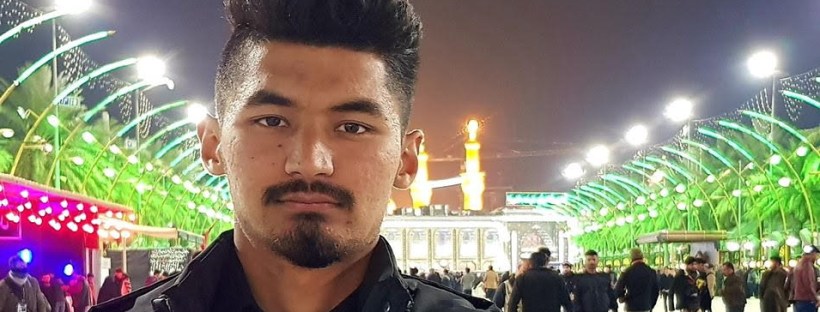
I’m a member of the Hazara people, an ethnic group in Pakistan, and I came to Australia with my family as a refugee. At the moment, I’m studying medicine in third year and doing my placement in Mildura where I grew up. I did my undergraduate degree in Biomedical Science back in Melbourne and lived away from my family. Now, I’m back in Mildura and I love the weather, I love the people – it’s really good to be back here. 

Outside of university, I used to volunteer for Monash Health, where I met a lot of refugees and people from different backgrounds. These days, I’ve found enjoyment in volunteering to teach young kids at a community school on Sundays, which is currently being run online due to coronavirus. I was asked to teach after helping out at Hazara community group services, and I think it’s given me more opportunities to improve my communications skills and get to meet new people. 

Could you explain a little of the situation facing the Hazara people in Pakistan?

Over the last ten to twenty years, we have seen many Hazara refugees coming to Australia from Pakistan because they are being persecuted by many terrorist organisations. They have suffered so much. I remember that in every street in the city [I came from], there have been people killed. I’ve lost people from my house, I’ve lost friends, my friends have lost their friends, and they’ve lost people from their houses. There’s not a single street that hasn’t lost someone. They’re constantly being persecuted, the Hazara, and now they’ve come to different countries like Europe, the US or Australia. A lot of them came to Dandenong, and there’s a big Afghan community there now.

What has your personal journey been like?

Like many of the Hazara who came to Australia to escape persecution and terrorism, I arrived here when I was very young with my family. I remember I didn’t speak any English. I went to a community centre in Mildura and then some of the secondary colleges, including Mildura Senior College, where I did my VCE. From there, I went to Monash University to study biomedical science and through that and volunteering for Monash Health, my love for medicine increased. And now I’m here.

What challenges did you face in Australia as a refugee?

It took a long time to learn English. When you first come to Australia and they put you in a mainstream school, it’s a bit difficult to understand the content, which resulted in disruption to my education. It took me around two years to actively engage with the community and start to become more fluent.

I also think not having an extensive connection with other people is something that affects a lot of refugees, even now. Although I was lucky to have access to a lot of other resources, there are asylum seekers who don’t have access to basic human rights such as the ability to go to the GP or use Medicare. I think that’s something that is detrimental to the health of a lot of asylum seekers.

Fortunately, in every step of my life my parents have had my back. Back in high school, I also had wonderful teachers who shared their life experiences and stories and guided me in what sort of path to take. I really appreciate that.

Are there any aspects of refugee health that the average student might not be aware of?

This is pretty relevant to me. In Mildura we’ve been seeing a lot of refugees coming in because it’s a small town, it’s easier to get around, it’s easier to get to know people and there’s a lot of organisations that can help you as a refugee. 

For example, the fact that a lot of the asylum seekers don’t have access to Medicare cards because their Visa applications have been rejected by the department is something that affects a lot of asylum seekers. Because of that, we’re seeing a lot of refugees coming straight to the ED instead of going through the usual process where a GP assesses you and decides whether your issue needs referral to the ED or other specialists. In Mildura, asylum seekers don’t have their Medicare card and don’t have access to healthcare. So they actually wait until their health deteriorates severely, and then come to the ED straight away without going to the GP. I think that’s something that negatively impacts the hospital, Australia overall, and the health of the asylum seekers themselves.

What has been your favourite moment in medicine so far?

On my first day at clinical placement in Mildura, I was allocated to the general surgery division and I was asked to scrub in. The first patient was a two-year-old who presented with hernia. It was my first time being part of that surgery. I was a bit nervous given the circumstances, but I got through it in the end with the help of my registrar. 

I had never been a part of a surgery before and to be helping a surgeon do a procedure on a two-year-old – it touched me emotionally. That’s something I keep in mind, and which has sparked my interest into possibly doing surgery in the future.

Where do you plan to take your career?

The relationship that I’ve made with Mildura is just wonderful, and I’d love to come back. Recently, we’ve lost a huge amount of doctors in Mildura, which is, of course, a bad thing for the community. I hope to see a lot of doctors coming back in the future, and would love to be part of that movement. The top two specialties I’ve got on my list are general practice or being a general surgeon.

I’m loving what I’m doing at the moment. There’s not a day that I feel 100% confident about my knowledge in medicine. I’m always thinking back and reflecting on the times that I didn’t know things in hospital. So I’m always learning, and I love that about medicine.

What changes would you like to see in medicine?

The hierarchy that we see in hospital. The structure is understandable, because someone needs to be responsible for everything that is happening with the patients, and that chain from the consultant down to the registrars and the interns and so on is how we do it. I do, however, think that the healthcare system would benefit from a more horizontal structure, so that we don’t approach medicine with such a rigid chain of command.