
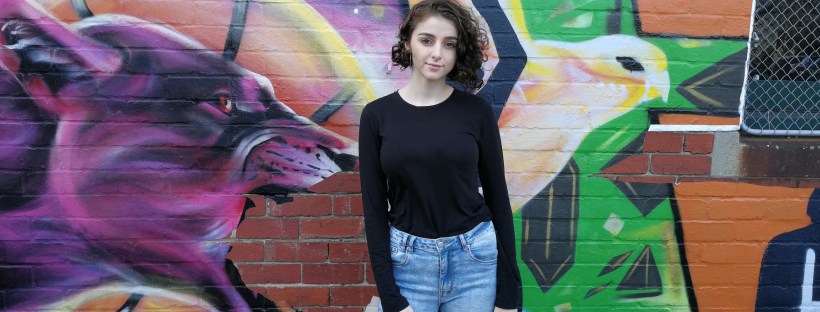
Welcome to our inaugural addition of Humans of Medicine!
Our first featured human is a 4C medicine student, a pro-vaccination advocate and a previously unvaccinated teen – Maya Moses
Tell us a bit about yourself
I grew up in Mullumbimby, which you may recognise as being number 1 on that list of “places with the lowest rates of vaccination in Australia” that always seems to be in lectures about vaccines. It is a very alternative area, which has some really awesome aspects to it, like being very socially progressive and ahead of the curve on environmentalism. It does have some really negative aspects like measles outbreaks and giving us Iggy Azalea.
Despite the sometimes science-sceptical nature of people in my hometown, I’ve always been very drawn to it, and rational explanations for things. I’m a very firm believer that a scientific explanation always makes something more interesting and magical, rather than detracting from it. Ironically the only science I didn’t do at school was biology, and I got really queasy during the dissections you do in like year 9 or 10. Somehow, I just decided in about year 11 that I wanted to be a doctor and applied for Biomed at Monash.
I would say at the time it was a pretty arbitrary decision when I made it, but I really love medicine and find it super interesting. You can take it in a lot of directions which I appreciate. There is always more to learn which is kind of awful and amazing at the same time.
Tell us about your vaccine journey
So, at the time I was born my parents were pretty much only exposed to anti-vax rhetoric and so didn’t know much better. When I was a year old I got whooping cough, and thankfully my parents reconsidered their views. You might think that’s how anyone would react, but I do have friends who had the same experience as me, and their parents are still vehemently anti-vax.
My brother, who is 10 years younger, got vaccinated and at the time my parents attempted to start catching me up on vaccines. I, however, was resistant to it because I was afraid of the needles. The first vaccines I got properly were the ones you get in high school.
I remember always being pro-vax, but I was a bit slow to get them done because of my mild needle-phobia, and the costs associated with it. But I did need to get them done for medicine and that gave me the final push. It was surprisingly a lot more confusing to navigate than I had expected.
Why do you think some people are against immunisation?
Some people – your tinfoil hat types – are pretty much against anything mainstream. I think these people are the most vocal, but also the minority. I believe most people are just scared, and if you’re scared and uncertain about a particular action it is easier to not do, than to do. A lot of fear mongering and very biased “science” from strong anti-vaxxers creates this hesitancy.
It’s easy to think “the truth is so obvious, how can’t they see it”, but a lot of people don’t learn how to navigate scientific evidence and filter out which sources are reliable. A lot of people don’t really know things like dose-response, or relative risk, or risk-benefit analysis so they’re much more prone to believing the misinformation around vaccines.
How do you think we as future doctors can help get people vaccinated?
Educate them! And do it nicely and respectfully. If you talk to an anti-vax parent and act like you know what’s best for their child, and they don’t, they won’t ever listen. It doesn’t really matter how right you are, if you can’t communicate it effectively.
But also educate yourself, be prepared to answer the questions people have, and know how to help someone get vaccinated if they want to. I had a doctor print off the infant vaccine schedule for me and that was the whole consult – which was useless to me as an adult who had a very short time frame to get vaccinated (before med started).
If there was one thing you would do differently back in first year what would it be?
I think the obvious answer is always “study more”. But really, I’d tell myself to eat better. I get a lot of pleasure from cooking and eating nice food, and I didn’t do that at all for first year. First year is taxing, mentally and physically, and it’s a relatively easy form of self-care. It doesn’t have to be gourmet meals but make it diverse and nutritious if you can.
What advice would you give to first year medical students?
Carrying on from the last question, eat well. But also, find what you enjoy and study that first. Most people never cover all the content, and don’t save what you enjoy until last thinking you should tackle the hard stuff first. You may never get to your favourite parts, and medicine is a marathon – you’ve got to enjoy it.
Also, for graduate entry kids, the staff at Churchill are incredibly supportive if you ever need it. Especially Shane, who is a gem.
What speciality do you want to do?
Radiology! Which people always are shocked by because my strongest skill is usually bedside manner, and not anatomy. I’m actually taking a break this year from my studies and doing some research with the Radiology Research Unit at Alfred Health.
Pineapple on pizza, yes or no?
Definitely yes, pineapple on pizza to the grave.
 The Auricle